

The courts
When the employer gives evidence: how the court assesses testimony from managers and HR

The courts must adjudicate according to the law, independently of the Storting and the government. Here we explain how a case goes through the district court, the court of appeal and the Supreme Court, what you can do if you believe the judge has a conflict of interest – and why we are campaigning for audio recordings in court.
Updated · By Justice for All Norway · Information about AI in our articles

Official description
The courts adjudicate according to the law and must be independent of both the Storting and the government. The ordinary courts consist of the district courts, the courts of appeal and the Supreme Court. There are also special courts, such as the land consolidation courts. The courts hear both criminal cases and civil cases.
Source: Domstol.no, Lovdata (the Courts of Justice Act (domstolloven))
Answers to what people most often wonder about the courts, appeals, experts and miscarriages of justice, with the law step by step and the experiences of our members.

Rules and advice
Rules and advice

Rules and advice

Rules and advice

Rules and advice

Rules and advice
Rules and advice

Rules and advice

Rules and advice

Rules and advice

Rules and advice

Rules and advice

Rules and advice

Rules and advice

Rules and advice

Rules and advice

Rules and advice

Rules and advice

Rules and advice
Rules and advice

Rules and advice

Rules and advice
Rules and advice

Rules and advice

Rules and advice
The district court is the first instance for most cases. In 2021, the district courts were merged into fewer and larger courts, but with court venues in many parts of the country. In civil cases, the conciliation board has often been a step before the district court.
The court of appeal is the appellate instance. Norway has six courts of appeal: Borgarting, Eidsivating, Agder, Gulating, Frostating and Hålogaland. In many cases, an appeal to the court of appeal may be refused leave to proceed if the court considers that it clearly will not succeed.
The Supreme Court is the highest instance. It hears only cases of general significance, and the Supreme Court Appeals Committee filters out the vast majority of appeals. The Supreme Court is to ensure consistency in the law and clarify how the law is to be understood.
There are also the land consolidation courts, which hear cases concerning boundaries, roads and the use of real property – see property law and land consolidation.
In a criminal case, it is the state, through the prosecuting authority, that brings an indictment against a person. Guilt must be proved beyond reasonable doubt. The accused has the right to defence counsel, and the court often consists of professional judges and lay judges.
In a civil case, the parties themselves are opposed to each other, for example in an inheritance dispute, a dispute over a road or a case against the state. Child welfare cases also end up in the courts after the Child Welfare Tribunal (barneverns- og helsenemnda) has made a decision – see the Child Welfare Service.
If you disagree with a judgment, you can appeal. In criminal cases, the appeal deadline is generally two weeks; in civil cases it is one month. The deadline runs from the time the judgment is served on you. If you miss the deadline, the appeal may be dismissed.
An appeal must give reasons: does it concern the assessment of the evidence (what happened), the application of the law (how the law has been applied), or the case handling (errors in the process)? Procedural errors in the district court can in some cases lead to the judgment being set aside.
When a judgment is final and enforceable and the appeal options have been exhausted, reopening is the last route in criminal cases. We have collected this under miscarriages of justice and reopening.
A judge cannot hear a case if she or he is disqualified. The Courts of Justice Act (domstolloven) lists situations where the judge is automatically disqualified, for example through family ties with a party. In addition, the judge is disqualified when other special circumstances are liable to weaken confidence that the judge is impartial.
Impartiality also applies to the experts, who often have a major bearing on the outcome. You can see what happens when impartiality is called into question in the TikTok grandmother case in Bodø.
If you believe that a judge has acted contrary to proper judicial conduct, you can complain to the Supervisory Committee for Judges. The Supervisory Committee does not change the judgment, but assesses the judge’s conduct. We have collected more about judges in the subtopic judges.
Many cases are decided by whom the court believes. The court assesses the evidence freely – this is called free assessment of evidence. We have written about how this works in practice in “When credibility decides, and no one can hear it again” and in the book on the assessment of credibility and evidence in the courts.
Experts have great influence, both in criminal cases and in child welfare cases. The Norwegian Board of Forensic Medicine quality-assures expert reports in criminal cases, and the Norwegian Commission for Child Welfare Experts does the same in child welfare cases. The commissions assess the reports, not the evidence in the case.
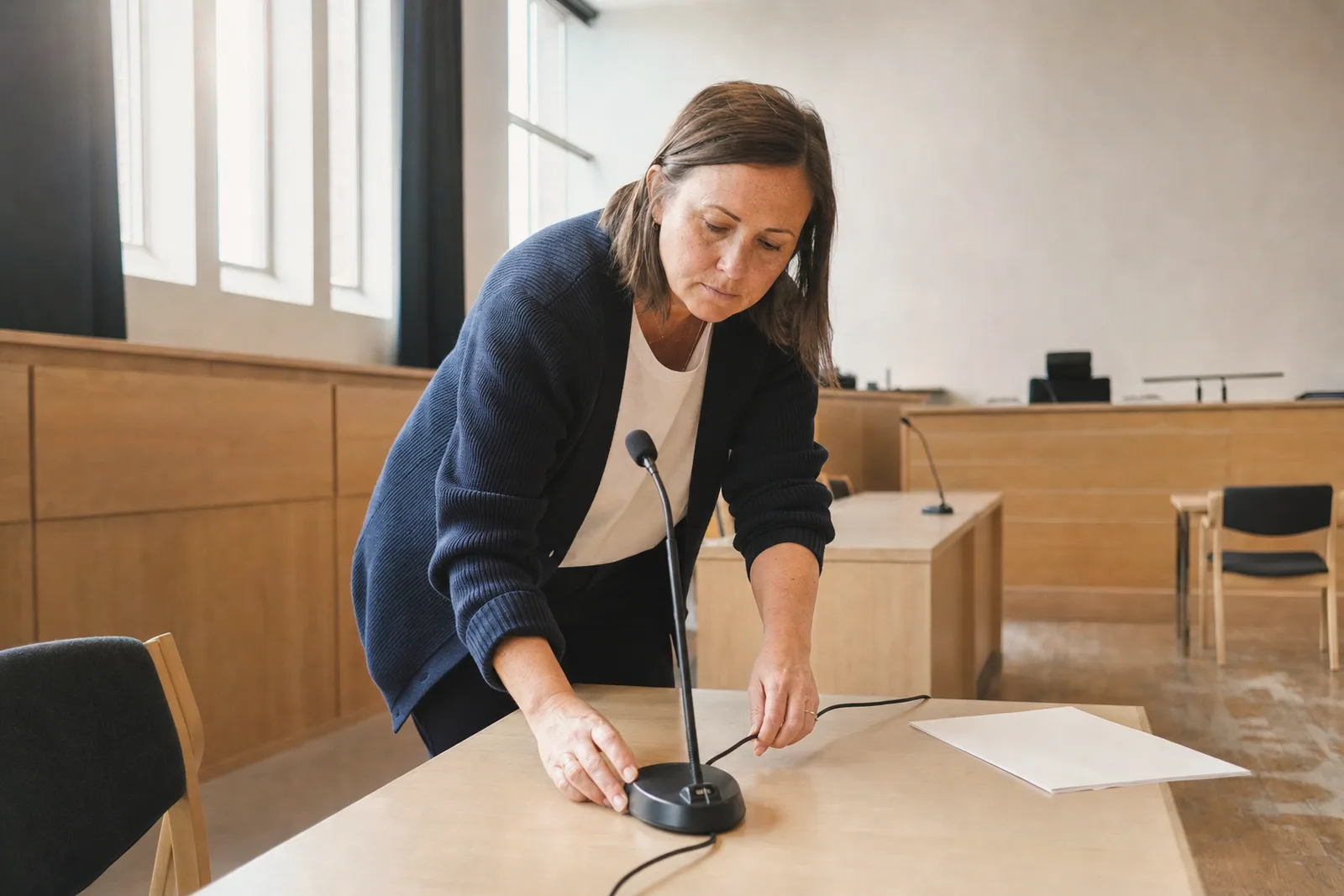
Audio recording is one of the association’s most important issues. The Dispute Act (tvisteloven) § 13-7 and the Criminal Procedure Act (straffeprosessloven) § 23 state that testimony during the main hearing and appeal hearing must be recorded – but the court may refrain from doing so when it does not have the necessary equipment. Where there is no equipment, what remains is the judge’s own notes.
We have documented what this means in “Audio recording in Norwegian courts?” and shown what a recording can look like in “We published the entire closing submission”. The association has also sent an extended whistleblowing notice to the courts. You can find everything on the topic in the subtopic audio recording in the courts.
Justice for All Norway believes that all testimony in court must be recorded, as the Storting (the Norwegian Parliament) decided in 2005. When that does not happen, neither the appeal court nor the Norwegian Criminal Cases Review Commission can check what was said.
The whistleblower Hans Eirik Olav believes that the court system has fundamental legal weaknesses, and sets out his view in “The two-part court system”. That is his assessment, which we present as part of the debate. If you are going to court, it may be useful to read about lawyers and legal aid first.
Read the writ of summons or the indictment carefully, and note the deadlines. Go through the documents with your lawyer, and ask which witnesses and evidence will be presented. You have the right to know what the other party will submit.
Arrive in good time, and bring someone with you. Court hearings are open to the public, with some exceptions, and it can be helpful to have a supporter in the courtroom. Ask the court whether the testimony will be recorded – and request a recording if it is not going to be made.
The right to a fair trial also includes the right to a decision within a reasonable time. A long wait can itself be a burden, especially in cases concerning children, health or liberty. The courts publish statistics on case handling times, and the Storting (the Norwegian Parliament) has set targets for how long cases should take.
If you are waiting a long time for a hearing date or judgment, you can ask the court when the case will be heard. Your lawyer can ask for the case to be prioritised if there are special reasons.
In many criminal cases, lay judges – ordinary citizens – sit together with the professional judge. In the district court there are usually two lay judges and one professional judge, and the lay judges have the same vote as the professional judge. The arrangement is intended to ensure that people’s sense of justice is included in the assessment, and that the decision is not made only by lawyers.
The district court is the court of first instance. The court of appeal hears appeals against decisions from the district court.
As a general rule, two weeks in criminal cases and one month in civil cases, from the time the judgment is served.
Yes, to the Supervisory Committee for Judges, if you believe the judge has breached proper judicial conduct. The complaint does not change the judgment.
As a general rule, not without the court’s permission. The court must itself record testimony, but does not always do so. Ask the court whether a recording is being made, and request one.
The courts’ digital solution where lawyers and other professional participants submit and retrieve documents in the case.
64 articles, newest first.
The courts
Explained

The brake check

Explained

The courts

The courts

Ten years on

After the crash

Explained

Rules and advice
Rules and advice
Miscarriage of justice

Safety Investigation Authority

Whistleblowing

Explained

Your rights

Rules and advice
Rules and advice
Rules and advice
Rules and advice
Rules and advice
Rules and advice
Rules and advice
Rules and advice
Rules and advice
Rules and advice
Rules and advice
Rules and advice
Rules and advice
The amalgam case

Recordings in court

Comment

Background

Comment

News

News

New book

Book

Book

Podcast

News
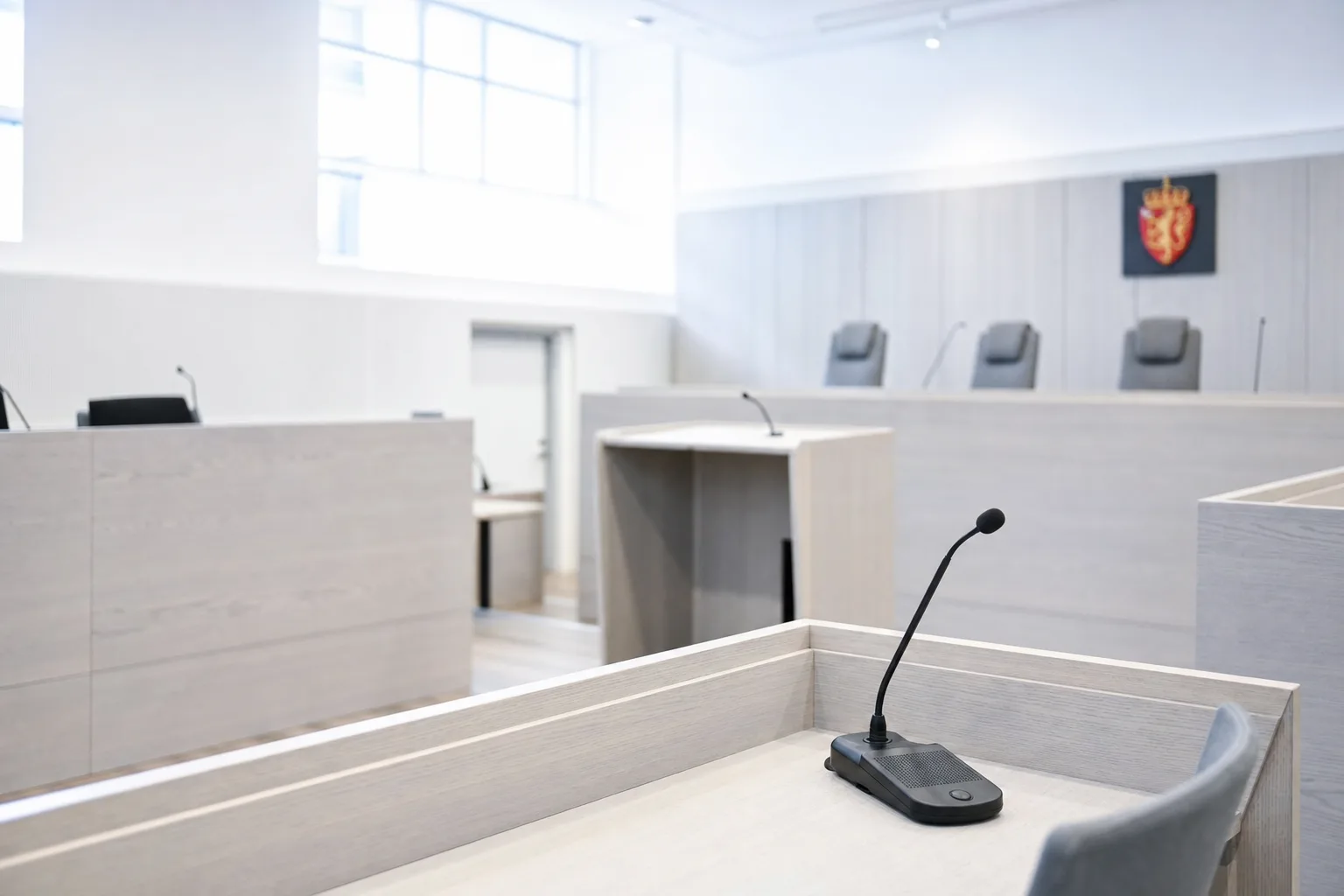
News

Background

Recordings in court

Egil Klubben

Interview

News

News
News

Interview

News

News

News

Lillian Gran

Film interview
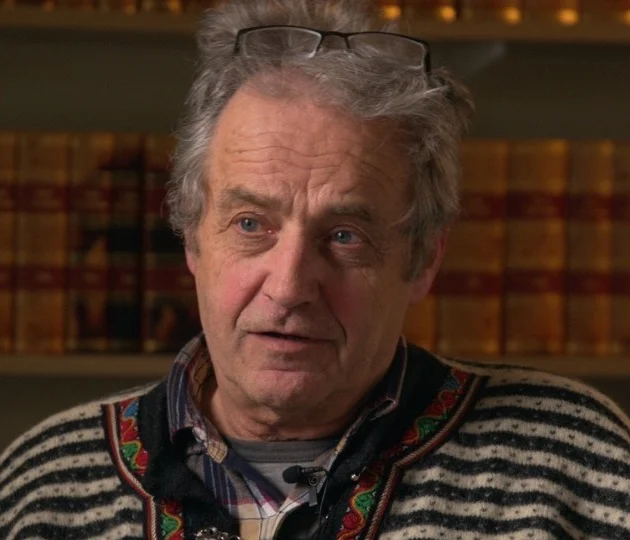
Film interview

Anne Lise Breidalseter

Øystein Flenning

Film interview

Hans Eirik Olav

Analysis

Recordings in court

Arvid Sjødin

Recordings in court