Spoofing – evidence manipulation that the prosecuting authority and the courts ignore – Lillian Gran
We have had some digital contact with Lillian, and on the Friday before her new custody hearing – where the question was an extension of her stay at the psychiatric institution, St. Olav’s Hospital Østmarka – she wrote to us that they had taken her phone.
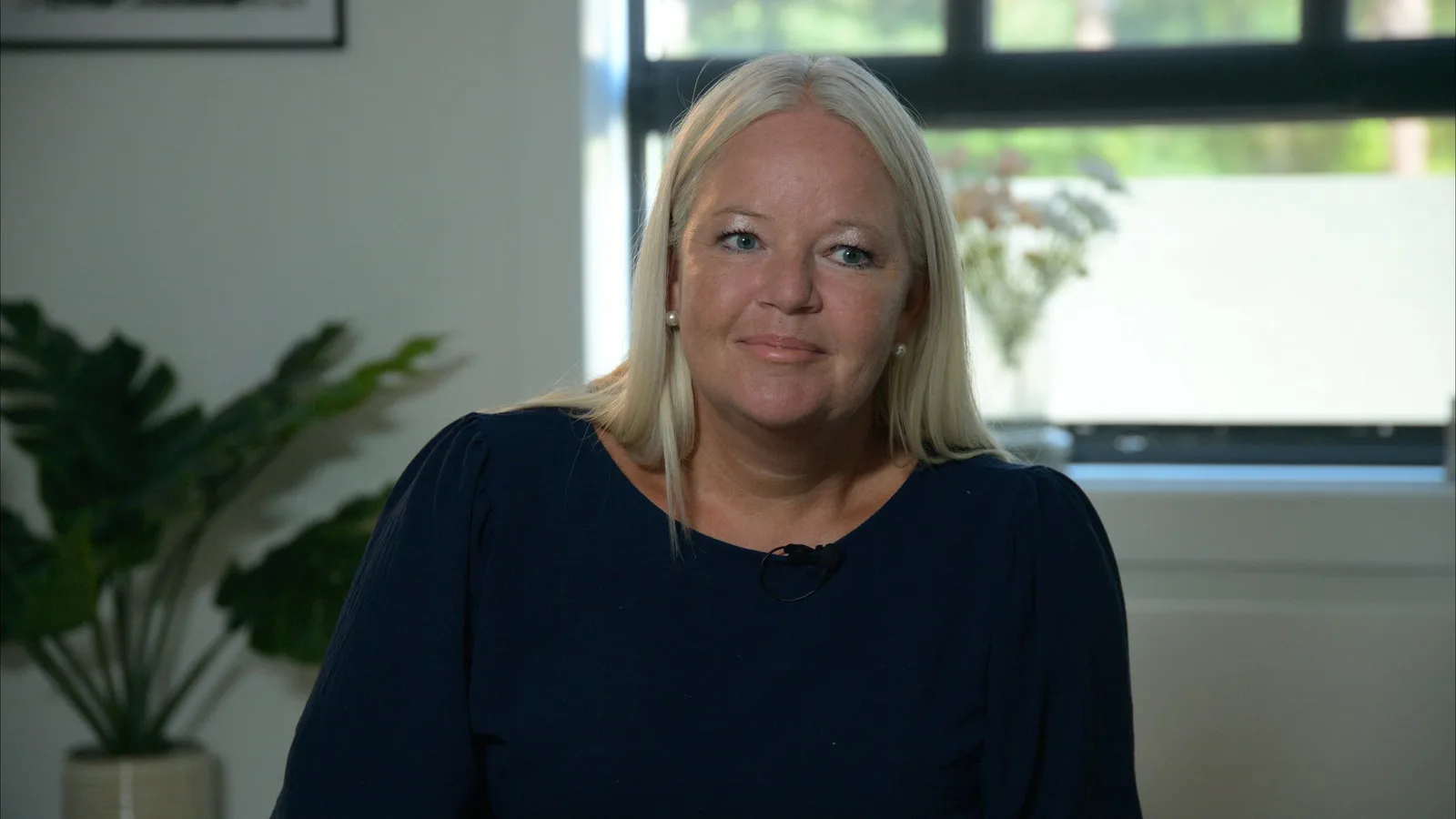
“I don’t know why they have taken my phone”, she wrote to us on Friday.
On the Wednesday of the following week, police prosecutor Wenche Brandstad presents new evidence to the court in Hamar, linked to a new charge.
The charge is that Lillian, from her work phone number – a number she has not had access to, and whose SIM card has been unavailable to her for six months, that is, ever since before her custody began on 2 December 2025 – sent a text message to her daughter with two red hearts.
Lillian was in an institution where she only had access to digital devices between 12:00 and 18:00 each day, while this text message is said to have been sent at a quarter to 11 on the day in question.
Spoofing as a criminal act: when someone wants to incriminate other people.
Spoofing is a collective term in cybersecurity for a type of crime that is no longer new, in which someone pretends to be you via email, text message or phone calls. Someone calls from your phone number, others receive the call and think it is you, because it is always you who calls from that number.
This is technology that has been known for a long time. Fraudsters have used it for many years.
Which of us does not regularly receive messages from the bank saying that fraudsters are at it again, and that we must be very careful about clicking on links and giving away information that can later be used in this way?
This is necessarily also well known to the police, the prosecuting authority and the courts.
Nevertheless, police prosecutor Wenche Brandstad can present a picture of a text message with two red hearts as evidence, and the court accepts it in connection with a new charge that is to form the basis for extended custody – and a further two weeks in psychiatric care – even though they know that this kind of manipulation is entirely possible.
We could talk at length about the extreme abuse of power the Norwegian state is committing against Lillian Gran, and we have done so in many ways.
But behind this lies a far bigger and more serious question:
If the courts in Norway blindly rely on this kind of evidence in the cases they hear, even though they know this technology exists, it means that anyone can have false text messages, emails or phone calls sent in their name to anyone else, with indications of criminal activity – and that police prosecutors and courts treat this as if it comes from the person themselves, without even making a phone call to the telecoms company.
In Lillian’s case it is so serious that they have already done this with her lawyer, and the police still do not investigate before the police prosecutor brings a new charge a few days after the incident allegedly took place.
Mette Yvonne Larsen’s law firm has submitted pleadings stating that Lillian’s lawyer sent messages to and tried to call Lillian’s daughter. That was a lie. It took one phone call to Telenor to clear this up.
Even so, they carry on with Lillian.
The police prosecutor plays out this charade and pretends that it is Lillian who sent the message from her own work phone – or in some way manipulated technology to incriminate herself – three days before she is due at a new custody hearing in court.
And the judge simply goes along with it without questioning the police prosecutor’s actions in any way.
This is not a state governed by the rule of law.
This is something else entirely.
This is a state we can compare with Stasi Germany and the old Soviet Union. It has nothing to do with the rule of law.
This is lies, manipulation and misuse of modern technology to keep a person in custody and locked up in psychiatric care.
Whether it is someone on the side of Lillian’s ex, whether it is the Child Welfare Service, or whether they are working together, or whether the lawyers are also involved – since this is happening in several cases connected with the same complex of cases – we do not know.
But someone is sitting at a computer fabricating messages from Lillian to her daughter while she is locked up in psychiatric care, even though she is completely mentally healthy, and because they want to keep her locked up.
Someone in this complex of cases has so much power that they can misuse it in this way to make sure Lilian is kept inside, and – as the police prosecutor herself says – “until beyond the sentence”.
“We want to hold her for as long as possible.”
Then you have to fabricate some kind of pretend evidence to make it happen.
Spoofing is a new way of doing it.
If the Storting does not address this and regulate it by law, it is open season for misusing text messages, emails and phone calls in anyone’s name when someone wants to incriminate other people. The police and the courts will rely on it as evidence in a criminal case if it comes from your mobile number or your email address.
And as we see in Lillian Gran’s case, it works perfectly well when the state wants a given outcome and goes along with the abuse of power and falsification of evidence.
Quotes translated from Norwegian.
Published 28 May 2026
About AI in our articlesSupporting members
Support Justice for All Norway from abroad
Membership of the association is open to people living in Norway. International supporting memberships are on their way, so that you can support our work wherever you live.
Become a supporting memberComing soonSupport our work
Related articles
Three in four are refused when they apply for patient injury compensation

Limit values assess one substance at a time. The body meets many

Amicable settlement with VG: – We should simply have called you

We published the entire closing speech. The court makes no such recording itself
Children who speak out have the right to be taken seriously