
Rules and advice
The principle of legality: the state needs statutory authority to intervene

The rule of law means that the state must follow the rules when it makes decisions about your life. Here we explain what that involves, what rights you have – and what our cases show about how it works in practice.
Updated · By Justice for All Norway · Information about AI in our articles

Official description
The rule of law means that individuals are protected against arbitrary use of power by the state, and that laws, the justice system and the public administration follow predictable procedures. The Constitution of Norway (Grunnloven) § 113 states that any intervention by the authorities against an individual must have a basis in law, and § 95 gives everyone the right to have their case decided by an independent and impartial court within a reasonable time.
Source: Lovdata (the Constitution of Norway (Grunnloven) §§ 95 and 113), Store norske leksikon
Answers to what people most often wonder about your legal safeguards, with the law step by step and the experiences of our members.

Rules and advice

Rules and advice
Rules and advice
Rules and advice
The rule of law may sound like a term for lawyers, but it is about entirely ordinary situations: when NAV (the Norwegian Labour and Welfare Administration) rejects an application, when the Child Welfare Service (Barnevernet) knocks on the door, when the police drop a police report, or when you end up in legal proceedings you did not choose yourself. In all these situations, you are facing a party with more power, more knowledge of the rules and more people than you.
The rule of law is meant to even out that imbalance. It does not give you the right to win, but the right to be treated correctly: that the case is investigated well enough, that you get to state your view, that you are told what the decision is based on, and that someone else can look at it again.
That distinction is important. A decision you disagree with may still be correct. But a decision made without you being allowed to see the documents, without important evidence being assessed, or by someone who was not impartial, is a rule-of-law problem – whatever the outcome.
Requirement of law. The authorities may intervene in your life only when a law gives them the right to do so. This is called the principle of legality and is set out in the Constitution of Norway (Grunnloven) § 113. It is the foundation of the rule-of-law state.
Predictability. The rules must be known in advance and applied equally. You must be able to know which rules apply to you, and similar cases must be treated alike.
The right to be heard. You have the right to be heard before a decision is made, and to respond to what the other party presents. In the public administration, the Public Administration Act (forvaltningsloven) gives the right to advance notice and to a party’s right of access to case documents. In the courts, it is a fundamental principle in both the Criminal Procedure Act (straffeprosessloven) and the Dispute Act (tvisteloven).
Reasons and access to information. You are entitled to know why the decision was made as it was, and what information it is based on. Without access to information, you cannot point out errors.
Review. A decision must be capable of review by someone else: a complaints body, the courts, the Parliamentary Ombud (Sivilombudet) or, ultimately, the European Court of Human Rights (ECHR). This is what makes it possible to correct errors.
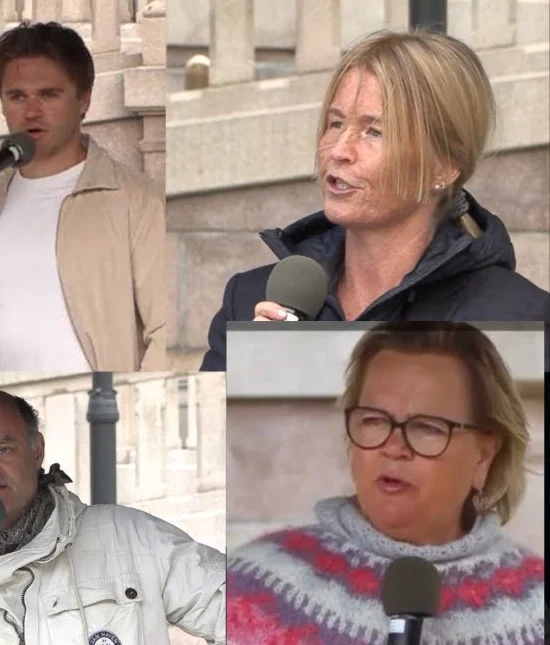
Most encounters with the public authorities go well. But the cases that come to us show what happens when they do not. In the film interview with Silje Schevig, she describes how years of conflict with public bodies can wear a person down. In “What the numbers show”, we have examined what the figures say about how many people are affected.
A recurring feature is inequality of resources. When individuals have to obtain evidence themselves, legal safeguards become dependent on their wallet. We have written about this in “When the citizen has to investigate for themselves”, and private investigator Thomas Mathiesen describes the same issue in the interview “The private investigator”.
Another feature is that what is said in court is often not recorded. In 2005, the Storting decided that, as a general rule, statements in court must be recorded, but the equipment is still missing in many places. You can read more about this in “The Storting decided it in 2005” and in the subtopic on audio recordings in the courts.
Your legal safeguards look different depending on whom you encounter. That is why we have gathered knowledge and cases on dedicated topic pages:
If you encounter the police, the issue is police interviews, reports to the police and investigations – see the police and the investigation. The decision on indictment and on dropping a case is made by the prosecuting authority. The trial itself concerns the courts and the judges, and when a judgment is wrong, it concerns miscarriages of justice and reopening.
For families, legal safeguards in the Child Welfare Service are our largest topic. In dealings with NAV (the Norwegian Labour and Welfare Administration), the municipality or a supervisory authority, the rules on the public administration and individual decisions apply. Injuries in the health service belong under health and patient injury, and property, rights of way and land consolidation under property law.
Many of our cases begin with someone speaking out. What happens to them is gathered under whistleblowing and whistleblowers. You will also find what you can expect from a lawyer and legal aid, how the Ministry of Justice and Public Security follows up, and what happens when Norway is tested against human rights and the European Court of Human Rights.
Yes. The right to a fair trial is set out in Article 6 of the European Convention on Human Rights (ECHR), and the right to an effective remedy in Article 13. Through the Human Rights Act (menneskerettsloven), the ECHR applies as Norwegian law and takes precedence over other legislation in the event of conflict. The Constitution of Norway (Grunnloven) § 92 also requires the authorities to respect and secure human rights.
This means that legal safeguards are not only a political goal, but a legal obligation. When Norway is found to have violated the Convention in Strasbourg, it is because this obligation has not been fulfilled in the individual case.
We are an association for people who have experienced injustice in dealings with the state governed by the rule of law, and for those who want to strengthen legal safeguards. We document cases through film interviews, articles and podcasts, we gather the patterns and present them to the authorities, and we give our members a community and tools to stand firm in their own case.
We write what we can document, and we cite our sources. Where something is our assessment, we make that clear. If you have a case you think we should look at, you can become a member and tell us your story.
The most important advice from our members is simple: document everything. Keep letters, decisions, emails and messages, and write down what was said in meetings and phone calls – with the date. Ask for access to documents early, and read the documents yourself.
Keep an eye on the deadlines. Many rights are lost because a three-week appeal deadline expires while you are waiting for an answer. If you are unsure, send a short appeal before the deadline and ask to submit your reasons later.
And take someone with you. It is easier to attend a meeting with a public agency when you have a supporter beside you who can take notes and remember. In the association there are people who have been through the same thing.
That the state must follow fixed rules when it makes decisions about you, that you get to have your say and see the papers, and that someone else can review the decision.
Because the state has a great deal of power over individuals. Without legal safeguards, you are at the mercy of whoever happens to handle your case.
Legal safeguards protect the individual. The rule-of-law state is the system intended to secure them: separation of powers, public administration bound by law and independent courts.
Start by asking for access to the documents and a written statement of reasons, and appeal before the deadline. Many appeal deadlines are short – in the public administration often three weeks. Seek advice from a lawyer, a legal aid service or the Parliamentary Ombud.
17 cases, most recent first.
Rules and advice
News

News

News

News

News

Thomas Mathiesen

Interview
News

News

Nikolai Vilnes

Film interview

Per Yngve Monsen

Hans Eirik Olav

Film interview

Siri Ann Moen

Recordings in court