Rules and advice
Police interview: your rights as a suspect and as a witness
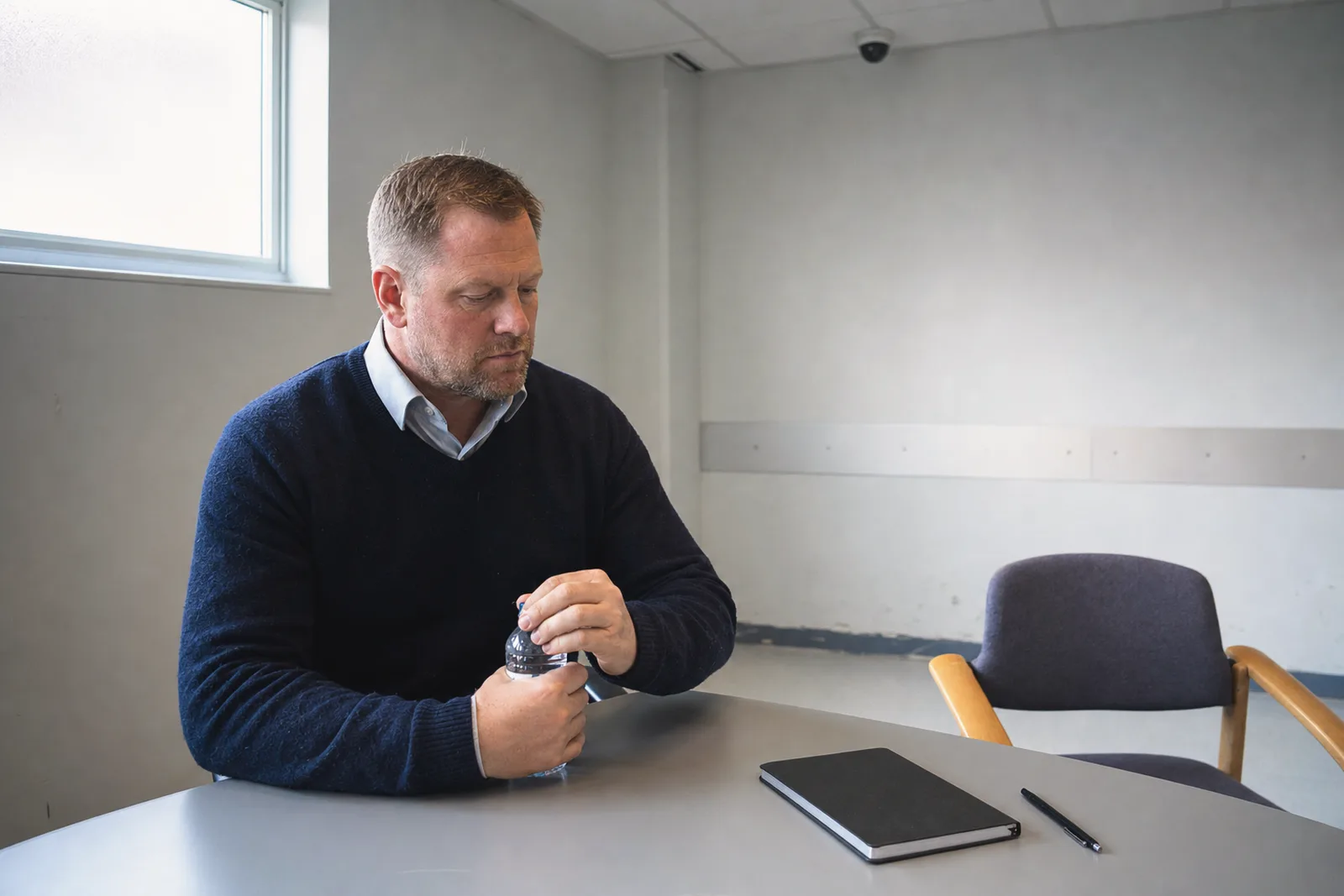
The police have great power over individuals: to interview, search and arrest them. Here we explain your rights in police interviews, how to report something to the police, how to complain about the police – and what the K.R.E.A.T.I.V. method promises.
Updated · By Justice for All Norway · Information about AI in our articles
Official description
The police must maintain public order, prevent crime and investigate offences. The National Police Directorate has overall professional responsibility, under the Ministry of Justice and Public Security. The duties and limits of the police follow from the Police Act (politiloven) and the Criminal Procedure Act (straffeprosessloven).
Source: Politiet.no, the National Police Directorate, Lovdata (the Police Act (politiloven))
Answers to what people most often wonder about the police, police interviews and investigations, with the law step by step and the experiences of our members.

Rules and advice
Rules and advice

Rules and advice

Rules and advice

Rules and advice

Rules and advice
Rules and advice

Rules and advice

Rules and advice
Rules and advice
Rules and advice

Rules and advice
Rules and advice

Rules and advice

Rules and advice

Rules and advice

Rules and advice
Rules and advice

Rules and advice

Rules and advice
Rules and advice

Rules and advice
Rules and advice
Rules and advice

Rules and advice
Rules and advice

Rules and advice

Rules and advice

Rules and advice
Rules and advice

Rules and advice

Rules and advice

Rules and advice
Rules and advice
Rules and advice

Rules and advice

Rules and advice

Rules and advice

Rules and advice
Rules and advice

Rules and advice

Rules and advice

Rules and advice

Rules and advice

Rules and advice

Rules and advice

Rules and advice

Rules and advice

Rules and advice

Rules and advice

Rules and advice

Rules and advice
Rules and advice

Rules and advice

Rules and advice

Rules and advice

Rules and advice

Rules and advice

Rules and advice
Rules and advice

Rules and advice
Rules and advice
Rules and advice

Rules and advice

Rules and advice

Rules and advice
Rules and advice
Rules and advice

Rules and advice

Rules and advice
Rules and advice

Rules and advice

Rules and advice

Rules and advice
The Norwegian police consist of twelve police districts and several specialist agencies, including Kripos (the National Criminal Investigation Service) and Økokrim (the National Authority for Investigation and Prosecution of Economic and Environmental Crime). The National Police Directorate leads and manages the police professionally, under the Ministry of Justice and Public Security. Each police district also has police lawyers who are part of the prosecuting authority and lead investigations.
The powers of the police are regulated. The Police Act (politiloven) sets the framework for public-order policing, and the Criminal Procedure Act (straffeprosessloven) regulates investigations and coercive measures such as arrest, search and seizure. Interventions must be necessary and proportionate.
As a suspect, you have no duty to give a statement, and you have the right to have defence counsel present. You must be told what the case concerns. The statement must be read back to you or given to you to read through, and you have the right to have anything that is wrong corrected. Do not sign anything you do not recognise.
As a witness, you have other rights and duties. You may have the right to refuse to give evidence about close family members or others close to you. In court, witnesses generally have a duty to give evidence.
Many police interviews are still written directly by the investigator, not recorded verbatim. We have written about this in “Did you know that Norwegian police still sit and type up interviews on a computer?”. When what was said does not exist as a recording, it becomes one person’s word against another’s.
The K.R.E.A.T.I.V. method is the Norwegian police interview method, developed to prevent false confessions and tunnel vision. It is based on open questions, respect and the investigator testing several hypotheses. Norway has helped develop the international Méndez Principles on interviewing, and the method is taught in many countries. We have written about this in “The method Norway teaches the world”.
But what happens when the method meets reality? In the series “The K.R.E.A.T.I.V. method versus reality”, police whistleblower Vigdis Bollerud tells of her experience. We have explained the difference between a hypothesis and a ready-made conclusion in “What is the difference between a hypothesis and a conspiracy theory?”. All about the method is collected under the subtopic the K.R.E.A.T.I.V. method.
Anyone can report a criminal offence to the police. You can do so on the police website, by telephone or by attending in person. Always ask for a receipt and a case number, and include the documentation you have: messages, photographs, names of witnesses and times.
The police decide for themselves whether and how a case is to be investigated. If the case is dropped, you can complain – see complaints about cases being dropped. Many of our members have experienced important evidence not being secured in time. Some have therefore engaged private investigators themselves, as you can read about in “The private investigator” and “When citizens have to investigate for themselves”.
The opposite also happens: the police take action on a thin basis. In “The arrest that was called off”, we look at one such case.
As a suspect or a person charged, you generally have the right of access to the case documents, provided this does not harm the investigation. Once an indictment has been issued, the defence counsel has the right to see all the documents. Aggrieved parties and bereaved family members also have a right of access in some cases, including in order to complain about a case being dropped.
Request access in writing, and refer to the Criminal Procedure Act (straffeprosessloven). If your request is refused, you can ask for reasons and complain.
If you are dissatisfied with how the police have behaved or treated you, you can complain to the police district. The complaint is dealt with by the police themselves, and you can complain further to the National Police Directorate.
If you believe that a police employee has committed a criminal offence in the course of duty, you must report it to the Norwegian Bureau for the Investigation of Police Affairs. The Bureau for the Investigation of Police Affairs is independent of the police and the rest of the prosecuting authority.
Whistleblowers in the police face their own challenges. We have collected this under whistleblowing and whistleblowers, including in “When the police go to war against the population”.
The police may arrest a person when there are reasonable grounds to suspect a criminal offence that can carry more than six months’ imprisonment, and there is also a risk of flight, tampering with evidence or new offences. The person arrested must be told why, and must generally be brought before the district court the day after the arrest if the prosecuting authority wants to keep the person in custody.
Search and seizure generally require a decision by the prosecuting authority or the court. You have the right to receive a copy of the decision and a list of what is taken. You can ask the court to review whether a seizure is lawful.
If you are unsure what the police are entitled to do, ask to speak to a lawyer before saying anything more. It is not a sign of guilt – it is a right.
The police register information about people in many contexts, including where there is no criminal case. You have the right of access to information the police have registered about you, with certain exceptions, and you can require incorrect information to be corrected or deleted.
Information in police registers may affect police certificates, firearms licences, driving licences and employment. If you believe something is wrong, ask the police district for access in writing and refer to the Police Registers Act (politiregisterloven).
All the articles about the police are in the list below – from the film interviews with the whistleblowers to the articles about the interview method. If the police have dropped a case you reported, you will find the procedure for complaining under the prosecuting authority. If you believe a case has ended with an incorrect judgment, see miscarriages of justice and reopening.
Justice for All Norway gathers experiences from members who have encountered the police, whether as suspects, aggrieved parties or witnesses. We present the patterns we see to those who are responsible.
Ask what the case is about, and whether you have been called in as a suspect or a witness. If you are a suspect, contact a lawyer before the interview. You can ask for the interview to be postponed until your defence lawyer can be present.
As a suspect: the right to remain silent, the right to a defence lawyer, and the right to read and correct your statement before you approve it.
Send a written complaint to the police district. If it concerns a possible criminal offence, report it to the Norwegian Bureau for the Investigation of Police Affairs.
As a suspect or a charged person, as a general rule yes, except for anything that could harm the investigation. Ask for it in writing.
The Norwegian police interview method, intended to ensure open questions and prevent tunnel vision and false confessions.
50 articles, newest first.
Rules and advice
Rules and advice
Rules and advice
Rules and advice
Rules and advice
Rules and advice
Rules and advice
Rules and advice
Rules and advice
Rules and advice
Rules and advice
Rules and advice
Rules and advice
Rules and advice
Rules and advice
The rule of law

The police

Domestic violence

Rape
Background

Interview

Podcast

Podcast
Film interview
Comment

News

Book

Short episode
Podcast

Podcast
Advice
News
News

Thomas Mathiesen
Interview
News

News

Interview

News
Lena Marthinsen
News
Film interview
Anne Lise Breidalseter

Film interview
Øystein Flenning

Accountant Gro Ødegård

Police whistleblower Vigdis Bollerud
Arvid Sjødin

The case

The case