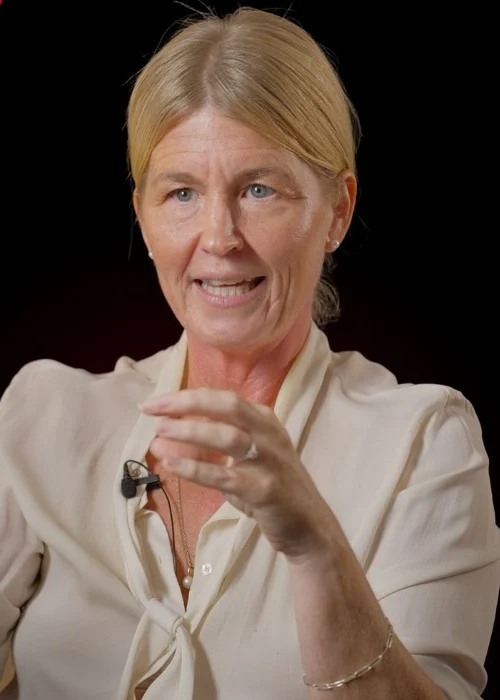
The K.R.E.A.T.I.V. method versus reality, Episode 1 of 5 – Vigdis Bollerud
The interview is in Norwegian. English subtitles are coming.
This is episode 1 of 5 in a series from Justice for All Norway about the police’s work on criminal cases.
The series looks at the actual conditions, the guidelines the police are required to follow, the regulations and the ethical guidelines in the police and the prosecuting authority, and what our members report about their own experiences. The Norwegian police have an interview method that has become an international standard: KREATIV.
It is meant to ensure that the police gather information, not extract confessions.
What happens when the method is not used? Vigdis Bollerud, chair of the association Justice for All Norway (Rettssikkerhet for alle) and a former police investigator, goes through the K.R.E.A.T.I.V. method and the Director of Public Prosecutions’ (Riksadvokaten) Circular No. 2/2016 on police interviews point by point. She also describes what our members experience, and gives seven concrete pieces of advice if you are called in for a police interview. Sources referred to in the video:
– Investigative interviewing in criminal cases (the Norwegian Centre for Human Rights, University of Oslo, in cooperation with the Norwegian Police University College)
– The Director of Public Prosecutions’ Circular No. 2/2016 on police interviews, dated 11 May 2016
– The Director of Public Prosecutions’ working group: Interview methodology in the police (October 2013)
Contact a lawyer for the best advice in your own case.
CHAPTERS
0:00 The method Norway is proud of
1:33 What the K.R.E.A.T.I.V. method contains
2:17 The purpose of the interview
2:40 The six phases
4:24 Open questions, and why closed ones are dangerous
5:09 Confirmation bias and tunnel vision
5:48 Hypothesis testing and the duty to look for innocence
6:25 Strategic presentation of evidence
7:03 Rights and vulnerability
7:36 The Director of Public Prosecutions’ circular point by point
16:25 What our members experience
18:00 Two types of case, and the one few people know about
19:20 How to protect yourself
24:58 Why this is necessary
Related articles
PFU cleared Morgenbladet and Ole Jacob Madsen. Here is why we believe the case is serious.
Sold out in Kongsberg – while the whistleblower is under investigation: Short episode

The helicopter pilot
The podcast Avhørt reported to the Norwegian Press Complaints Commission
A child welfare service gone astray