News · Explained · The courts and the judges
Who investigates fatal accidents involving articulated lorries?
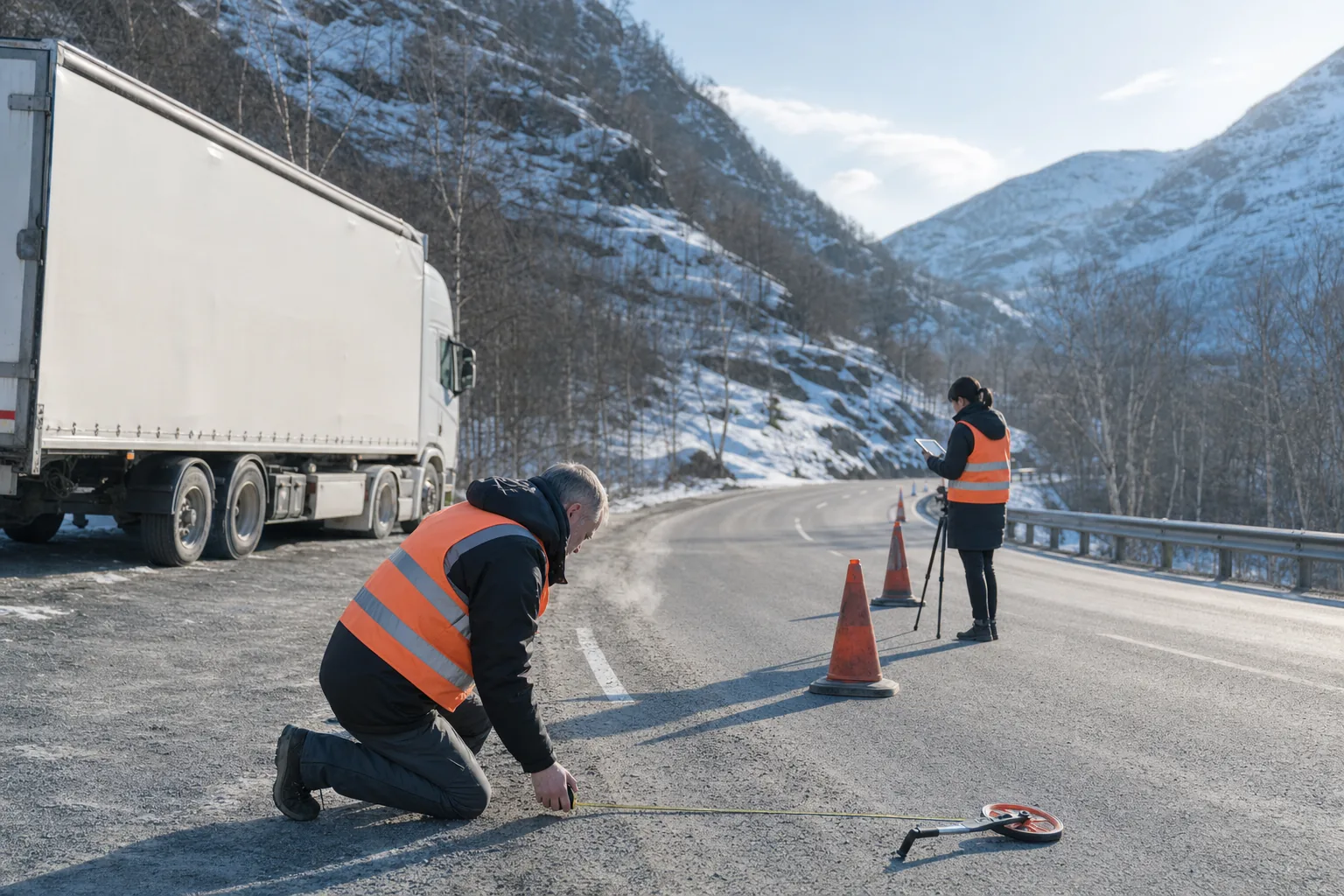
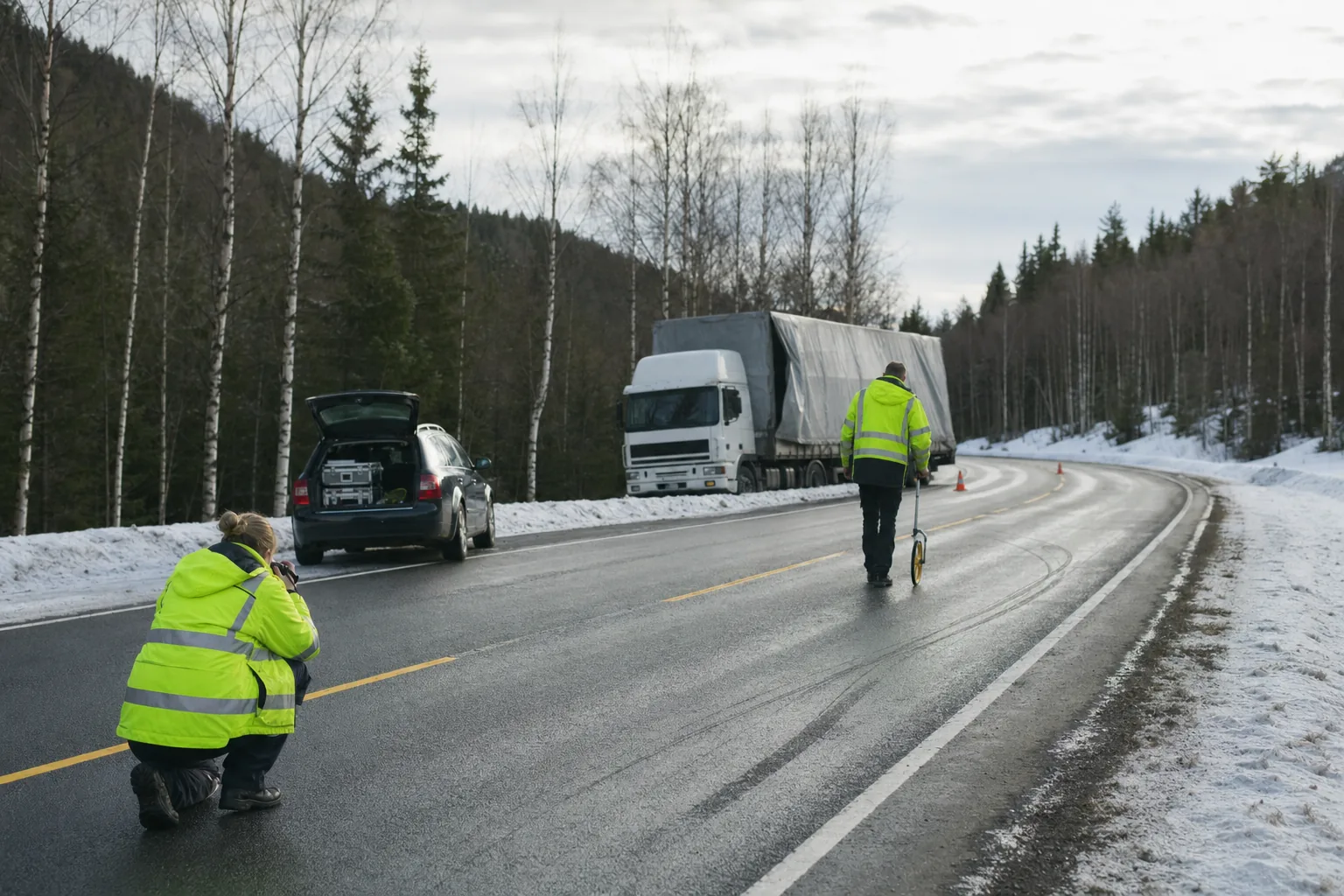
After a fatal crash on the road, the police investigate whether anyone has committed a criminal offence. The Norwegian Public Roads Administration and the Norwegian Safety Investigation Authority investigate what happened, so that it does not happen again. They are three different tasks – and only one of them is about guilt.
In brief
- The police investigate fatal crashes as possible criminal cases. The prosecuting authority decides whether the driver is to be charged, the court whether he is guilty.
- Since 2005 the Norwegian Public Roads Administration has carried out in-depth analyses of every fatal crash on Norwegian roads. The analyses take no position on guilt or liability.
- The Norwegian Safety Investigation Authority investigates a selection of crashes in order to improve road safety. What a person tells the authority cannot be used as evidence against them in a criminal case.
- The Norwegian Public Roads Administration also decides how the brakes on heavy vehicles are to be inspected. The lawyer Sigurd Klomsæt believes the agency needs scrutiny from outside.
When an articulated lorry is involved in a fatal crash, several agencies come to the scene. They have different tasks and follow different rules. In the cases in the series Brake Deaths, the question of who examined the lorry, and how, has become decisive. It is also a question about the public administration and about how independent the investigations are.
The police: was it a criminal offence?
The police investigate the crash as a possible criminal case. Anyone who negligently causes another person’s death when using a motor vehicle can be punished under the Penal Code, and under section 31 of the Road Traffic Act it is section 281 of the Penal Code on negligent homicide that applies. The prosecuting authority decides whether the driver is to be charged, and the court decides whether he is guilty. On technical questions, the police often rely on experts.
The Norwegian Public Roads Administration: what happened?
Since 2005 the Norwegian Public Roads Administration has carried out in-depth analyses of every fatal crash on Norwegian roads. Today a national accident analysis group does this work. Its task is to establish the sequence of events and the causes in order to improve road safety, and among other things it receives information about those involved from the police. The analyses take no position on guilt or liability.
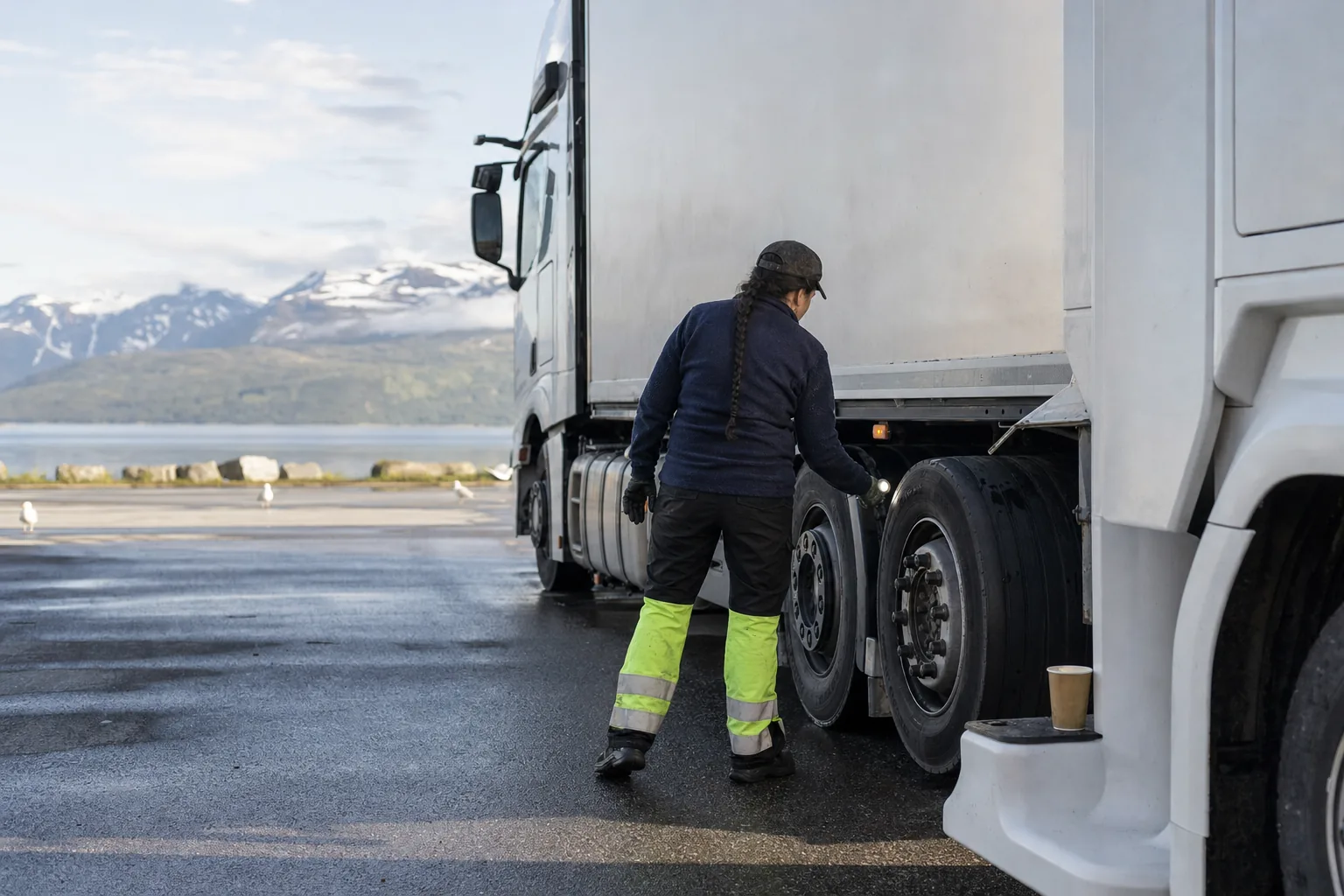
At the same time, the Norwegian Public Roads Administration is the authority that decides how vehicles are to be inspected, including their brakes. The agency approves the workshops that carry out the EU inspection, and has its own inspectors out on the roads. In criminal cases, the agency’s technical investigations can become important evidence. In the case against Markus “Webasto” Myrvold, the Public Roads Administration’s investigations supported the prosecution’s explanation, according to NRK, and the court accepted it.
The Safety Investigation Authority: what can we learn?
The Norwegian Safety Investigation Authority is the investigating body for road traffic accidents. It investigates a selection of serious crashes and is to establish the sequence of events and the contributing factors, not to apportion blame. Its investigation is independent of the police investigation. The authority can demand to examine and take charge of vehicles and wreckage.
So that people can speak freely, the law provides a safeguard: what a person tells the Safety Investigation Authority cannot be used as evidence against them in a later criminal case. What the authority has found about brakes in earlier crashes, we have gathered in Four crashes, three warnings.
“Needs external scrutiny”
Sigurd Klomsæt is the lawyer for several drivers who have been convicted after crashes involving articulated lorries. For him it is a problem that the same agency decides how brakes are to be inspected and investigates the crashes in which the brakes may have failed. When the agency’s people investigate a crash, in his experience the conclusion almost always lands on the driver, and experts who think otherwise are not heard.
I also know that the Norwegian Public Roads Administration is a system that needs external scrutiny.
The Minister of Transport has told the Storting that roller brake tests are the best method of inspecting the brakes on heavy vehicles, and the Norwegian Public Roads Administration has told NRK that it has followed up the Safety Investigation Authority’s recommendations. How the roller test works, we have explained in How the roller brake test works – and the criticism. Who is responsible when the brakes fail, you can read in Who is responsible when the brakes fail?.
Read more about Sigurd Klomsæt’s case here: “The lawyer who drove a lorry”. The story is about the drivers who get the blame when the trailer swings out, about the case that ended in acquittal, and about the rejection from the Criminal Cases Review Commission.
Supporting members
Support Justice for All Norway from abroad
Membership of the association is open to people living in Norway. International supporting memberships are on their way, so that you can support our work wherever you live.
Become a supporting memberComing soonRead more
- Part 3: The lawyer who drove an articulated lorry – Sigurd Klomsæt on the drivers who are blamed
- Part 2: “A week earlier the articulated lorry had been approved” – Markus “Webasto” Myrvold on the fatal accident in Lofoten
- Part 1: The man who would not give up – the whistleblower Helge Andersen and the brake tests
- More articles on the case: – There are a great many people out there who have been wrongly convicted · When a convicted driver wants the case retried · Victims on both sides
- From parts 1 and 2: Convicted over a fatal crash – acquitted 13 years later · Approved one week before the fatal accident
- Topic pages: Brake Deaths · The courts · Public administration and NAV
- The film interviews: Sigurd Klomsæt: Brake Deaths 4 · Markus’ story · Helge Andersen: Brake Deaths
- NRK Brennpunkt: “Kollisjon” (Collision, NRK TV, in Norwegian)
- Become a supporting memberComing soon
Sources
- Road Traffic Act, sections 31 and 33 and chapter VII on the investigation of road traffic accidents (Lovdata)
- Penal Code (straffeloven) § 281 on negligent homicide (Lovdata)
- Norwegian Public Roads Administration: Analysis of fatal crashes (UAG)
- Norwegian Safety Investigation Authority: road
- NRK (19.12.2022): Lorry driver convicted of negligent homicide. But what if it was the articulated lorry’s fault, not the driver’s?
- NRK (8 November 2022): Fatal accidents on Norwegian roads may be caused by faults in articulated lorry brakes that inspections do not always detect
- The Storting (the Norwegian Parliament), Document 15:762 (2022–2023): written question on brake inspections, answer 3 January 2023
- Justice for All Norway: Sigurd Klomsæt – Brake Deaths 4 (film interview, May 2026)
- Justice for All Norway: Topic Brake Deaths
Quotes translated from Norwegian.
Published 21 November 2026 at 17:45 · Updated 21.11.2026
About AI in our articlesSupporting members
Support Justice for All Norway from abroad
Membership of the association is open to people living in Norway. International supporting memberships are on their way, so that you can support our work wherever you live.
Become a supporting memberComing soon