News · Brake inspections · The courts and the judges
Approved one week before the fatal accident
An approved stamp from the workshop means that each part of the articulated lorry brakes hard enough. It says nothing about how tractor unit and trailer brake together. In Lofoten in 2015 that became a matter of life and death.
In brief
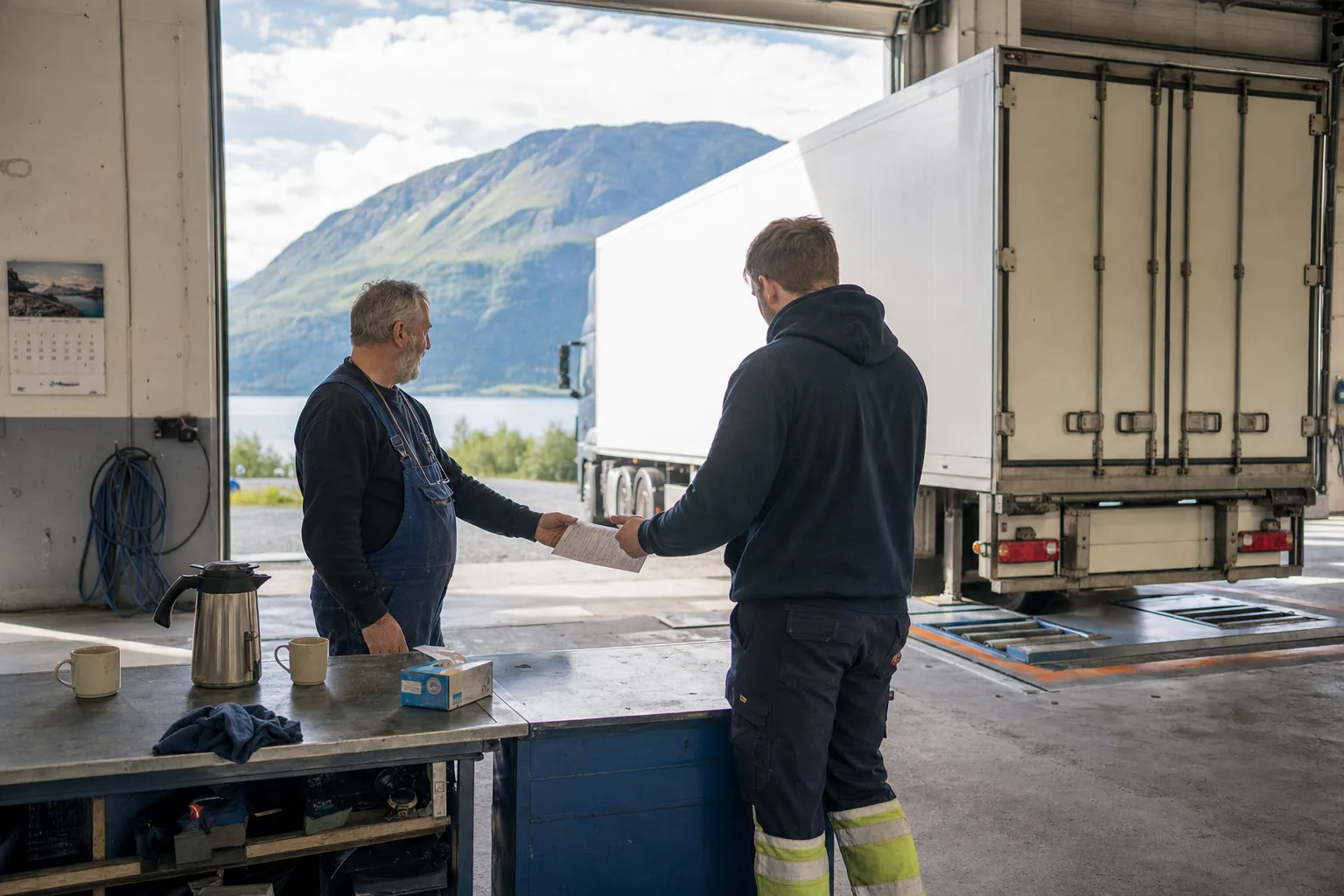
- At the brake inspection of heavy vehicles, each unit is measured separately. The rules set one minimum requirement for the tractor unit and one for the trailer.
- The table of requirements in the EU directive on periodic roadworthiness tests has no upper limit and no requirement that tractor unit and trailer brake equally.
- Markus “Webasto” Myrvold’s articulated lorry was approved at a workshop the week before the fatal crash in Lofoten in 2015. The trailer achieved 82 per cent braking force and the tractor unit 55, according to NRK.
- Myrvold was convicted of negligent homicide. The judgment is final and enforceable. He believes the trailer was over-braked and skidded out.
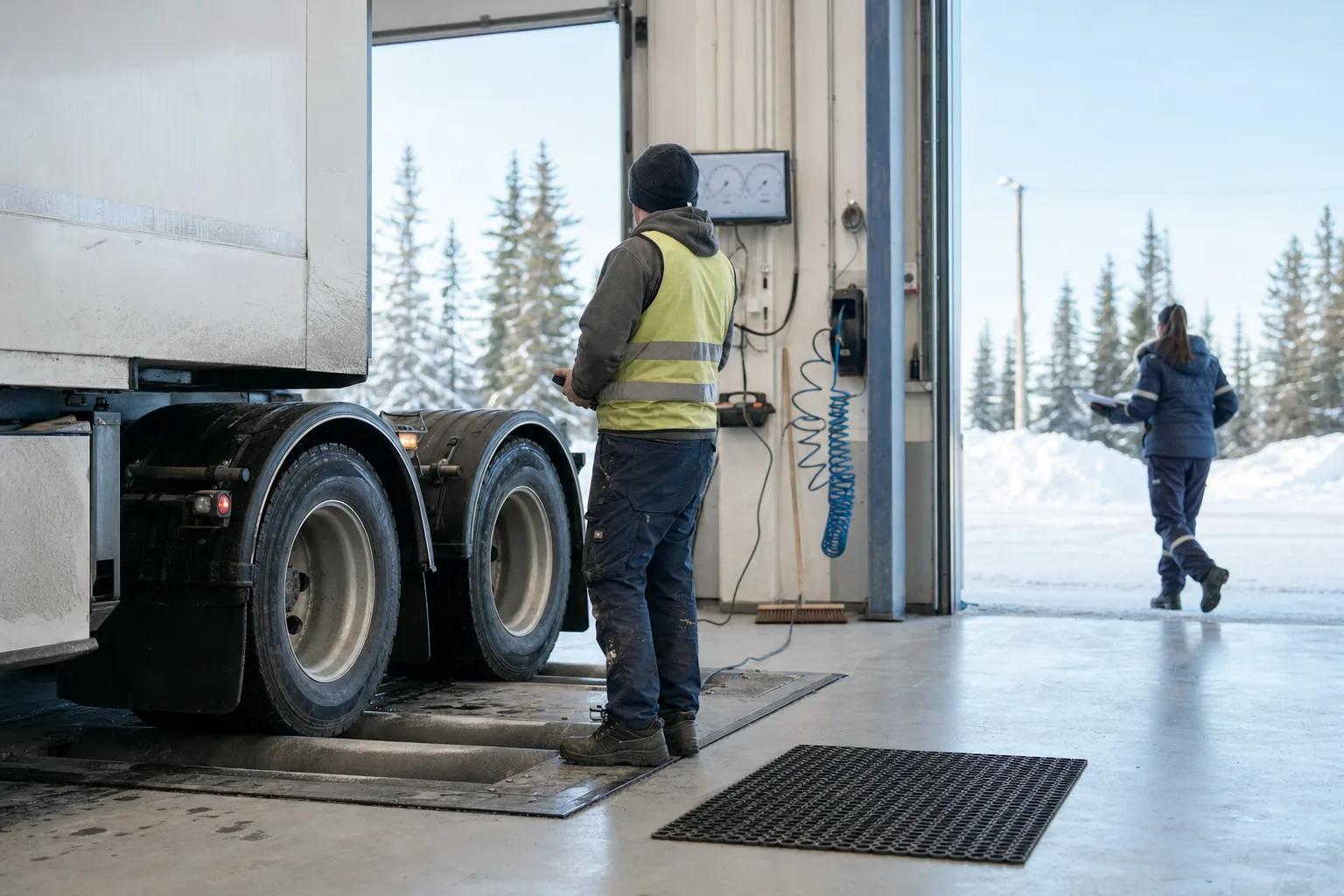
Lorries and large trailers must go through the annual roadworthiness test, known in Norway as the EU inspection. The brakes are tested on a roller brake tester, where the wheels are driven round on rollers in the floor while the braking force is measured axle by axle. How the test is carried out, and why it is disputed, we have explained in How the roller brake test works – and the criticism. This article is about something else: what an approved result actually tells you. It belongs to the series Brake Deaths.
What the stamp means
The requirements are set out in the EU directive on periodic roadworthiness tests, which Norway follows through its regulations on periodic vehicle inspection. For a lorry first registered after 1 January 2012, the braking force must be at least 50 per cent of the maximum permissible mass. For a semi-trailer the requirement is 45 per cent. For older vehicles the requirements are slightly lower.
The figures are minimum requirements. The table has no upper limit, and it says nothing about the tractor unit and the trailer braking roughly equally hard. Each unit is measured on its own, and each unit is approved on its own. The Norwegian Public Roads Administration has acknowledged to NRK that the roller tests do not show how the braking force is distributed between them.
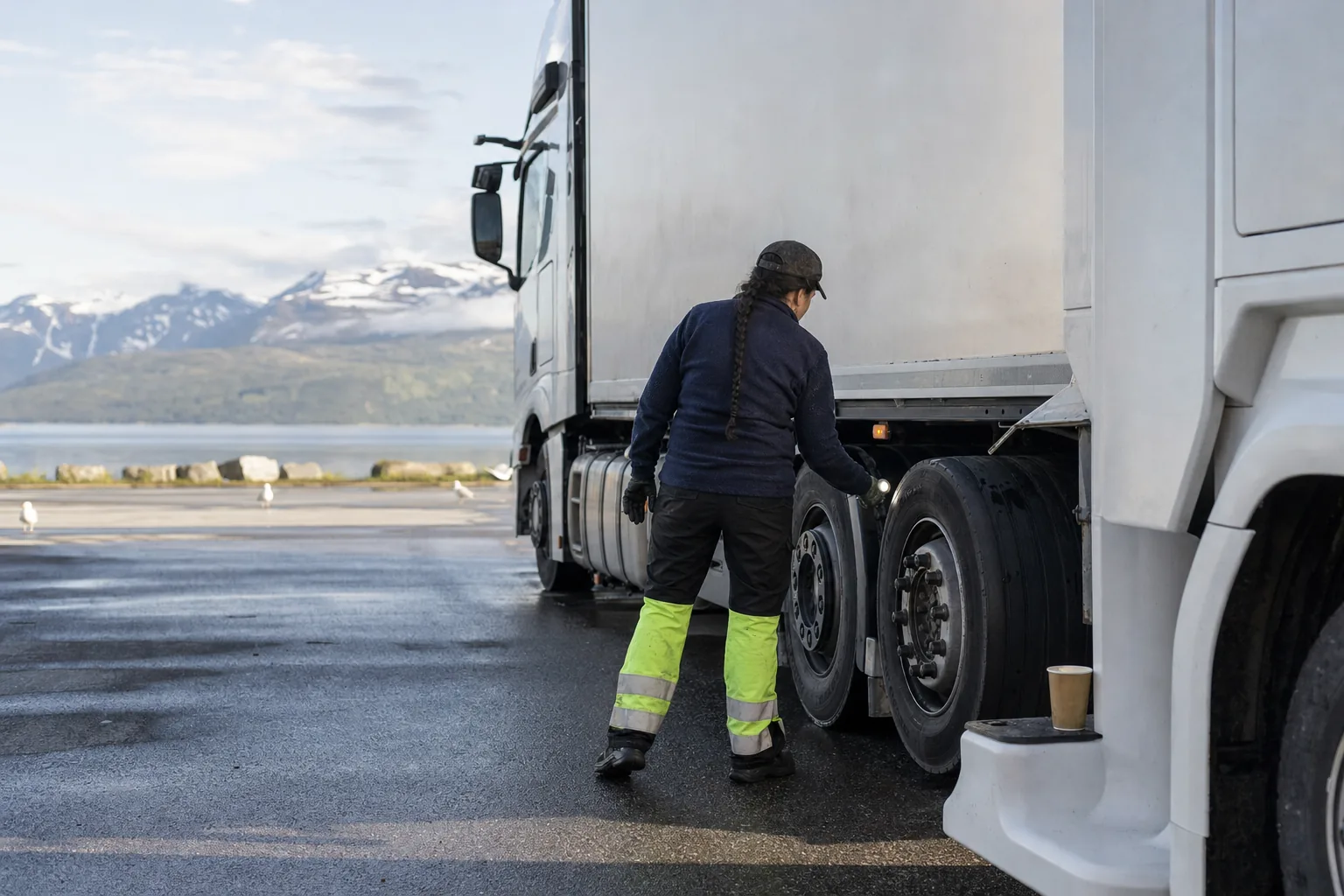
That matters on the road. If the trailer brakes much harder than the vehicle pulling it, the trailer’s wheels can lock, especially when it is lightly loaded and the road is wet. The trailer can then skid out to the side. This is known as overbraking.
The articulated lorry in Lofoten
Markus “Webasto” Myrvold was 23 when his articulated lorry collided with a car at Torvdalsvatnet in Lofoten on 2 July 2015. The driver of the car, a mother, was killed. A week earlier the lorry had been in a workshop. The brakes were repaired and inspected, and the lorry was approved.
According to NRK, which has gone through the results, the tractor unit achieved 55 per cent braking force and the trailer 82 per cent – almost twice the requirement. Both were approved. Myrvold himself remembers the trailer’s figure as 88 per cent.
I had an articulated lorry that was stamped as approved for the road. And then this happens.
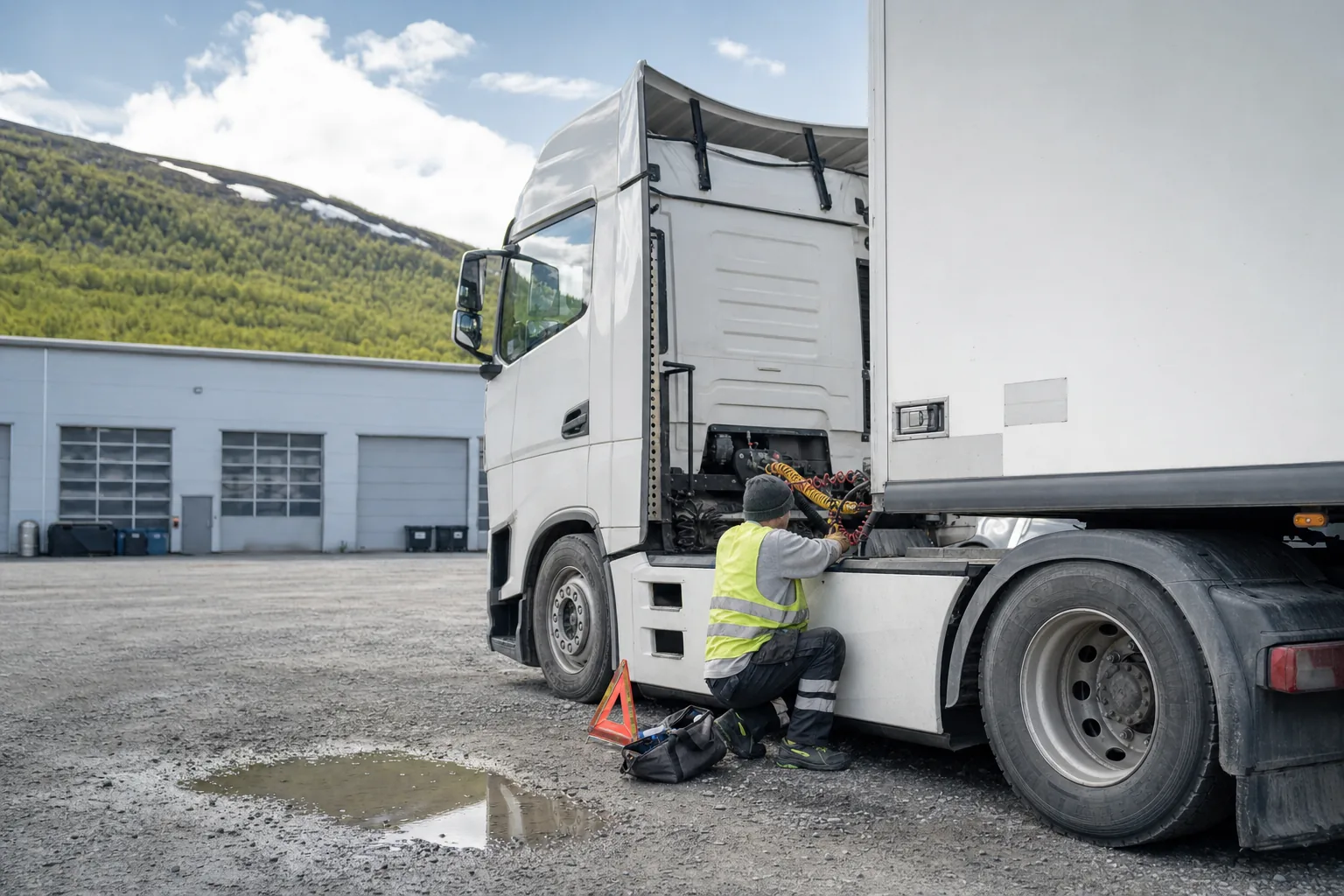
In the years after the verdict he did not think about the brakes. Only when NRK Brennpunkt got in touch, and he heard about the whistleblower Helge Andersen, did he begin to see the case differently. Andersen has warned about the roller tests for more than 20 years, as we tell in The man who would not give up.
It never occurred to me that it was the brakes.
The court saw it differently
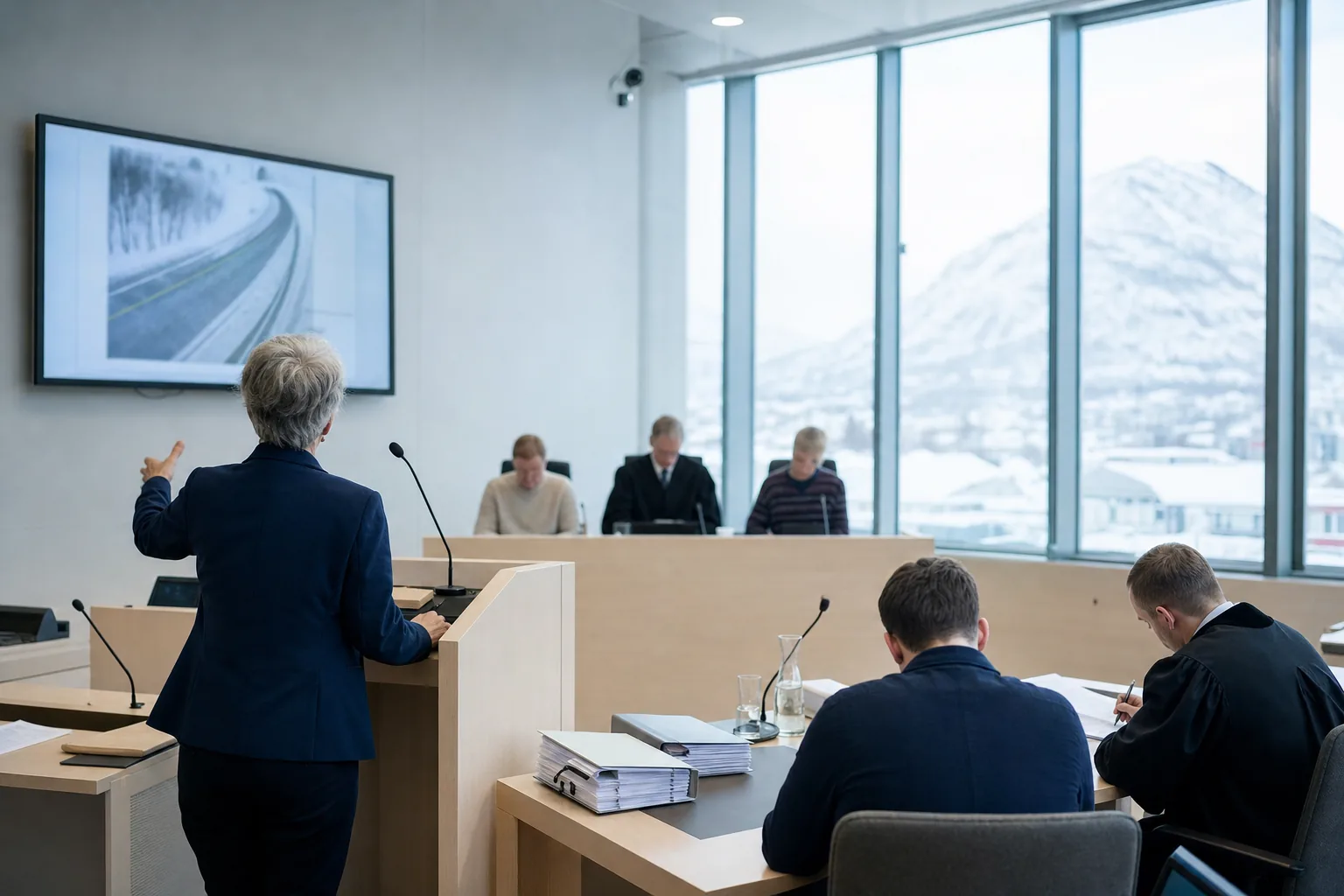
The courts did not accept the brakes as the cause. Lofoten District Court convicted Myrvold of negligent homicide in 2016, and Hålogaland Court of Appeal reached the same result. According to NRK, the court found that the whole lorry had been in the wrong lane and that he steered to get back. How the witness and the experts were assessed, you can read in Two explanations for the bend at Torvdalsvatnet.
In June 2023 the lawyer Sigurd Klomsæt submitted a petition to reopen the case to the Criminal Cases Review Commission, with technical assessments from Helge Andersen and another former employee of the Public Roads Administration. According to Klomsæt, the commission has rejected the petition. We have not seen the decision.
Read more about Markus’ case here: “A week earlier the lorry had been approved”. The story is about the fatal crash in Lofoten in 2015, the conviction for negligent homicide and the brake inspection the week before.
Supporting members
Support Justice for All Norway from abroad
Membership of the association is open to people living in Norway. International supporting memberships are on their way, so that you can support our work wherever you live.
Become a supporting memberComing soonRead more
- Part 2: “A week earlier the articulated lorry had been approved” – Markus “Webasto” Myrvold on the fatal accident in Lofoten
- Part 1: The man who would not give up – the whistleblower Helge Andersen and the brake tests
- Part 3: The lawyer who drove an articulated lorry – Sigurd Klomsæt on the drivers who are blamed
- More articles on the case: Two explanations for the bend at Torvdalsvatnet · Who is responsible when the brakes fail? · – I know what kind of hell is waiting
- From part 1: How the roller brake test works – and the criticism · Convicted over a fatal crash – acquitted 13 years later
- Topic pages: Brake Deaths · The courts · Public administration and NAV
- The film interviews: Markus’ story · Helge Andersen: Brake Deaths · Gunnar Waagestad
- NRK Brennpunkt: “Kollisjon” (Collision, NRK TV, in Norwegian)
- Become a supporting memberComing soon
Sources
- Directive 2014/45/EU on periodic roadworthiness tests, Annex I point 1.2.2 (EUR-Lex)
- Regulations on Periodic Inspection of Vehicles (Lovdata)
- Norwegian Public Roads Administration: Roadworthiness test (EU-kontroll)
- NRK (19.12.2022): Lorry driver convicted of negligent homicide. But what if it was the articulated lorry’s fault, not the driver’s?
- Nordlys: Tromsø man convicted of negligent homicide of mother of two after traffic accident (Lofoten district court)
- NRK (12.6.2023): Applies for reopening after Markus Myrvold was convicted of homicide
- NRK (8 November 2022): Fatal accidents on Norwegian roads may be caused by faults in articulated lorry brakes that inspections do not always detect
- NRK Brennpunkt: “Kollisjon” (12.10.2022)
- The Storting (the Norwegian Parliament), Document 15:762 (2022–2023): written question on brake inspections, answer 3 January 2023
- Justice for All Norway: Brake failure, fatalities and miscarriages of justice – Markus’ story (film interview, Dec. 2025)
- Justice for All Norway: Topic Brake Deaths
Quotes translated from Norwegian.
Supporting members
Support Justice for All Norway from abroad
Membership of the association is open to people living in Norway. International supporting memberships are on their way, so that you can support our work wherever you live.
Become a supporting memberComing soon