News · Explained · The courts and the judges
Who is responsible when the brakes fail?
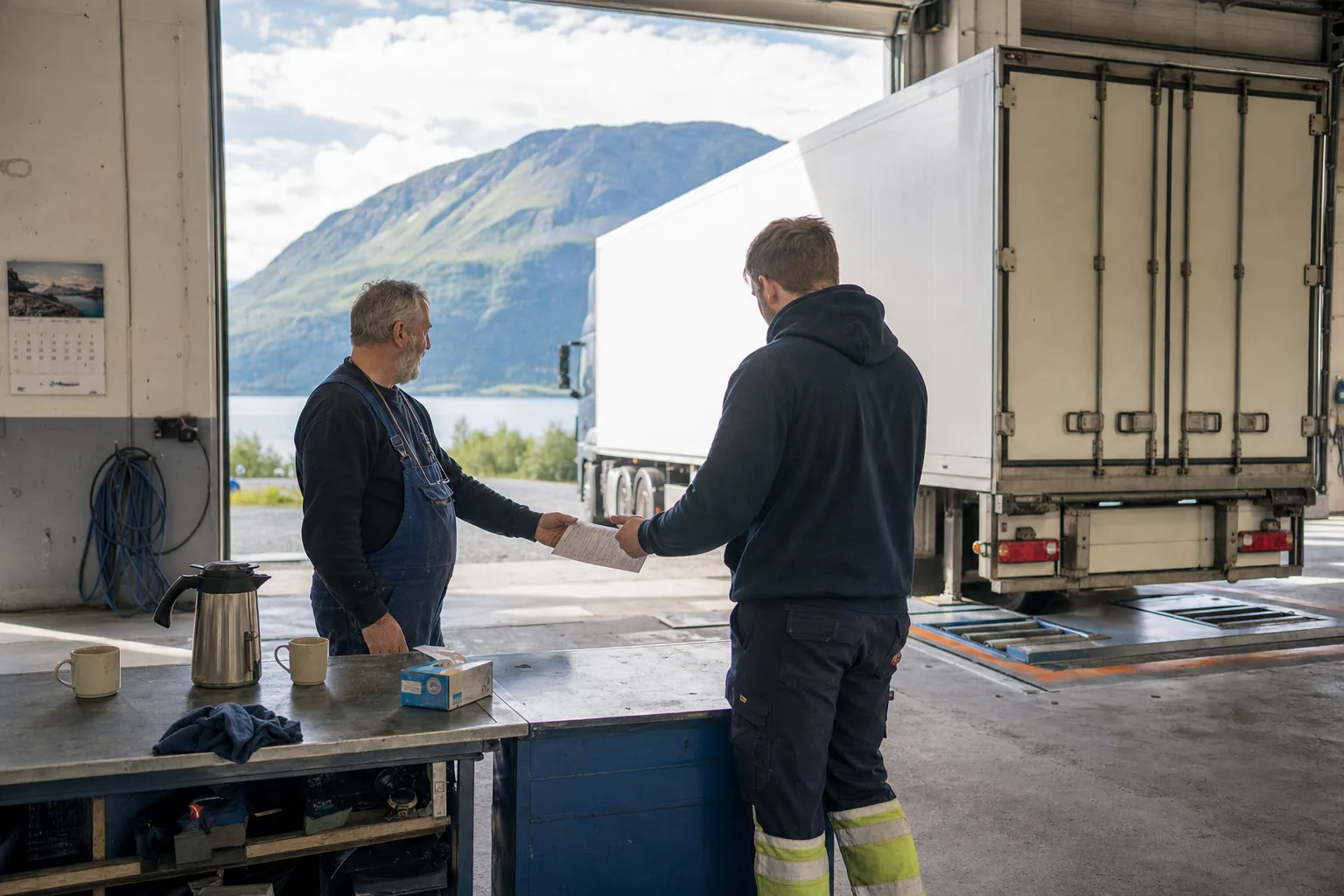
The workshop inspects the brakes, the Norwegian Public Roads Administration (Statens vegvesen) decides how, and the driver drives. If something goes wrong, it is the driver who is held responsible under the law.
In brief
- According to section 23 of the Road Traffic Act (vegtrafikkloven), no one may drive a vehicle that is not in a roadworthy condition. The driver is responsible.
- Lorries and trailers must go through the EU inspection every year. The inspection is carried out by workshops and inspection bodies approved by the Norwegian Public Roads Administration.
- The driver can check what can be seen and heard, but cannot measure the braking force or the balance between lorry and trailer himself.
- The Minister of Transport has pointed out that the driver must ensure that the vehicle is correctly coupled.
Who is to blame when a trailer swings out and the brakes had been approved? The question comes up again and again among the drivers in the series Brake Deaths. The answer in law is simple. Reality is not. The regulations belong to what we write about under the public administration, because it is the Norwegian Public Roads Administration that decides how the inspection is to be carried out.
What the law says
Section 23 of the Road Traffic Act (vegtrafikkloven) states that no one may drive a vehicle that is not in a roadworthy condition. The driver is responsible for this. The Vehicle Regulations (kjøretøyforskriften) set the technical requirements, including for brakes, and the Regulations on periodic inspection of vehicles govern the annual roadworthiness test (EU inspection) for heavy vehicles.
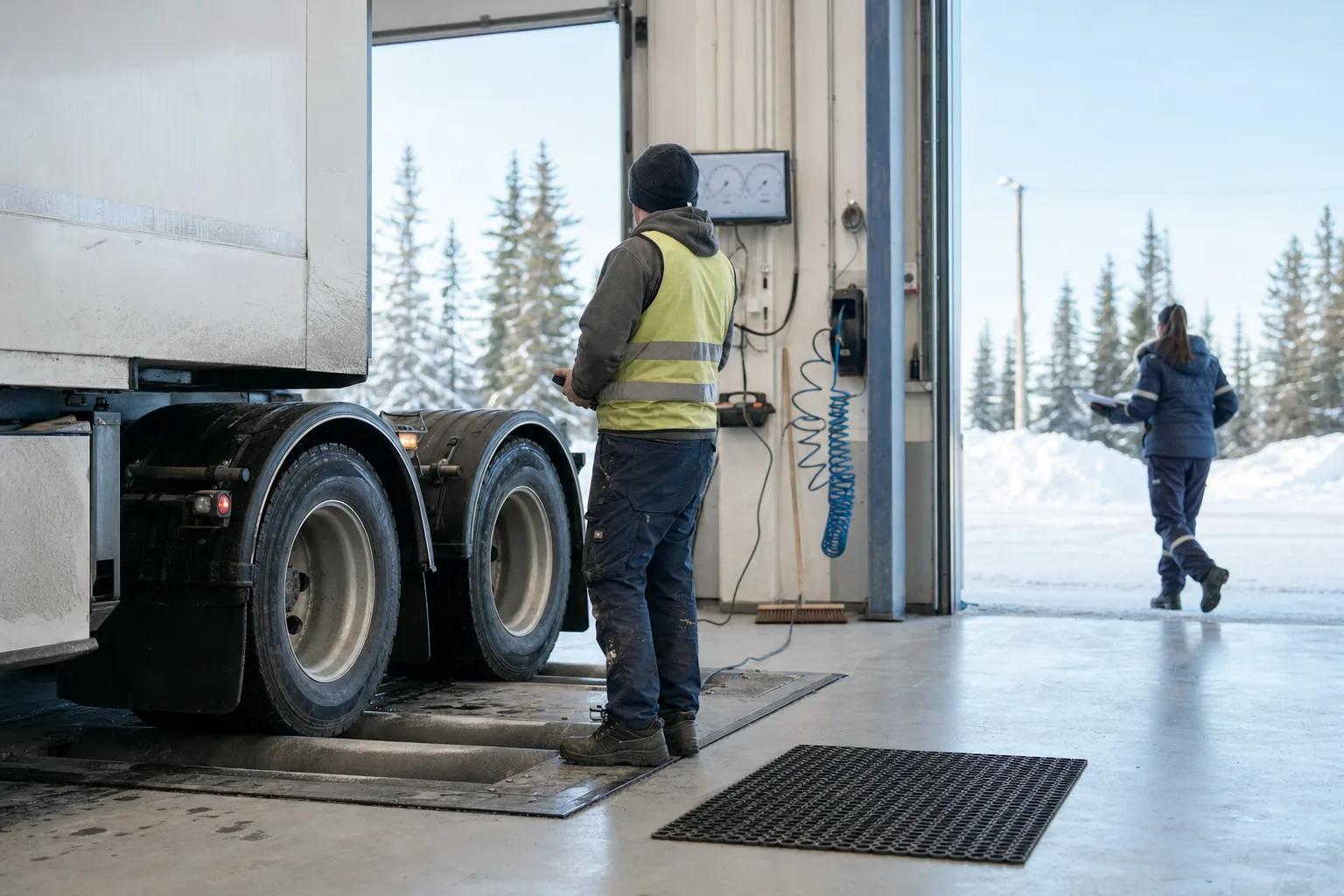
The inspection is carried out by workshops and inspection bodies approved by the Norwegian Public Roads Administration. The brakes are mainly measured on roller brake testers, and tractor unit and trailer are inspected separately. The Norwegian Public Roads Administration also inspects vehicles out on the road and at its inspection stations.
What the driver can see – and cannot see
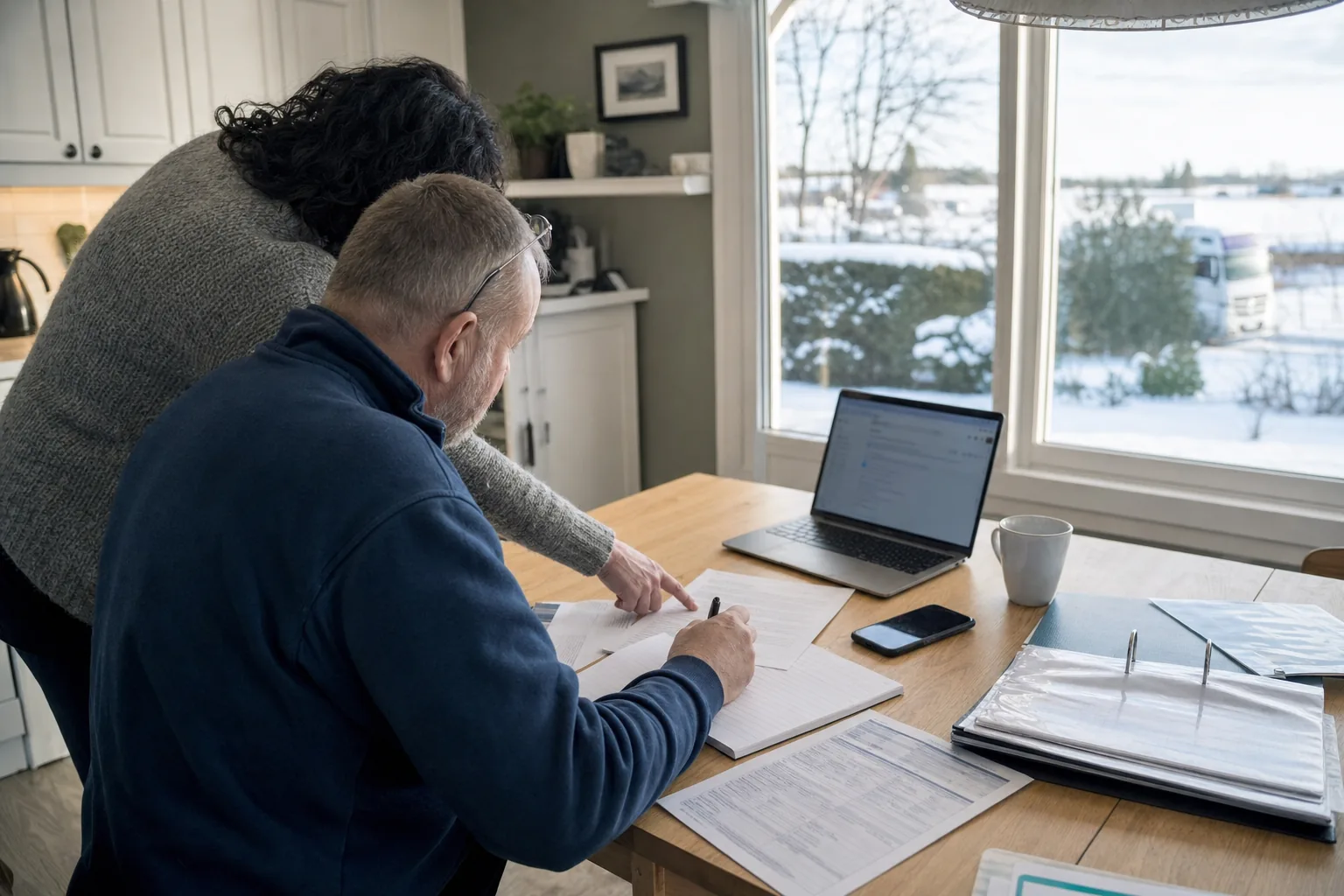
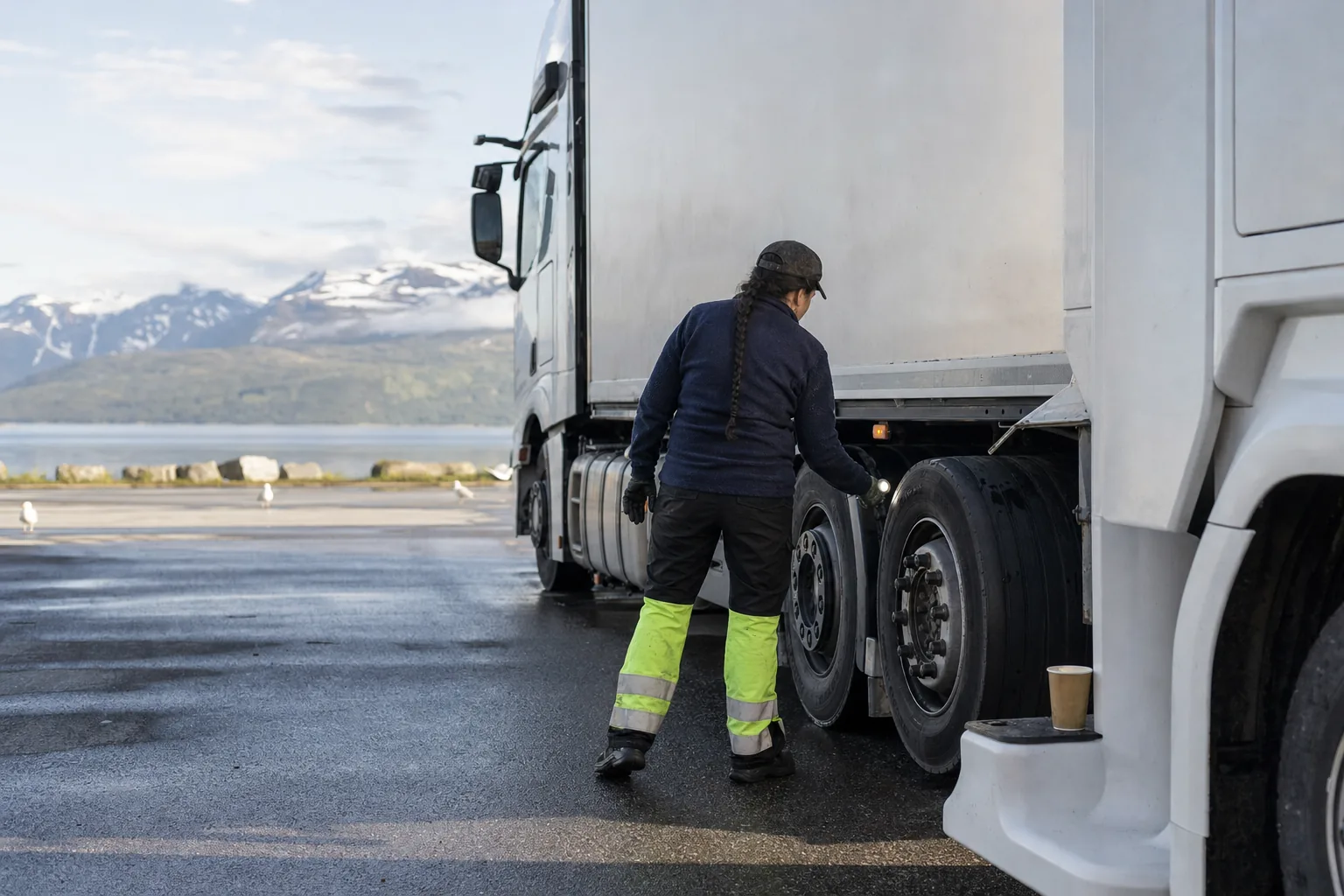
Before setting off, a professional driver walks round the vehicle: lights, tyres, couplings, air hoses and leaks. What can be seen and heard, he can check. He cannot measure the braking force, nor how it is distributed between the lorry and the trailer. There he has to trust the workshop and the paper he takes with him.
Markus “Webasto” Myrvold was convicted of negligent homicide after a fatal crash in Lofoten in 2015. The lorry had been approved at a workshop the week before. He points to what he sees as a lopsided responsibility: the workshop inspects and adjusts the brakes. The driver is not a mechanic.
And if they write OK, stamp it as approved, then we have to trust it.
What an approved result actually says, and what it does not, we have gone through in Approved one week before the fatal accident. The haulier Gunnar Waagestad describes the same thing from the owner’s side in the film interview with Justice for All Norway: the authorities decide how the inspection is done, the workshops carry it out, but if something goes wrong, the driver stands alone.
If you believe the inspection has given a wrong result, there are ways to proceed. We have written about that in Vehicle taken off the road after a brake test? What you can do.
Read more about Markus’ case here: “A week earlier the lorry had been approved”. The story is about the fatal crash in Lofoten in 2015, the conviction for negligent homicide and the brake inspection the week before.
Supporting members
Support Justice for All Norway from abroad
Membership of the association is open to people living in Norway. International supporting memberships are on their way, so that you can support our work wherever you live.
Become a supporting memberComing soonRead more
- Part 2: “A week earlier the articulated lorry had been approved” – Markus “Webasto” Myrvold on the fatal accident in Lofoten
- Part 1: The man who would not give up – the whistleblower Helge Andersen and the brake tests
- Part 3: The lawyer who drove an articulated lorry – Sigurd Klomsæt on the drivers who are blamed
- More articles on the case: Approved one week before the fatal accident · Two explanations for the bend at Torvdalsvatnet · – I know what kind of hell is waiting
- From part 1: How the roller brake test works – and the criticism · Convicted over a fatal crash – acquitted 13 years later
- Topic pages: Brake Deaths · The courts · Public administration and NAV
- The film interviews: Markus’ story · Helge Andersen: Brake Deaths · Gunnar Waagestad
- NRK Brennpunkt: “Kollisjon” (Collision, NRK TV, in Norwegian)
- Become a supporting memberComing soon
Sources
- The Road Traffic Act (Lovdata)
- The Vehicle Regulations (Lovdata)
- Regulations on Periodic Inspection of Vehicles (Lovdata)
- Norwegian Public Roads Administration: Roadworthiness test (EU-kontroll)
- The Storting (the Norwegian Parliament), Document 15:762 (2022–2023): written question on brake inspections, answer 3 January 2023
- NRK (8 November 2022): Fatal accidents on Norwegian roads may be caused by faults in articulated lorry brakes that inspections do not always detect
- Justice for All Norway: Brake failure, fatalities and miscarriages of justice – Markus’ story (film interview, Dec. 2025)
- Justice for All Norway: Topic Brake Deaths
Quotes translated from Norwegian.
Published 21 November 2026 at 12:00 · Updated 21.11.2026
About AI in our articlesSupporting members
Support Justice for All Norway from abroad
Membership of the association is open to people living in Norway. International supporting memberships are on their way, so that you can support our work wherever you live.
Become a supporting memberComing soon