News · The Orderud case · Miscarriages of justice and reopening
Four convicted, nobody knows who fired the shots
Evidence that is to be reviewed many years after a conviction must be traceable from where it was found to the courtroom and on to the store. In the Orderud case, it is precisely the chain of evidence that is disputed: a tree root that was two pieces in court was six pieces twenty years later.

In brief
- Anne Orderud Paust and her parents were shot dead at Orderud farm in Sørum in May 1999.
- In 2002 Eidsivating Court of Appeal convicted four people of complicity in murder. Who fired the shots was never established.
- On 17 June 2024 the Norwegian Criminal Cases Review Commission unanimously rejected the petition from Per and Veronica Orderud for the case to be retried.
- Lawyer Arvid Sjødin believes the conviction rests on statements that do not hold up under the ECHR, and questions a root exhibit shown in the court of appeal.
- In 2023 the Bureau for the Investigation of Police Affairs dropped a police report against a former Kripos officer. He has rejected the allegations.
When a criminal conviction is to be reviewed, it is often the physical evidence that decides the matter. The Criminal Cases Review Commission can reopen a case where, among other things, new evidence or a new circumstance comes to light that appears likely to lead to an acquittal (section 391 no. 3 of the Criminal Procedure Act). But evidence is only as strong as its documentation: who found it, how it was secured, and where it has been since. The police must record everything that is relevant as evidence. Norwegian lawyers call this “notoritet”: a verifiable record.
The Orderud case shows what happens when there is doubt about the chain of evidence. During the night of 23 May 1999, Anne Orderud Paust and her parents, Marie and Kristian Magnus Orderud, were shot dead at the Orderud farm in Sørum. Four people were convicted of complicity in the killings. Neither the investigation nor the trials have established who fired the shots.
What has been decided
Nes District Court convicted all four in 2001. On appeal, Eidsivating Court of Appeal found in 2002 that all four were guilty of complicity in premeditated murder. Per and Veronica Orderud were sentenced to 21 years in prison, Lars Grønnerød to 18 years and Kristin Kirkemo to 16 years. The couple have always denied guilt. They were released in January 2015, after almost 16 years.
The case has since been before the Criminal Cases Review Commission several times. Grønnerød petitioned for reopening in 2006 and was unanimously refused in 2010. He died in 2019. Per and Veronica Orderud submitted a petition in 2005 but withdrew it in February 2012, according to News in English. The next came in June 2018. Six years later, on 17 June 2024, the Commission unanimously rejected it. None of the conditions for reopening were met, and the decision was in line with the prosecuting authority’s recommendation.
When the decision came in 2024, the public prosecutor in the case told Dagbladet that the convictions can stand, but that there are still unanswered questions, including who carried out the killings.
“So wrong from the outset”
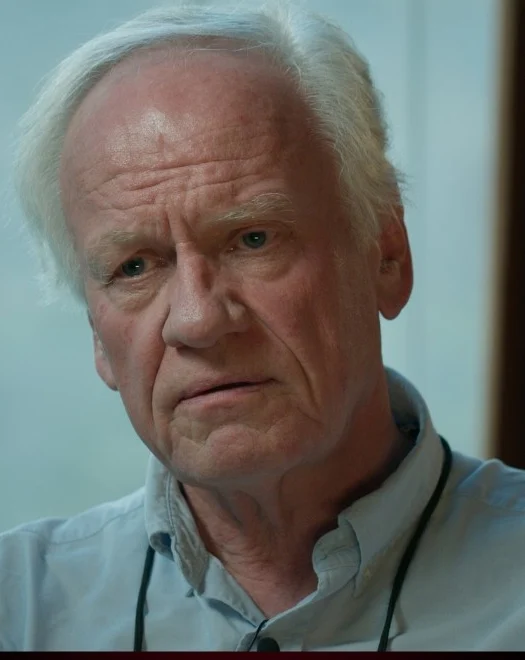
Lawyer Arvid Sjødin is Per Orderud’s defence counsel and has worked on the case together with private investigator Tore Sandberg. In the film interview with Justice for All Norway in May 2025, he goes through what he sees as the errors in the case. The case has not been reopened, and the convictions stand. But it shows how difficult it is to have evidence reviewed once a conviction is final – one of the themes we collect under the rule of law.
That case is so wrong from the outset, because international rules have not been followed.
In Sjødin’s view, the central issue in the case is the weapon: who obtained it, and who used it. According to his review, the claim that Per and Veronica Orderud asked for a weapon rests on the statements of two of the other convicted persons. The couple have denied it from the very first day.
But they deny it. They have never done it.
He refers to the presumption of innocence in Article 6(2) of the European Convention on Human Rights. As Sjødin reads the provision, the court may only disregard the accused person’s statement if it has been proved beyond reasonable doubt that it is untrue. Here, as he sees it, the opposite was done: two other people’s statements were preferred to the couple’s own.
This is Sjødin’s legal assessment. The court of appeal and the Criminal Cases Review Commission have not shared it. How much weight statements can be given when nobody can hear them again is something we have written about in When credibility decides, and nobody can hear it again.
The root from Vestengbrua
In Eidsivating Court of Appeal in 2002, images were shown of two pieces of root from an area near Vestengbrua in Ski. A projectile was said to have been found in the root. According to Sjødin, the crime scene technician told the court that the projectile matched the projectiles from the farm cottage at Orderud.
In the summer of 2022, Tore Sandberg was allowed to see the pieces of root. By then there were five. He and an investigator from the Criminal Cases Review Commission found no visible traces of shots in them, Dagbladet reported. According to the newspaper, the forensic unit of Oslo Police District later reported traces of lead on piece number five. A sixth piece, which came from Kripos, had traces of lead and copper. The report concluded that the damage to piece six was probably a continuation of the damage to piece five.
Sjødin finds it inexplicable that a piece which, according to his information, is not mentioned in any document turns up more than 20 years after the conviction. Under the Police Instructions, everything that is relevant as evidence must be recorded. About this piece, according to Sjødin, there is not a word.
Yes, well, I can’t prove it one hundred per cent, but everything points to it, when you see that a piece of root turns up, 20 years later, that hasn’t been mentioned anywhere, in any system.
The former Kripos officer who presented the root evidence in the court of appeal has rejected the allegations. “What I presented in court is the truth. The allegations are absurd”, he told Dagbladet in February 2023. He explained that the root was X-rayed and then split, and that the projectile was found at that point.
Per Orderud reported the officer to the Norwegian Bureau for the Investigation of Police Affairs. The Bureau dropped the case without investigation in April 2023, Dagbladet reported. There were insufficient grounds to believe that he had knowingly given false testimony or fabricated evidence, the decision stated. Sjødin called the decision unfounded. According to him, the appeal was also rejected.
A commission that does not talk to witnesses
In the interview, Sjødin states that he has asked the Criminal Cases Review Commission for DNA tests that could show whether the sixth piece belongs with the others. Experts at the agricultural university at Ås are to assist, and according to him the East Police District has agreed to take part. We have not found any published result of these tests.
He also refers to information that entered the case documents after the trials, including from a prison officer. In his view it points to people other than those convicted having taken part in the killings. Justice for All Norway has not seen these documents. The problem, as Sjødin describes it, is that the Commission does not interview the witnesses itself:
So then they won’t find out.
Why the prosecuting authority has not supported reopening, he has a simple answer to: people in the system do not want to be shown to have made mistakes.
So we have a prosecution system in Norway that readily lets innocent people sit in prison, and lets them live the rest of their lives with the guilt of having committed very serious acts.
He is not alone in criticising the Commission. Lawyer Sigurd Klomsæt has raised the same question in the interview From lorry driver to defender of drivers, and the Baneheia Committee has produced a separate report on how reopening should work. How evidence is tested – and when it fails – is gathered in Evidence in criminal cases: when oversight fails.
Open questions
- How did two pieces of root in 2002 become six pieces in 2022, and is there a written log of who has handled them?
- What did the DNA tests of the pieces of root show, if they have been carried out?
- How did the Criminal Cases Review Commission assess the root evidence in its 2024 decision?
- Why does the Commission not interview witnesses itself in cases where new information comes from witnesses?
See the full film interview with Arvid Sjødin.
Norway is ranked the world’s second-best state governed by the rule of law. How that fits with the cases our members tell us about can be read in Silver for the rule of law, and a crisis of trust. Do you have your own experience with the police, the prosecuting authority or the courts? Become a supporting memberComing soon.
Read more
- The big story: “There is no oversight at all” – lawyer Arvid Sjødin on the rule of law
- The series: When credibility decides, and nobody can listen to it again
- The series: Called “Norway’s most dangerous woman”. Now her lawyer wants the case retried
- The series: Evidence in criminal cases: when oversight fails
- Topic page: The prosecuting authority · The courts · The police and investigations
- The film interview: The rule of law behind the façade – Arvid Sjødin
- Sources: NOU 2026: 3 (regjeringen.no) · NOU 2024: 24 Prøvd på nytt (Tried again) · Store norske leksikon: The Orderud case · Dagbladet on the root evidence · HR-2019-1747-U
- Become a supporting memberComing soon
Sources
- Justice for All Norway: The rule of law behind the façade – Arvid Sjødin (film interview, 30 May 2025)
- Store norske leksikon: The Orderud case
- Dagbladet (1 February 2023): Complete confusion about evidence
- Dagbladet (22 April 2023): Will not investigate
- Dagbladet (23 November 2023): Will stop only at an Orderud acquittal
- Dagbladet (17 June 2024): The decision is in
- News in English (14 February 2012): Orderuds withdraw new trial request
- European Convention on Human Rights Article 6 (Human Rights Act, Lovdata)
- The Norwegian Criminal Cases Review Commission
Quotes translated from Norwegian.
Supporting members
Support Justice for All Norway from abroad
Membership of the association is open to people living in Norway. International supporting memberships are on their way, so that you can support our work wherever you live.
Become a supporting memberComing soon