News · Whistleblowing in the police · Whistleblowing and whistleblowers
What Vigdis Bollerud put before Oslo District Court
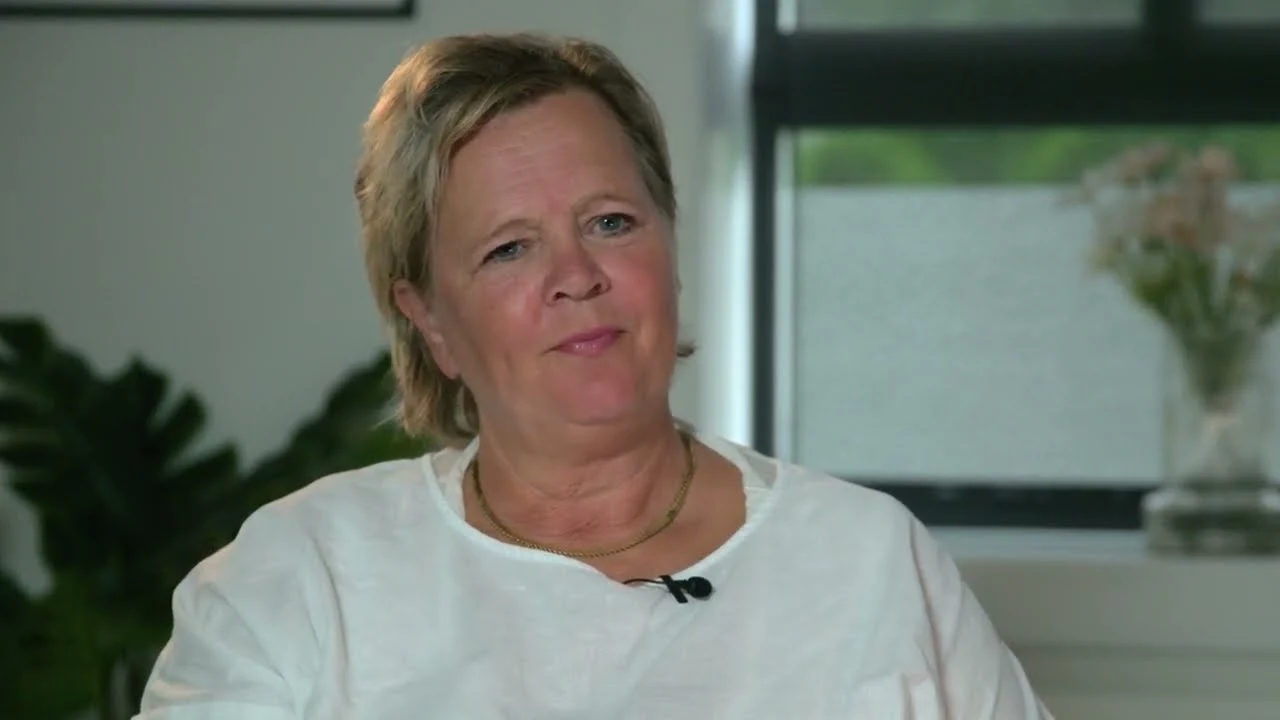
For two and a half hours the police whistleblower gave evidence to the court about her dismissal from the South-East Police District. She went through ten years of whistleblowing reports, police reports and replies from the authorities. The state says the case is about something else: her posts on social media. Judgment has not been delivered.
In brief
- Vigdis Bollerud was dismissed by the South-East Police District in 2024. The dismissal was based on her posts on social media. She believes it is retaliation for blowing the whistle and has sued the state.
- In court she presented a number of documents: a reply from the Norwegian Bureau for the Investigation of Police Affairs stating that none of her reports had been investigated, a public prosecutor who called the registration of the reports “open to criticism”, and a reply from the whistleblowing ombud stating that it does not investigate cases that are before the courts.
- She explained that around half of the posts the employer attached to the case date from before May 2023 – the period the chief of police had said the dismissal would be based on.
- In a decision from April 2026 the Tax Administration allowed a deduction of almost NOK 3.7 million in legal costs as costs related to her employment income, according to the decision she showed the court.
- The state's lawyer confronted her with her posts. The employer believes they stem from a private conflict and are not objective contributions to a debate. HR explained that the proposal to dismiss came from HR, not from the police management. Judgment has not been delivered.
The police whistleblower Vigdis Bollerud has sued the state over her dismissal from the South-East Police District in 2024. The case was heard in Oslo District Court in October. She is asking for the dismissal to be declared invalid, and she is claiming compensation and redress. The state maintains that the dismissal was correct and relies on section 26(d) of the Civil Service Act. It allows dismissal when a civil servant “through improper conduct in or outside the service shows himself or herself unworthy of the position or undermines the respect or trust necessary for the position or the service”.
Judgment has not been delivered. Many people have asked us what was actually put before the court. Here we set out the main points of Bollerud's own evidence, her testimony as a party, and the questions she was asked by the state's lawyer. We have listened to a recording of her entire evidence. Recordings from a courtroom cannot be reproduced as they are, and we do not publish it. The quotations are short and verbatim.
What the employer says
Before we come to Bollerud's documents: the employer's reasons are set out in the dismissal case, and Bollerud read them aloud in court herself. They state that her posts are not objective contributions to a debate about the police, but relate mainly to a private conflict with a former partner and to how the police have handled her reports.
Instead, they are rooted in her personal dissatisfaction at not having succeeded with her police reports, whistleblowing cases, requests for access to documents and other complaints related to the conflict.
The employer also refers to the police's ethical guidelines, under which employees who speak publicly must take account of the objectivity and impartiality needed for the public to trust the police. The district has received reactions to the posts both from the public and from within the service, according to the assessment. The state's lawyer told the court, according to NRK, that police employees have freedom of expression, including when they criticise their own employer, but that in the state's view the limits “have clearly been exceeded in this case”.
Bollerud began by objecting to what the state had said the day before: that she had made “untrue and grossly false accusations”. She asked for her objection to be entered in the court record.
My loyalty lies with the mission the police serve in society.
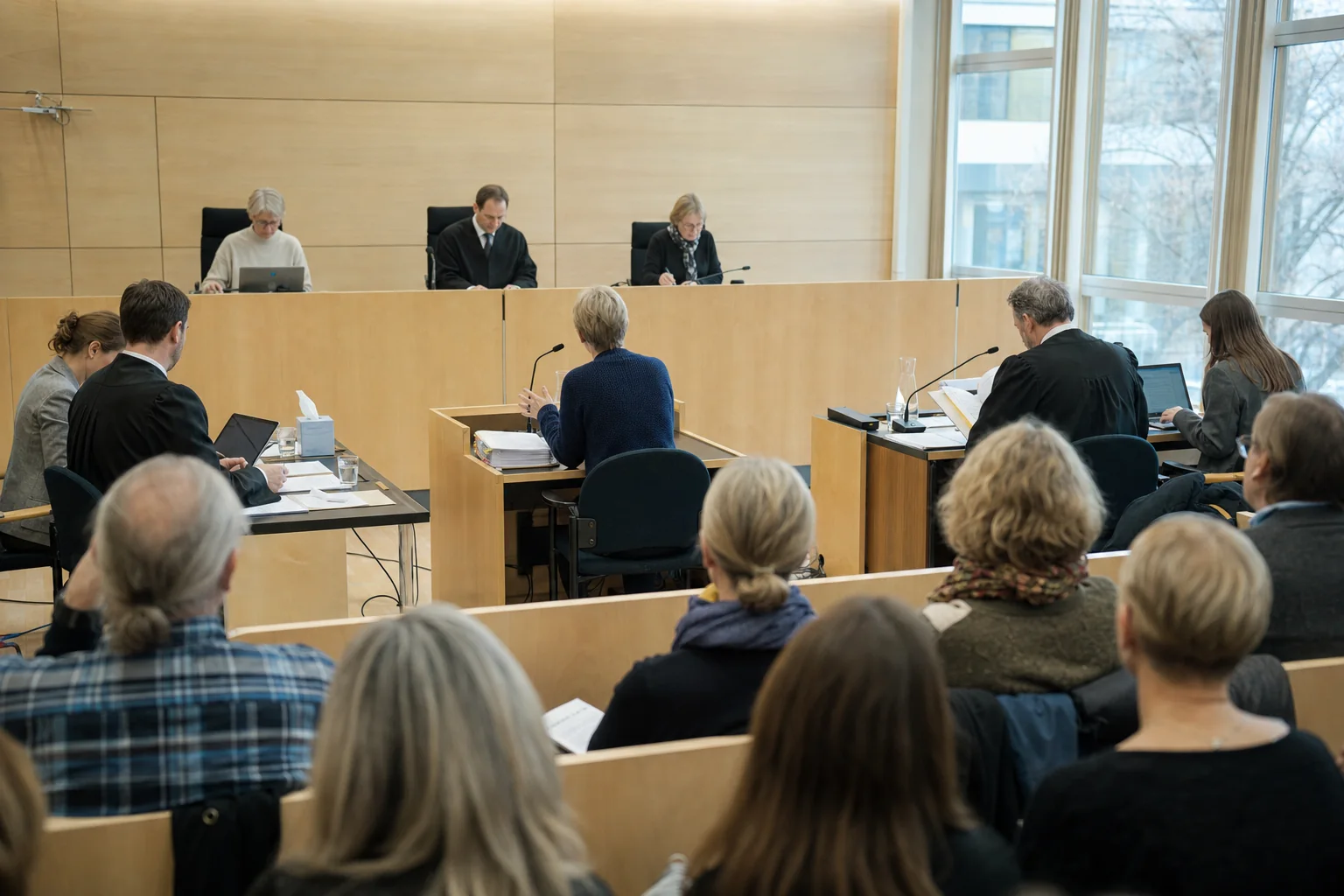
What Vigdis Bollerud put before the court
Most of her evidence was taken up with documents. Bollerud asked the court to turn to one document after another and read aloud from them. The points below are what she put before the court, with what she referred to. The courtroom was full, and several members of Justice for All Norway were present and saw the documents on the large screen along with everyone else in the room.
1. The reports and who decided on them
- 2016: Bollerud found what she believed was financial crime in the accounts of a security company in which she was herself a shareholder and board member. Behind the company was her former partner, a former police officer. She alerted the board and the auditor and later reported the matters to the police. The first police report is dated 24 August 2017. According to Bollerud, it ran to around 800 pages.
- 2017: A police officer in the economic crime section wrote in a report dated 4 September 2017 that the team in Buskerud would not investigate the case because they knew both parties.
- 2017: She asked the local union representative for support for a victim's lawyer before an interview. This was refused.
- 25 August 2020: The first written whistleblowing report went to the chief of police. He decided that it was not a whistleblowing report. Bollerud pointed out that the chief of police has himself told VG that he has overall responsibility for the investigation of organised financial crime in the district, and referred to the Director of Public Prosecutions' circular stating that the chief of police is responsible for the handling of criminal cases in the district. In her view, he thereby decided on a report about his own area of responsibility.
- 2022: She asked for a meeting with a state secretary at the Ministry of Justice. The reply was that whistleblowing reports concerning police districts are to be dealt with by the National Police Directorate, under guidelines of 2 November 2016: “The Ministry has no role in whistleblowing cases”.
- 26 September 2023: She was formally given whistleblower status. She learned of it from a journalist, not from the National Police Directorate. Dagbladet has documented that the status came after questions from the newspaper.
2. The police reports and what happened to them
- According to Bollerud, 23 reports were filed by 15 complainants between 2019 and 2022. All were dropped as civil matters linked to the conflict between her and her former partner, including those filed by people who were not part of that conflict. The cases were spread among 20 to 30 investigators and lawyers in the region.
- In 2022 the criminal cases were transferred to Oslo Police District, after Bollerud's new manager had contacted the Office of the Director of Public Prosecutions. A public prosecutor in Oslo reviewed the cases. In his written decision he states that errors had been made in registering the criminal cases, “which is open to criticism”. People who had been reported were not registered as suspects, and several reported matters had not been registered at all. The prosecutor gave weight to a report from the Financial Supervisory Authority of 2 July 2020 and asked the police to open an investigation.
- The investigation nevertheless ended with all the cases being dropped in Oslo too. She herself was called in for one interview, according to her evidence.
- On 16 November 2023 the Director of Public Prosecutions replied to a complaint that Oslo Police District was not genuinely investigating: “You are hereby informed that we will not take any action on the basis of your enquiry”.
- On 13 May 2024 the Norwegian Bureau for the Investigation of Police Affairs replied to her question about whether any police employees had been investigated for breaching the whistleblowing rules. The answer was that the Bureau has not opened an investigation into any of the cases she has reported to it. All had been dropped without investigation. Bollerud presented this because the state had said the day before that the Bureau and the Director of Public Prosecutions had reviewed the cases.
3. The dismissal and the posts
- According to Bollerud, the employer has mapped her posts on social media going back to August 2022. The chief of police decided that it was the posts after May 2023 that would form the basis for the dismissal.
- By her count, around half of the posts in the dismissal case date from before May 2023.
- One of the posts is dated 19 January 2024 in the documents. According to Bollerud's evidence it is from April 2023: it was reported to the police with an offence date of 12 April 2023, the case was dropped, and the post was discussed in a meeting with her managers on 10 May 2023. She believes the date is wrong, and that the post was nevertheless passed on to the appointments board.
- On 26 May 2023 the chief of police asked her to sell her shares in the security company, because the ownership could damage trust in the police. According to her evidence, she had been a shareholder since 2005, with approved permission for secondary employment.
- The security company lost its licence in 2023, after an inspection by the police district's administrative department. In Bollerud's view, it was the first genuine inspection of the company. The state's lawyer pointed to the same thing: that the inspection was carried out and the company lost its licence.
Well, then I think they have a terribly weak case.
That was Bollerud's answer when her own lawyer asked what she thought about the post with the disputed date having been sent to the appointments board.
4. After the dismissal
- In July 2024 she sent her case to the new whistleblowing ombud for the police. She was one of the first to be interviewed, on 12 November 2024. The ombud later confirmed in writing: “It is correct that the whistleblowing ombud does not investigate cases in parallel with their being in the court system”. In her view, the report was nevertheless dealt with and redefined, and the report concluded that there were no matters open to criticism.
- In February and April 2026 the Tax Administration dealt with a claim for a deduction for her legal costs. In its decision of 29 April 2026 she was allowed a deduction of almost NOK 3.7 million, recorded as legal assistance related to employment income, with effect back to 2017. Bollerud presented this as evidence that her employment had been under threat all along.
- On 29 September 2026, shortly before the trial, she was notified via Altinn that the prosecuting authority is reopening 19 cases in which she has been reported. She believes this is retaliation. Document reported on the reopening on 6 October 2026. Justice for All Norway has not seen the decision.
Bollerud's own assessment
What is set out above is what she presented. What follows is her assessment of it. She believes that for ten years the police and the prosecuting authority have turned serious police reports into civil disputes, and that the dismissal is the last of many reactions after she spoke up.
So I became a whistleblower in 2016, and I have blown the whistle through every channel for ten years without being heard.
She explained that she went public on social media on the advice of politicians she met at five meetings at the Storting between 2022 and 2025, and because in her view the media would not take up the case. In her view the posts are whistleblowing, and she has invoked necessity, because the matters she is reporting are serious.
That deserves no trust, and I really must be allowed to go out and say so.
The word corruption came late: “I didn't dare use a word like corruption until 2022.” In court she was also asked why she continued to write after the security company lost its licence. Her answer was that many cases were still open.
The state's questions
The state's lawyer spent most of his time on the posts. He read from one of them, in which Bollerud writes that she and her family have been subjected to “physical, psychological and financial violence” by the management of the South-East Police District for more than seven years, and asked what kind of physical violence she meant.
I haven't been physically beaten, but you do become physically ill.
The lawyer pointed out that in the posts she states that the police management has committed criminal acts, and asked whether it is not for the courts to decide that. “I have certainly not taken over the court's job”, Bollerud replied. She pointed out that she has worked in criminal investigation for 35 years.
He also asked about her roles: on Facebook she had stated that she was a police officer in the South-East Police District, and on X she had written “investigator in the police” and that she was writing in a private capacity. The lawyer argued that this links the employer to what she writes. Bollerud replied that the posts have no connection with her job. He also raised a post about the head of the administrative department after an accidental discharge at Kongsberg police station, and asked whether it was an objective contribution to a debate about the use of firearms. Bollerud believed it was.
In the civil case between her and her former partner, Borgarting Court of Appeal found that there was no basis for the allegations of financial crime, and that her persistence had to have a bearing on her credibility. Bollerud herself quoted this in court. She believes the Court of Appeal set her documentation aside and relied on the auditor's evidence.
The employer's witness
Among the state's witnesses was a senior adviser in the HR department of the South-East Police District. She handled the dismissal case and sat on the district's assessment group when Bollerud's whistleblowing report was assessed for the second time, in January and February 2023. The employer told the court that the proposal to dismiss came from HR, not from the police management. According to the senior adviser, it was HR that assessed the documentation and put the recommendation to the appointments board, although there was dialogue with the management along the way.
On the whistleblowing reports, she explained that the assessment group, like the chief of police, concluded that what had been presented concerned specific individual cases and dissatisfaction with how they had been handled, and that this belonged in other channels. According to HR, the employer has nevertheless treated Bollerud as a whistleblower. The meetings in spring and summer 2023 were originally meant to sort out her absence and her secondary employment. Social media came onto the agenda after a letter of concern from a lawyer. She found the meeting itself pleasant, and the local workplace functioned well. The problem, as HR understood it, was that Bollerud did not trust the district's management.
The senior adviser also said that the many requests for access to documents and the complaints became a heavy burden for the employees who had to answer them, and that it was unusual for this to be mentioned in a personnel decision. She was herself among the many employees who were reported to the Norwegian Bureau for the Investigation of Police Affairs after the first dismissal decision. The Bureau found no grounds for further investigation.
The law
Chapter 2 A of the Working Environment Act gives employees the right to report censurable conditions (section 2 A-1). Retaliation against someone who blows the whistle is prohibited, including dismissal (section 2 A-4). The section contains an important rule on the burden of proof: if the employee presents information giving reason to believe that retaliation has taken place, the employer must show that it is more likely than not that it has not. In the event of a breach, the employee can claim redress and compensation (section 2 A-5). How the protection works in practice is covered in The law forbids punishing whistleblowers. This is how the protection works.
For civil servants, section 26 of the Civil Service Act on dismissal also applies. The court must weigh freedom of expression, which is protected by Article 100 of the Constitution, against the duty of loyalty in the employment relationship. The question of who should decide on a report about the management itself is covered in Who decides on a report that concerns the management itself?
The case is awaiting judgment
Oslo District Court must now decide whether the dismissal was valid, and whether it was retaliation for whistleblowing. The court has not taken a position on anything Bollerud said, and none of those she has reported have been convicted of anything the case concerns. The largest police union has advised its members against whistleblowing since 2016. That story is told in The police's own union has advised against whistleblowing for ten years, and Vigdis Bollerud's case is also mentioned in the commentary Who cleans up inside the rule of law?
One of the witnesses in the case was Morten Wold, Member of Parliament for the Progress Party (Frp) and former First Vice-President of the Storting. He arranged her meetings at the Storting. Read the full account of what Morten Wold told the court.
- The main story: Varsleren fra innsiden (The whistleblower from the inside)
- The witness: What Morten Wold told the court
- The series: What can the Storting do for police whistleblowers? · The law forbids punishing whistleblowers · The police's own union has advised against whistleblowing for ten years
- The filmed interview: Police whistleblower Vigdis Bollerud
- More whistleblowers: The whistleblower investigated for a thumbs-up
- Topic page: Whistleblowing and whistleblowers · The police and criminal investigation
Have you blown the whistle yourself and suffered for it? Become a supporting memberComing soon, and share your experience with us.
Supporting members
Support Justice for All Norway from abroad
Membership of the association is open to people living in Norway. International supporting memberships are on their way, so that you can support our work wherever you live.
Become a supporting memberComing soonSources
- Recording of Vigdis Bollerud's evidence as a party in Oslo District Court, October 2026 (in Justice for All Norway's archive, not published)
- NRK: “Politivarsler saksøker staten for ugyldig oppsigelse” (Police whistleblower sues the state for unlawful dismissal), 13 October 2026
- Dagbladet: “Politivarsleren: – Blir ikke hørt” (The police whistleblower: “Not being heard”), 27 September 2023
- Dagbladet: “Varslet politiledelsen: Sparket” (Blew the whistle on police leadership: Fired), 16 May 2024
- Working Environment Act, chapter 2 A (Lovdata)
- Civil Service Act, section 26 (Lovdata)
- Section 100 of the Constitution of Norway (Grunnloven) (Lovdata)
Quotes translated from Norwegian.
Published 21 November 2026 at 20:45 · Updated 21.11.2026
About AI in our articlesSupporting members
Support Justice for All Norway from abroad
Membership of the association is open to people living in Norway. International supporting memberships are on their way, so that you can support our work wherever you live.
Become a supporting memberComing soon