News · The Storting · Whistleblowing and whistleblowers
What can the Storting do for police whistleblowers?
Vigdis Bollerud has put her case to the Storting's Standing Committee on Justice several times. The committee's chair has called the whistleblowers' accounts “horrific”. But the Storting does not decide individual cases. This is how parliamentary oversight works – and these are the tools.

In brief
- The Storting does not decide individual cases and cannot overrule the courts (Constitution, Article 95).
- The Storting oversees the government, which is responsible for the police. It can require anyone to appear before it in matters of state (Constitution, Article 75 (h)).
- Members of the Storting can put written questions to ministers and table their own proposals.
- The Parliamentary Ombud is the Storting's ombud for oversight of the public administration, but does not deal with the work of the courts (Parliamentary Ombud Act, section 4).
- In July 2025 the Minister of Justice replied that she could not comment on individual cases.
When a whistleblower has tried everything within the agency, the Storting is often the next stop. But the Storting is not a body of appeal, and it cannot overrule the courts. What can the Storting actually do?
What the Storting cannot do
The Storting makes laws, grants money and oversees the government. It does not decide individual cases. A dismissal in the police is an administrative decision, and a lawsuit is a matter for the courts. Article 95 of the Constitution says that “the authorities of the State shall ensure the independence and impartiality of the courts and the members of the judiciary”. The Storting therefore cannot intervene in a case that is before the courts, as Bollerud's case is now.
The whistleblowers have had the same answer from the government. On 30 June 2025 Morten Wold, a Member of the Storting for the Progress Party, put a written question to the Minister of Justice about how the police treat whistleblowers. The answer came on 4 July 2025: the minister could not comment on individual cases.
What the Storting can do
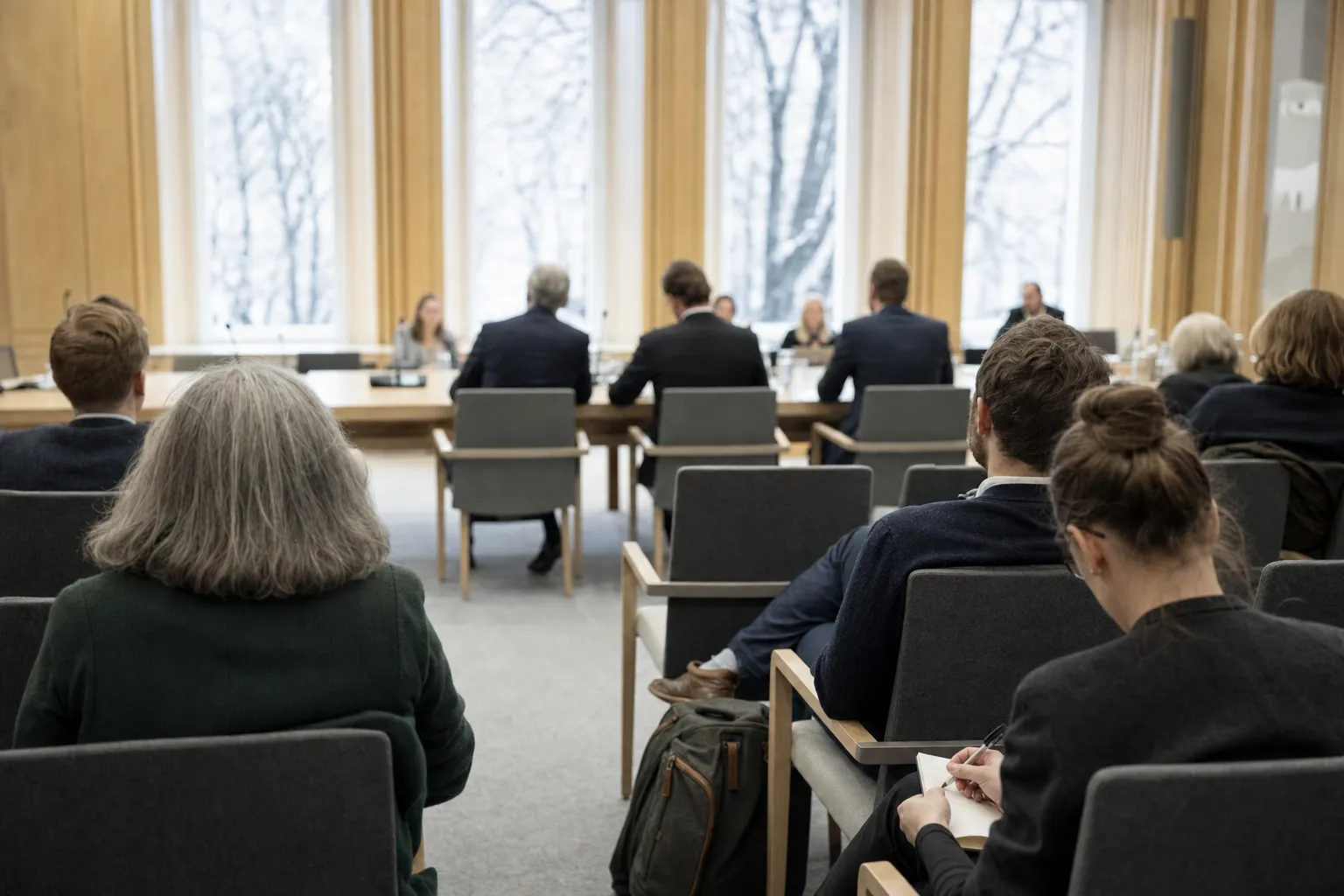
Even so, the Storting has strong tools when it comes to how the system works. Under Article 75 (h) of the Constitution, the Storting may “require anyone to appear before it in matters of State”. The Standing Committee on Scrutiny and Constitutional Affairs can hold open hearings at which ministers and heads of agencies must answer. The Storting can ask the government to set up an inquiry, and it can change the law – for example the whistleblowing rules in the Working Environment Act or the dismissal rules in the Civil Service Act.
The meetings with the justice committee
Vigdis Bollerud has met the Storting’s Standing Committee on Justice several times, together with other police whistleblowers and lawyers. She has asked for an independent investigation of the National Police Directorate and of how whistleblowing cases in the police are handled.
This is one of four articles that belong to The whistleblower from within, the story of Vigdis Bollerud. The chapter on the meetings at the Storting is closely linked to what you are reading here. The full story has seven chapters, from the first criminal complaint in 2017 to the trial in Oslo District Court in October 2026.
How many times Bollerud has met the justice committee rests on her own statements. Outside the Storting on 23 May 2025:
I have met the Standing Committee on Justice at the Storting four times, most recently last week.
On 27 October 2025 she attended another meeting at the Storting. We have not found minutes of the meetings. What is documented is that the committee's then chair, Helge André Njåstad (Progress Party), told TV 2 after a meeting with police whistleblowers in May 2024: “The stories are horrific.” That meeting was with the lawyer Arvid Sjødin and another whistleblower, not with Bollerud. Sjødin's view of the oversight of the police is set out in the story about Arvid Sjødin.
The call for an inquiry
The whistleblowers have asked the Storting for an independent inquiry into the National Police Directorate and into how whistleblowing cases in the police are handled. Bollerud has also asked for changes to the Civil Service Act, so that dismissal cases where the employee has blown the whistle are handled differently. A proposal of this kind from Members of the Storting is called a private member's proposal, or a Document 8 proposal. According to Bollerud, the proposal for an inquiry has not been tabled in the Storting.
Now they at the Storting really have to do their job too.
We have written about what whistleblowers have faced in their own agency in The law forbids punishing whistleblowers. This is how the protection works and in Who decides on a report about the leadership itself?. That the largest union in the police has advised against whistleblowing for ten years – and that the federation's own leader confirms it is still not safe to blow the whistle – is set out in The police's own union has advised against whistleblowing for ten years.
What you can do
- Write to the committee. The Storting's standing committees accept letters. The justice committee is responsible for the police and the courts. The Standing Committee on Scrutiny and Constitutional Affairs oversees the government.
- Contact a Member of the Storting. A member can put written questions to the minister. The questions and answers are public.
- Give input on legislation. When a law is to be amended, the committee holds hearings where anyone can send input.
- Complain to the Parliamentary Ombud if you believe the administration has made mistakes in your case. The Ombud does not deal with cases decided by the courts.
- Stand together with others. One case is an individual case. Ten similar cases are a pattern the Storting can do something about.
Watch the filmed interview: Police whistleblower Vigdis Bollerud (90 minutes) – about what it is like to speak up from inside the police. The video is also embedded in the main story.
Open questions
- What has the justice committee done with what it has heard from police whistleblowers since 2024?
- Will the justice committee or the Standing Committee on Scrutiny and Constitutional Affairs call for an inquiry into how whistleblowing cases in the police are handled?
- What changes has the government made following the evaluation of the police whistleblowing ombud?
Have you taken your case to the Storting? Become a supporting memberComing soon, and you can share your experience with us.
Supporting members
Support Justice for All Norway from abroad
Membership of the association is open to people living in Norway. International supporting memberships are on their way, so that you can support our work wherever you live.
Become a supporting memberComing soonRead more
- The big story: The whistleblower from within – chapter 2: The report · chapter 3: The dismissal · chapter 5: The rule of law seen from the inside · chapter 6: The meetings at the Storting
- The series: The police's own union has advised against whistleblowing for ten years
- The series: The law forbids punishing whistleblowers. This is how the protection works
- The series: Who decides on a report about the leadership itself?
- The filmed interview: Police whistleblower Vigdis Bollerud
- More whistleblowers: The whistleblower under investigation for a thumbs-up · “There is no oversight at all”
- Topic page: Whistleblowing and whistleblowers · The police and criminal investigation
- Become a supporting memberComing soon
Sources
- The Constitution, Articles 75, 95 and 100 (Lovdata, in Norwegian)
- Parliamentary Ombud Act, section 4 (Lovdata, in Norwegian)
- The Storting: written question no. 15:2696 (2024–2025) from Morten Wold (Progress Party), answered 4 July 2025 (in Norwegian)
- TV 2: “Sendte brev om heksejakt i politiet” (Sent letter about witch-hunt in the police), 19 April 2026
- Norwegian Police Federation: “Saksbehandlingstid utfordrer Varslingsombudet” (Processing times challenge the Whistleblowing Ombud), 20 April 2026
- Justice for All Norway: Police whistleblower Vigdis Bollerud – When the police go to war against the public (filmed interview, 2025, in Norwegian)
- Vigdis Bollerud's speeches outside the Storting on 23 May 2025 and at Arendal Week 2025 (recordings in Justice for All Norway's archive)
Quotes translated from Norwegian.
Published 19 November 2026 at 13:01 · Updated 19.11.2026
About AI in our articlesSupporting members
Support Justice for All Norway from abroad
Membership of the association is open to people living in Norway. International supporting memberships are on their way, so that you can support our work wherever you live.
Become a supporting memberComing soon