News · Witness in court · Whistleblowing and whistleblowers
What Morten Wold told the court about the police whistleblower
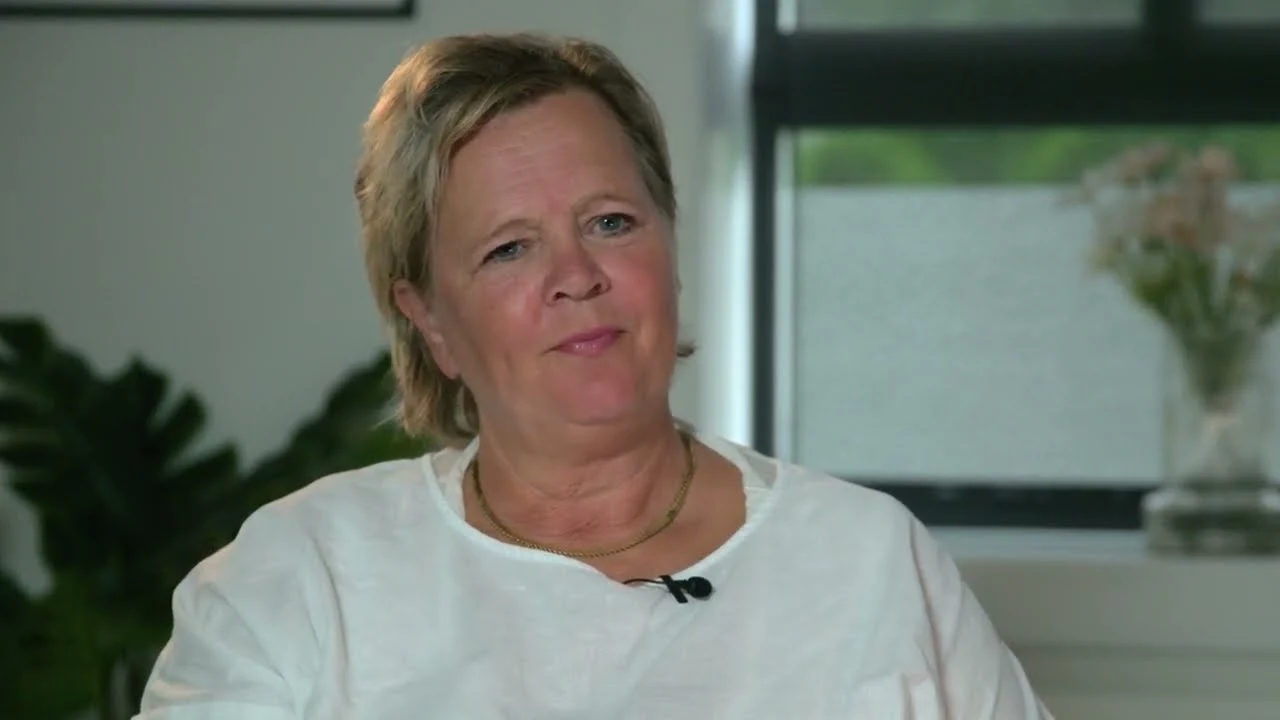
Morten Wold, Member of Parliament for the Progress Party (Frp) and former First Vice-President of the Storting, gave evidence in Vigdis Bollerud's case against the state. He described five meetings at the Storting, the advice he gave her about social media, and why he believes her dismissal looks like retaliation. The state's lawyer challenged him on his choice of words. This is the full account.

In brief
- Morten Wold arranged five meetings at the Storting where Vigdis Bollerud could present her case to members of the Standing Committee on Justice and the Standing Committee on Scrutiny and Constitutional Affairs. The case has never been dealt with by a committee.
- He believes it was he who advised her to use social media and to contact the major newsrooms.
- In his view it is “difficult not to think” that the dismissal is retaliation, and she has stayed within the bounds of freedom of expression.
- The state's lawyer confronted him with a post of his own from summer 2024. Wold acknowledged that he had no basis for alleging corruption in the way he had put it there, and that he cannot claim that mistakes were made at every level.
- The case is awaiting judgment in Oslo District Court. The court has not taken a position on anything that was said.
Morten Wold, a Progress Party (Frp) Member of Parliament, was one of the witnesses when Vigdis Bollerud's case against the state was heard in Oslo District Court in October. Bollerud was dismissed by the South-East Police District in 2024, after more than 30 years in the police. She believes the dismissal is retaliation for blowing the whistle. The state maintains it was due to her posts on social media. Wold was called by Bollerud's side. He was questioned first by her lawyer, then by the state's lawyer, and finally by the court.
We have listened to a recording of his evidence. Recordings from a courtroom cannot be reproduced as they are, and we do not publish it. Here we go through his evidence theme by theme. Where the words matter most, we quote him verbatim. Otherwise we give an account of what he said in our own words. The recording begins while he is already explaining how he came to know about the case.
How he came to know about the case
Wold became interested in the case because of the police reports. Many different people had reported matters concerning the same person, and all the cases had been dropped. He found that strange.
I thought it was strange that there should be so many different people, as if it were one and the same person, and that none of the cases were subject to anything more than a swift dismissal.
He could not remember how many reports were involved. He stressed several times that the reports were the starting point for his involvement. The case has since grown in many directions, and by his own account it has been difficult to keep up with all of it. He was aware that the court was to deal with the dismissal, not everything else.
Five meetings at the Storting
Bollerud wanted to reach the politicians. Wold sat in the Presidium at the time and on a committee that did not deal with justice. He therefore arranged meetings where she could present her case to members of what he called “the right committee”.
That was really my role in it. I didn't take any part in the case as such, other than listening to what Bollerud had to say.
In all there were five meetings. Members of the Standing Committee on Justice from both the Progress Party and the Conservatives attended, along with members of the Standing Committee on Scrutiny and Constitutional Affairs and probably one member from another committee. Wold explained why the meetings nevertheless did not become a case: the Storting's committees cannot take up a matter on their own initiative. There has to be a private member's motion, a so-called Document 8 proposal, or a matter from the government. Only the Standing Committee on Scrutiny and Constitutional Affairs can take up matters on its own initiative.
The case has therefore never been dealt with by any committee. Nor has the Storting sent any enquiries about it to the Minister of Justice or the government. Individual members were contacted, and some may have replied to Bollerud directly, but Wold knows of no official reply from the authorities.
The email to the Presidium
The Presidium is the Storting's board: the President and five Vice-Presidents. Wold sat on it for eight and a half years, as First, Second and Third Vice-President. Bollerud sent an email about the case to everyone in the Presidium. The Presidium does not deal with such matters. Its task is to facilitate the work of the Storting, not to intervene in disputes.
Wold nevertheless asked the President of the Storting to call Bollerud, because he is the President and because he comes from the same municipality as she does. He does not believe that call ever took place.
The documents he has received
Over the years Wold has received many emails from Bollerud. He has been given access to what was referred to in court as the weapons case, concerning the storage of weapons at the home of her former partner. He has also received documents from other police whistleblowers, among them Alexander Karlsen. He could not give a detailed account of what he has received and when. The information has come regularly and was the basis for the meetings.
The advice about social media
Bollerud has explained that she went public on social media on the advice of politicians. Wold largely confirmed this. Since the Storting has no role in dealing with such matters, he thought it was important for her to “break the sound barrier”.
I actually think it was me who told Bollerud that she should use social media to get her message out.
He also asked her to contact the largest newsrooms. At the same time, he pointed to the difference between edited media and social media. There is little control in the comment sections, and in his view there have certainly been conspiracy theories there. He did not say that Bollerud herself had written anything of the kind. But that does not change the fact that her case is serious.
Freedom of expression and retaliation
Her lawyer asked whether he sees signs that Bollerud has been subjected to retaliation. Wold answered that it is difficult not to see it that way. He pointed out that she has worked in the police for 35 years, exercised her freedom of expression and fulfilled her duty to report. He noted that the Norwegian Police Federation advised its members against whistleblowing in 2016, and that those who were the subject of the reports in several cases assessed their own impartiality. He found that “very, very strange”.
And everything Bollerud has, in a way, brought out into the open cannot have been plucked out of thin air.
On the posts, he pointed out that no superior likes being criticised by subordinates, and that a manager who does not listen is sad, but common in all kinds of workplaces. When people express themselves properly and objectively, the latitude should in his view be “very, very wide”.
Bollerud fulfilled her duty to report, used her freedom of expression to point out what she believed was wrong, because she was not heard, and in my opinion that is entirely within the limits of freedom of expression.
He has been in contact with several people in the police who believe they have experienced the same, and in his view this is not peculiar to the police. He referred to a documentary in which former employees of the Ministry of Foreign Affairs said they did not dare to blow the whistle for fear of their careers. Strong loyalty within a group can, in his view, cloud judgement. He himself once declined to join a lodge for that reason. He named no one.
Later, during the state's questions, he came back to this: if the working environment in the district had been good, the matter could have been resolved through conversations and meetings by taking her reports seriously. And then he believes she would also have stopped writing the way she did. He added that in some cases it is “very convenient” for an employer to resort to dismissal to get rid of an employee who is seen as a burden. “It may well be that that is the reason here.”
The state's lawyer: Wold's own post
The state's lawyer began with Wold's own words. In her writ of summons, Bollerud had quoted a post he wrote on social media in summer 2024. In it he wrote, among other things, that “someone must be held to account here”, that the police district appeared to consist of officers who worked off the books for a private company and covered for each other, and that “cronyism in uniform” was harmful to society. He also suggested that the case should be raised with reference to the Working Environment Act, with the Standing Committee on Scrutiny and Constitutional Affairs or with the Office of the Auditor General.
Wold confirmed that he wrote the post and that the language was harsh. The basis for the words “working off the books” was information that police officers had carried out security work for the security company, which a former police employee had reported. That was also the basis for the word corruption.
The lawyer asked what he knows about the outcome. Most of the cases have been dropped, as far as he understands. He is not a lawyer and has not seen the documentation for the decisions to drop them. What he does know is that the company was used as a security firm at events at the ski-flying hill in Vikersund, and that this stopped when the company lacked the necessary approval. When the lawyer asked whether he meant there was corruption in the police in the form of money changing hands, he replied:
I don't really have any basis for claiming that.
The whistleblowing ombud and impartiality
Wold does not know the police whistleblowing ombud in detail, but several people who have tried to use it have told him that it does not work, and that it was set up more for appearances' sake. He could not remember who had said so. He has himself put questions about the ombud to the Minister of Justice.
The lawyer asked what basis he has for commenting on the chief of police's impartiality. Wold answered that it is strange that someone whose impartiality is called into question can decide on it himself. The lawyer stated that others have assessed the impartiality, and that the chief of police first met Bollerud at the appointments board. Wold replied that he had understood that the two had a relationship through working together.
The posts that were read out
The state's lawyer then read from several of Bollerud's posts, including that she and her family have been subjected to “physical, psychological and financial violence” by the management of the South-East Police District, that she has lost all trust in the police and the rule of law, and that some in the management “deserve no trust”. Wold has read some of what she has written, but not all of it.
Of course, what is written there is pretty strong.
Asked where the limit of freedom of expression lies in an employment relationship, Wold replied that in Norway you can say what you like, but that it may have consequences. He believed that Bollerud's posts are within the limit, and that this would become clear in court. The lawyer asked whether such statements, if untrue, could undermine public trust in the police. Wold replied that they could, but that Bollerud writes what she writes because she has had different experiences, and that many who believe they have been treated unfairly by the police and the courts recognise themselves in it. That was also why so many people turned up in the courtroom.
Trust in the institutions
Finally, the state's lawyer put forward a premise: the management of the South-East Police District, the Director of Public Prosecutions, the Norwegian Bureau for the Investigation of Police Affairs, the regional public prosecutors and the Tax Administration have all assessed the cases and dropped them. Does he trust that this was right?
In principle he has great trust in these institutions, Wold answered. But in this case there has been so much back and forth, with cases dropped, reopened and new reports filed, that it is difficult to say that no mistakes have been made at any level. The lawyer pointed out that her account presupposes mistakes at every single level:
I have no basis for claiming that mistakes have been made at every level.
Corruption under the Penal Code
Bollerud's lawyer followed up. He asked whether Wold believes the investigation of the information about undeclared work has been inadequate. Wold answered that it is strange that there have been no consequences when, according to the information, police officers carried out security assignments for undeclared payment, and the company lacked approval. He also mentioned the weapons case, which was dropped, while another police officer was convicted of a similar offence.
The lawyer then referred to section 387 of the Penal Code on corruption: giving or offering someone an improper advantage in connection with a position, office or assignment. If the police refrain from investigating known information about undeclared work, the lawyer argued, that falls within the provision. On the basis of that section he believes so, Wold answered.
The court asked him to clarify. Wold explained that he had answered the lawyer's question as it was put, and that the wording of the law may suggest that it is a form of corruption. On his own post from 2024:
What it says in that message about corruption, I perhaps had no basis for writing at the time.
Whether it can be called corruption when someone, by virtue of their position, gives another person an advantage by refraining from investigating is a legal question. No court has decided it, and no one has been charged or convicted of it. Wold spoke as a witness, not as a lawyer.
What he has experienced himself
At the very end Wold was asked whether he wished to add anything. He said that after he became involved in the case, he was contacted by two retired police officers who advised him to stay well away. He has promised not to say who they are. His letterbox was blown up, and on two occasions he found a total of seven shotgun pellets on his garage floor. He has never owned a shotgun. He added himself that these may have been chance incidents, but that he found them unpleasant.
What is documented, and what is his assessment?
What Wold said about retaliation, freedom of expression, impartiality, the whistleblowing ombud and corruption are his assessments. He stressed himself that he is not a lawyer and has not seen the documentation for the decisions to drop the cases. The same applies to what he said about his own experiences. The employer's view is that the dismissal is based on the posts, and that the limits on what a police employee can write about their employer have clearly been exceeded. A senior adviser in HR at the South-East Police District told the court that the proposal to dismiss came from HR, not from the police management, and that the whistleblowing reports were assessed as dissatisfaction with specific individual cases. We have gone through what Vigdis Bollerud herself put before the court in What Vigdis Bollerud put before Oslo District Court.
The case is awaiting judgment
Oslo District Court is to decide whether the dismissal was valid, and whether it was retaliation for whistleblowing, which is prohibited under section 2 A-4 of the Working Environment Act. How that protection works is explained in The law forbids punishing whistleblowers. This is how the protection works. What the Storting can actually do for police whistleblowers is covered in What can the Storting do for police whistleblowers? And on why oversight of the police so rarely leads to sanctions: Who cleans up inside the rule of law?
- Her own evidence: What Vigdis Bollerud put before Oslo District Court
- The main story: Varsleren fra innsiden (The whistleblower from the inside)
- The series: The police's own union has advised against whistleblowing for ten years · Who decides on a report that concerns the management itself?
- More whistleblowers: The whistleblower investigated for a thumbs-up
- Topic page: Whistleblowing and whistleblowers · The police and criminal investigation
Have you blown the whistle yourself and suffered for it? Become a supporting memberComing soon, and share your experience with us.
Supporting members
Support Justice for All Norway from abroad
Membership of the association is open to people living in Norway. International supporting memberships are on their way, so that you can support our work wherever you live.
Become a supporting memberComing soonSources
- Recording of Morten Wold's evidence in Oslo District Court, October 2026 (in Justice for All Norway's archive, not published)
- Stortinget: Morten Wold – biography
- Stortinget: The Presidium 2025–2029 (data.stortinget.no)
- NRK: “Politivarsler saksøker staten for ugyldig oppsigelse” (Police whistleblower sues the state for unlawful dismissal), 13 October 2026
- Dagbladet: “Varslet politiledelsen: Sparket” (Blew the whistle on police leadership: Fired), 16 May 2024
- Penal Code, section 387 (Lovdata)
- Working Environment Act, chapter 2 A (Lovdata)
Quotes translated from Norwegian.
Published 21 November 2026 at 20:45 · Updated 21.11.2026
Supporting members
Support Justice for All Norway from abroad
Membership of the association is open to people living in Norway. International supporting memberships are on their way, so that you can support our work wherever you live.
Become a supporting memberComing soon