News · Whistleblowing and language · Whistleblowing and whistleblowers
“Conspiracy theory”: the phrase that moves the conversation from the case to the person
Call someone a conspiracy theorist, and the conversation is no longer about what they put forward, but about them. For a whistleblower, that can decide whether anyone reads the documents at all. At the same time, conspiracies do exist, and they have often been exposed by people who spoke up. The phrase can be used with good reason. But it can never replace an answer to the arguments.
In brief
- The phrase “conspiracy theory” is older than the 1960s. It appears in a letter to the editor of the New York Times on 11 January 1863. Researchers disagree about how negatively it was perceived at the time.
- Store norske leksikon, the Norwegian encyclopaedia, calls the phrase a “pejorative term”. It also points out that such theories are often hard to disprove, because they are flexible about what counts as evidence.
- A CIA circular dated 1 April 1967, often cited as Dispatch 1035-960, told stations and bases to counter and discredit critics of the Warren Commission. How big a part it played in the spread of the phrase is disputed.
- The sociologists Ginna Husting and Martin Orr describe “conspiracy theorist” as a strategy for excluding people from the conversation. Berit Ås’s “domination techniques” describe some of the same mechanism.
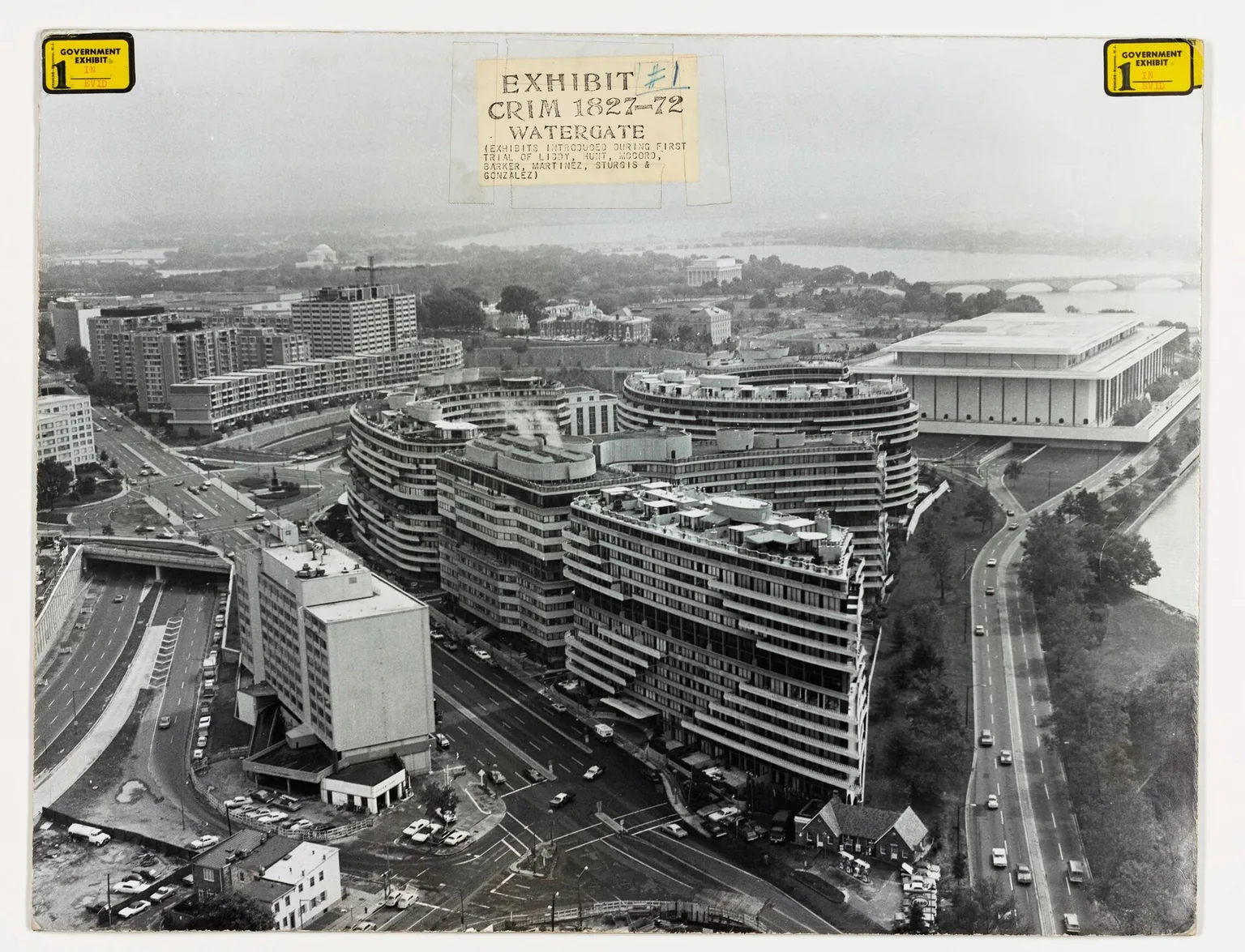
- Real conspiracies exist: the Lund Commission presented its report in 1996, the Watergate scandal led to President Nixon’s resignation in 1974, and Edward Snowden exposed mass surveillance in 2013.
- The Working Environment Act prohibits retaliation against whistleblowers, including “harassment” and “social exclusion”. In Norwegian surveys, between 12 and 25 per cent of whistleblowers have experienced sanctions.
What happens when a whistleblower is called a conspiracy theorist? Her claims may be left untested. The question “Is what she is presenting true?” is replaced by “What kind of person says something like that?”. This article looks at where the phrase comes from, how it works, and what distinguishes a theory that must be taken seriously from a label that simply ends the conversation. More cases on the topic are on the topic page Whistleblowing and whistleblowers.
A word with a long history
Store norske leksikon, in an article by the religious studies scholar Asbjørn Dyrendal at NTNU, defines a conspiracy theory as an explanatory model in which whatever goes wrong in the world is caused by powerful groups secretly working for their own hidden agenda. At the same time the encyclopaedia calls the phrase a “pejorative term”, used about explanations that contain logical errors and a problematic handling of facts. Such theories are often hard to argue against, the encyclopaedia writes, because they are flexible about what counts as evidence and resist counter-arguments. Read the article
The phrase is older than many people think. The earliest known use for a theory that something is due to a conspiracy is considered to be a letter from Charles Astor Bristed to the New York Times on 11 January 1863. He wrote about claims that British aristocrats were weakening the United States during the Civil War for their own gain (overview on Wikipedia). Researchers disagree about what the phrase meant then. Store norske leksikon writes that it was often critical from the start. According to the same overview, the researcher Andrew McKenzie-McHarg concludes that it had no clear positive or negative ring in the nineteenth century.
After the Second World War, the philosopher Karl Popper criticised what he called “the conspiracy theory of society”. From the 1960s, according to the encyclopaedia, the phrase was used widely about poorly supported, speculative theories of conspiracy. Being called a conspiracy theorist then became something people preferred to avoid.
The CIA circular of 1967
Many people link the phrase to a CIA document. On 1 April 1967 the intelligence agency sent a circular entitled “Countering Criticism of the Warren Report” to selected stations and bases. It is often cited as Dispatch 1035-960. The Warren Commission had been appointed by President Lyndon B. Johnson on 29 November 1963 to investigate the assassination of John F. Kennedy. In its report, published on 24 September 1964, it concluded that Lee Harvey Oswald acted alone (Wikipedia). The report met with a great deal of criticism, in books among other places.

According to Dan L. Hardway, who has written about the document for the Assassination Archives and Research Center, the circular says its purpose is to give the stations material for countering and discrediting the claims of those it calls “conspiracy theorists”. The document also asks recipients to use particular arguments against the critics. It became public after freedom-of-information requests in the 1970s (Hardway and the transcript at 22november1963.org.uk).
What the document proves is nevertheless disputed. The researcher Michael Butter, author of “The Nature of Conspiracy Theories” (2020), points out that the circular uses the expression “conspiracy theories” only once. And the phrase was in use long before 1967. Lance deHaven-Smith argues in his book “Conspiracy Theory in America” (2013) that the expression entered everyday American speech after 1964 (both in Wikipedia’s overview). What is certain is that an intelligence agency, in a written circular, told its people to counter and discredit critics, and referred to them as “conspiracy theorists”.
From academic term to domination technique
In Norwegian, the phrase has a close relative in the term “hersketeknikk” (domination technique). The psychologist Ingjald Nissen used the word in his books on manipulation and the exercise of power (Store norske leksikon). The social psychologist Berit Ås developed and popularised it. In her book “Kvinner i alle land” (1981) she described five techniques: making people invisible, ridiculing, withholding information, double punishment, and imposing guilt and shame (Store norske leksikon). Today the word is part of everyday Norwegian speech.
A label such as “conspiracy theorist” can do two of these things at once. It turns the person into something to laugh at, and it makes her arguments invisible. The sociologists Ginna Husting and Martin Orr examined how the expression is used in public debate and published their findings in the journal Symbolic Interaction in 2007. They describe “conspiracy theorist” as an established way of excluding someone from the conversation. The label deflects questions about power, corruption and motives, and turns them into an attack on the person’s competence (the abstract).
From the case to the person
This is how the mechanism can look in practice:
- The claim: “The documents show that the case was handled wrongly.”
- The label: “This is a conspiracy theory.”
- The result: Nobody asks any longer whether the documents are accurate. The question has become whether the person can be trusted.
From a purely logical point of view, this is an invalid inference. Whether a claim is true depends on the evidence, not on who puts it forward or what others call it. Here the academic nuance must be added: Store norske leksikon points out that conspiracy theories can indeed have features that make them hard to discuss, because anything can be read as further proof of the theory. The phrase is therefore not useless. The question is whether it is used to describe a specific weakness in a specific explanation, or as a shortcut that means nobody has to answer.
A hypothesis is something different from a theory that cannot be tested. In a police investigation, several hypotheses are to be kept open, including the one that points to the suspect’s innocence. We have written more about this in What is the difference between a hypothesis and a conspiracy theory?
Conspiracies that really existed
The second point is just as important. Known conspiracies and hidden abuses exist, and several of them have been exposed by people who spoke up.
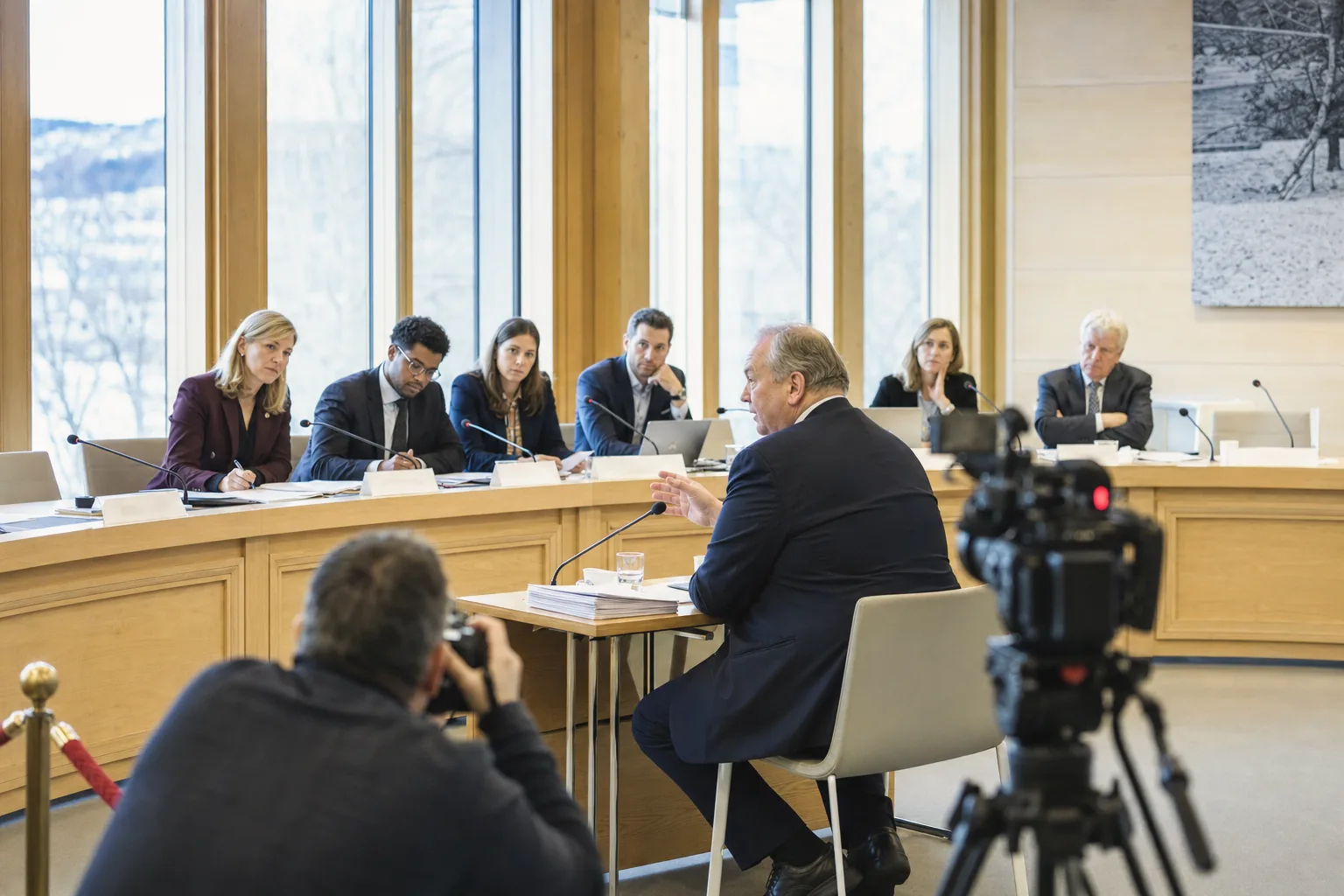

A case from Romania is particularly close to this topic. Constantin Bucur worked for an intelligence service and gave the press information about unlawful acts within the service. He was convicted in Romania. On 8 January 2013 the European Court of Human Rights (ECtHR) found that the judgment against him violated freedom of expression (Bucur and Toma v. Romania).

What the cases have in common is that the knowledge came from the inside, or from documents that were eventually put forward, and that the matter was decided by what the documents showed. They do not prove that other claims of conspiracy are true. But they show that the word “conspiracy” does not in itself tell us whether a claim is true or false. Only the documents do.
What the law says about whistleblowers
Chapter 2 A of the Working Environment Act gives employees the right to blow the whistle on matters of concern in the workplace (section 2 A-1). This includes corruption, other financial crime and abuse of authority, among other things. The employee can always report internally, and always externally to a public supervisory authority or another public authority. Reporting to the media is permitted when the employee is in reasonable good faith, the matters are of public interest, and she has first reported internally or has reason to believe that this would not be appropriate (section 2 A-2). It is the employer who bears the burden of proof that the whistleblowing was in breach of the rules (section 2 A-2, fourth paragraph).
The Act also prohibits retaliation (section 2 A-4). This means “any unfavourable act, practice or omission that is a consequence of or a reaction to the employee having blown the whistle”. The Act mentions, among other things, “threats, harassment, unfair discrimination, social exclusion or other improper conduct”, and also dismissal and summary dismissal. If the employee presents information giving reason to believe that retaliation has occurred, the employer must show that it is nevertheless not the case (section 2 A-4, fourth paragraph). Whether labelling is retaliation in the sense of the Act must be assessed case by case. But the list shows that the Act regards social exclusion as a possible form of punishment for having blown the whistle.
The courts’ examination is therefore about the content and about how the whistleblower went about it. It is not about what anyone has called her. We have written about how the law works in practice in The law prohibits punishing whistleblowers. This is how the protection works.
The phrase in a Norwegian courtroom
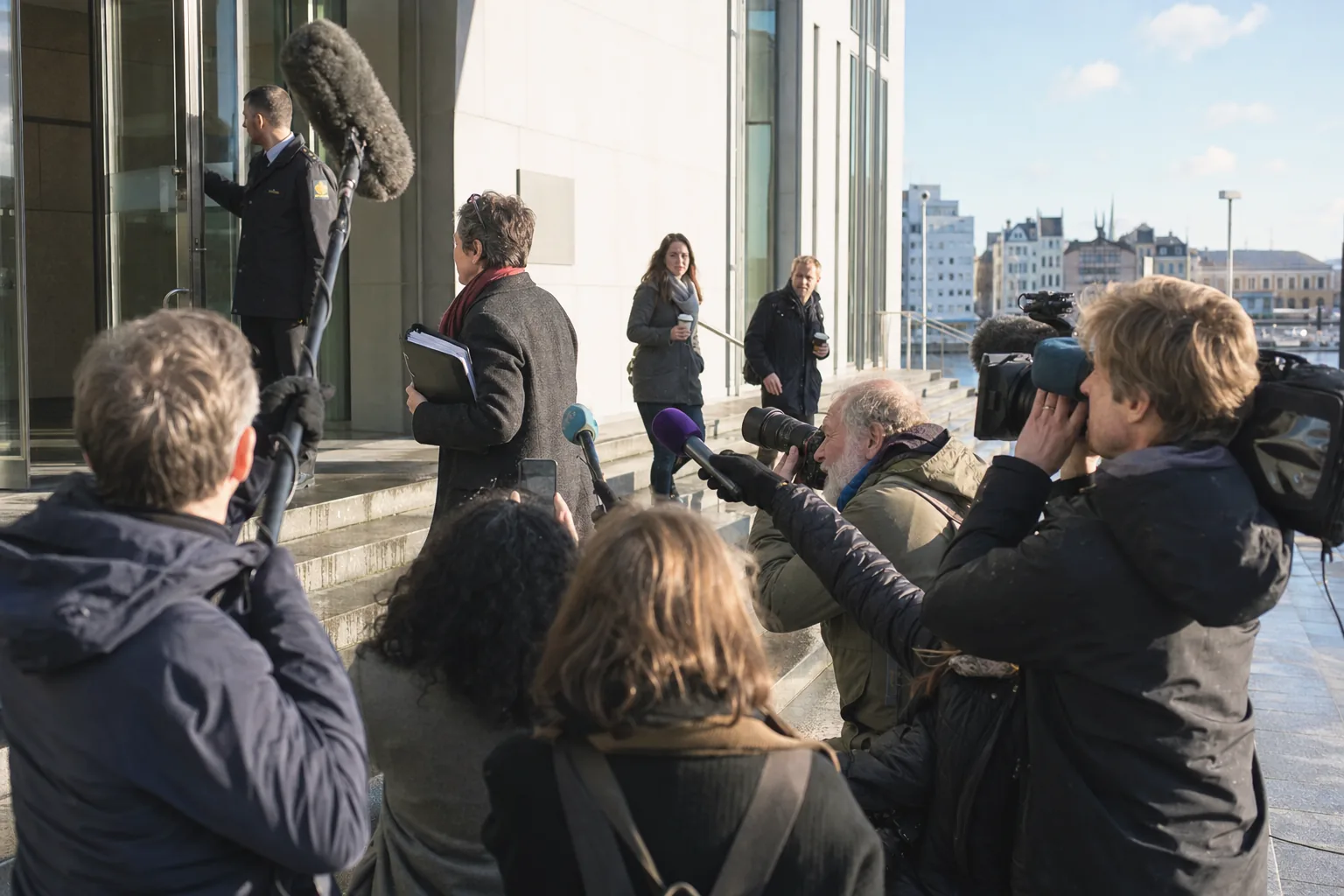
The term has recently been used in a Norwegian courtroom. Vigdis Bollerud was a police investigator for more than 30 years. She blew the whistle on matters concerning her own management, and in 2024 she was dismissed (Dagbladet). The case was before Oslo District Court in October 2026, and no judgment has been delivered. In the trial, the state’s lawyer from the Office of the Attorney General for Civil Affairs (Regjeringsadvokaten) argued that the case bore the hallmarks of “conspiracies” and of claims “with no basis in reality”. He asked the court: “How likely is it that everyone would gather in a conspiracy against this one woman?” (Document, 14 October 2026). According to VG, the Director of Public Prosecutions and the Norwegian Bureau for the Investigation of Police Affairs have also considered that several of her statements resemble conspiracy theories. Bollerud herself replied: “It is a mark of quality to be called a conspiracy theorist. Then you have hit the nail on the head; they have no other arguments to offer” (VG, 13 October 2026, iNyheter, 13 October 2026).

What is publicly known about the state’s position comes from NRK. The state’s lawyer said that police employees have freedom of expression, including when they criticise their own employer, and that in the state’s view the limits have clearly been exceeded in this case. The state also maintains that the dismissal is based, among other things, on her having repeatedly made incorrect and unfounded accusations (NRK, 13 October 2026). Bollerud sees the dismissal as retaliation for her reports. It is for the district court to decide who is right, and Justice for All Norway takes no position on the outcome.
Bollerud has herself described being met with the word. At Arendalsuka in 2025 she said she had been handed “a conspiracy label” by the Director of Public Prosecutions. That is her own description, and we have not examined it further. The point here is what such a label does to a conversation, not who has given it.
A courtroom is precisely where the label should count for least. The court is to test each matter against the documents, the witness statements and the law. If the claims are wrong, they should be shown to be wrong. If they are right, calling them theories does not help. The whole case is in Varsleren fra innsiden (The whistleblower from the inside), and the four articles around it.
How to meet the label
There is no simple recipe. But some moves make it harder to dismiss you:

- Separate what is documented from your own assessments. Write what a document says, with the source, and what is your interpretation. Then nobody can say you are merely expressing an opinion.
- Put the documents forward first. A document cannot be dismissed as a theory.
- Use questions and hypotheses where you do not know. Say what would count against your explanation, and what you have done to check it.
- Ask for a specific answer. “Which of these points is wrong, and why?” is harder to answer with a label than “This is a conspiracy theory”.
- Do not answer with a label of your own. Calling the other side names moves the conversation away from the case, whoever does it.
- Report in the right way, and keep the evidence. Follow the procedure in section 2 A-2, keep copies of what you send and receive, and talk to your trade union or a lawyer early. The time limits for going to court are short.
For journalists, politicians and case officers, the opposite question applies. When you want to use the phrase, you can ask yourself whether you have answered the content. If you have pointed out what is wrong and why, the phrase is perhaps superfluous. If you have not, it is the label that carries the argument, and that does not carry far.
Watch the film interview: Police whistleblower Vigdis Bollerud (90 minutes) – about what it is like to speak up from inside the police.
Open questions
- How often is “conspiracy theory” used in replies from public bodies and courts to whistleblowers? We have not found a Norwegian study that measures it.
- Should the whistleblowing rules state expressly that labelling can be a form of retaliation? The Act currently mentions “harassment” and “social exclusion”.
- How did the state answer each of her claims – one by one – beyond saying that they bore the hallmarks of “conspiracies”?
- What does the judgment in the case show, once it is delivered?
Have you yourself been called names when you blew the whistle? Become a supporting memberComing soon, and you can share your experience with us.
Supporting members
Support Justice for All Norway from abroad
Membership of the association is open to people living in Norway. International supporting memberships are on their way, so that you can support our work wherever you live.
Become a supporting memberComing soonRead more
- The main story: Varsleren fra innsiden (The whistleblower from the inside)
- The question of hypotheses: What is the difference between a hypothesis and a conspiracy theory?
- Whistleblower protection: The law prohibits punishing whistleblowers. This is how the protection works
- Whistleblowing in the police: The police’s own trade union has advised against whistleblowing for ten years · Who decides on a report that concerns the management itself? · What can the Storting do for police whistleblowers?
- The filmed interview: Police whistleblower Vigdis Bollerud
- Topic pages: Whistleblowing and whistleblowers · The rule of law
- Become a supporting memberComing soon
Sources
- Store norske leksikon: “konspirasjonsteori” (conspiracy theory) (Asbjørn Dyrendal)
- Document, 14 October 2026: “Regjeringsadvokaten tok oppgjør med “konspirasjonsteoretikere” – ble møtt med latter” (The Attorney General’s office took on “conspiracy theorists” – was met with laughter)
- VG, 13 October 2026: “Vigdis Bollerud saksøker staten: “Kvalitetsstempel å bli kalt konspirasjons-teoretiker”” (Vigdis Bollerud sues the state: “A mark of quality to be called a conspiracy theorist”)
- iNyheter, 13 October 2026: “Tidligere politietterforsker saksøker staten” (Former police investigator sues the state)
- Store norske leksikon: “Karl Popper”
- Wikipedia: “Conspiracy theory” (etymology and research overview)
- Dan L. Hardway, AARC: “What were they hiding and what should we look for?” (reproduces the 1967 CIA circular)
- 22november1963.org.uk: “CIA – Warren Report critics” (transcript of the circular)
- Wikipedia: “Warren Commission”
- Store norske leksikon: “hersketeknikk” (domination technique)
- Store norske leksikon: “Ingjald Nissen”
- Store norske leksikon: “Berit Ås”
- Husting and Orr (2007): “Dangerous Machinery: ‘Conspiracy Theorist’ as a Transpersonal Strategy of Exclusion”, Symbolic Interaction 30(2)
- The Storting: “Lund-kommisjonen” (the Lund Commission; commissions of inquiry in history)
- Store norske leksikon: “Lund-kommisjonen” (the Lund Commission)
- Store norske leksikon: “EOS-utvalget” (the EOS Committee)
- The EOS Committee (the committee’s own website)
- Wikipedia: “Watergate scandal”
- Store norske leksikon: “Edward Snowden”
- The Guardian, 6 June 2013: “NSA collecting phone records of millions of Verizon customers daily”
- The Guardian, 6 June 2013: “US tech giants nsa data” (PRISM)
- Columbia Global Freedom of Expression: “Bucur and Toma v. Romania” (ECtHR 2013)
- The European Court of Human Rights: Key Theme “Article 10 – Whistle-blowing”
- Working Environment Act, chapter 2 A – whistleblowing (Lovdata)
- Fafo 2019:14, Trygstad and Ødegård: “Varsling i norsk arbeidsliv 2018” (Whistleblowing in Norwegian working life 2018) (English summary)
- Skivenes and Trygstad (2010): “When whistle-blowing works: The Norwegian case”, Human Relations 63(7) (Fafo)
- NOU 2018: 6 “Varsling – verdier og vern” (Whistleblowing – values and protection) (regjeringen.no)
- NRK: “Politivarsler saksøker staten for ugyldig oppsigelse” (Police whistleblower sues the state for unlawful dismissal), 13 October 2026
- Dagbladet: “Varslet politiledelsen: Sparket” (Blew the whistle on police leadership: Fired), 16 May 2024
- Justice for All Norway: Police whistleblower Vigdis Bollerud – When the police go to war against the public (filmed interview, 2025, in Norwegian)
- Vigdis Bollerud’s appeal at Arendalsuka 2025 (recording in the Justice for All Norway archive)
Quotes translated from Norwegian.
Published 20 November 2026 at 00:50 · Updated 20.11.2026
About AI in our articlesSupporting members
Support Justice for All Norway from abroad
Membership of the association is open to people living in Norway. International supporting memberships are on their way, so that you can support our work wherever you live.
Become a supporting memberComing soon