Who scrutinises the Child Welfare Service’s discretion?
Reader’s letter from Nina-Elizabeth Ingleson, who has 20 years’ experience as a caseworker, child welfare manager and expert for the Child Welfare Tribunal, and who wishes to make a factual contribution in support of Lillian Gran.
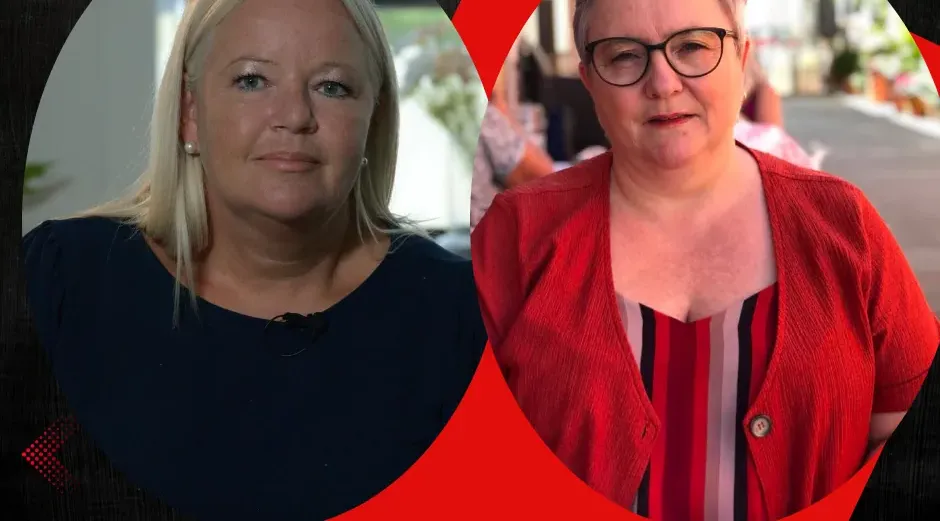
I have worked in the child welfare service for many years – as a caseworker and as a manager.
I have sat on both sides of the table in investigation cases, I know how difficult the judgements can be, and I know how much is at stake when we get it wrong. That is precisely why I cannot remain silent about the Lillian Gran case. A mother answers the phone. Her children call, desperate, and ask her to come. She gets into the car and drives. For this, Lillian Gran has spent around half a year in custody.
That ought to make us all stop and think – and it ought to make us ask the uncomfortable question:
How good, really, was the child welfare assessment on which the whole case rests?
What the case is actually about
Let me take the course of events as it has been described publicly. It begins with a separation. In the period afterwards, the children are said to have spoken about violence and abuse while they lived with their father – not as a single statement, but repeatedly and in different contexts, and they have given evidence about it in police interviews. Lillian Gran then did what we all ask parents to do: she alerted the municipality and the child welfare service in Løten. What followed is an extensive complex of cases. The children were eventually taken into public care and placed outside the home. Mother and children moved to the neighbouring municipality, and it has been argued that the case was nevertheless pursued in a way that raises questions about which municipality was actually responsible – the children are said to have been resident in Elverum at this point.
In a case under the Children Act (barneloven) in autumn 2025, the daughter, then 15, is said to have expressed that she wanted to live with her mother, without this being given weight.
A restraining order was imposed between mother and children – an order the children themselves reportedly did not want. When the children later ran away from the foster home and called their mother, she answered and collected them. It is this – together with having answered phone calls from her own children – that forms the core of the prosecution against her. And on 13 March 2026 judgment was given in the Children Act case: Gran was deprived of parental responsibility for both children (aged 15 and 14), the father was given sole parental responsibility, and it was decided that there should be no contact. Much of this is based on the account given by the family and their supporters, because the child welfare service is bound by confidentiality and can respond publicly only to a limited extent. But the main features – the restraining order, the judgment, the custody – are not in dispute.
And here is the point to which I, as a professional, react most strongly of all: the children have been placed in foster care with the father and his new partner – the same man the children themselves have accused of violence and abuse.
The partner is said to have been registered as foster mother. Let that sink in: children are moved to a carer they themselves accuse of abuse, while the same allegations apparently have not been fully investigated. If this is true, it is not a child welfare judgement I recognise as sound – it is the opposite of what we are there to do. Were the children’s statements taken seriously? That is the core. A child welfare service that receives information about violence and abuse has a statutory duty to investigate thoroughly and independently. This is not a formality – it is the whole reason the service exists. If the service instead locked itself into one narrative – that this was “just” a bitter parental conflict – and left the children’s own statements unexplored, that is no trifle. It is a failure in the very core task.
I have seen how easily a case can go off the rails when the conclusion is decided before the investigation has been done. It is one of the most dangerous traps in our profession. Reason for concern about the professional judgement: in its supervision of the child welfare service in Løten, the County Governor (Statsforvalteren/Fylkesmannen) found breaches of the law: investigations that had not been carried out properly, and a lack of documentation of professional and legal assessments – including assessments of the best interests of the child. The findings included, among other things, delayed follow-up in cases concerning suspected violence, and investigations in which children had not been spoken to.
Let me be clear, as a professional: these are not loose accusations from an upset party.
It is the conclusion of a public supervisory authority. When a service with precisely such findings is to assess whether two children are safe, the public has every reason to ask whether the assessment can be trusted.
The question does not become any smaller when one looks at the management.
The same head of child welfare has led two different child welfare services in two different municipalities – and both have been criticised by the County Governor during her time as head. In Stor-Elvdal, the County Governor described deviations so serious that the municipality’s management was asked to review procedures and internal control. In Løten, breaches of the law were established years later. And here I speak from experience: supervisory criticism is not something the County Governor hands out lightly. The threshold for formal, written criticism is high, and the vast majority of services go through a manager’s entire working life without being found to have broken the law. That the same pattern – failures in management, documentation and sound investigative work – follows the same head from one service to the next cannot simply be explained by local conditions. It raises a timely question about the professional child welfare management and competence. It is legitimate to ask that question – not to single out an individual, but because children’s safety depends on those who lead such services actually being up to standard.
The rule of law has already spoken
On 29 May 2026 Eidsivating Court of Appeal unanimously allowed the appeal, and the application for continued custody was not granted. An independent court found that continued deprivation of liberty could not be justified. At the same time, it has been reported that the state found no funds to transport Gran to a court hearing, but found resources for six weeks of compulsory psychiatric observation. The priorities jar. One may take the view that decisions must be complied with. I have made and defended such decisions myself. But a state governed by the rule of law is measured by how it treats those who challenge it – and a child welfare service is measured by whether it actually protects children, or merely protects its own decisions. That is the difference between a child welfare service that serves the children and one that serves itself.
This case deserves an independent review, both of the specific assessments and of the management behind them. Not a lid.
Nina-Elizabeth Ingleson, caseworker and manager in the child welfare service for 20 years
Quotes translated from Norwegian.
Related articles
Three in four are refused when they apply for patient injury compensation

Limit values assess one substance at a time. The body meets many

Amicable settlement with VG: – We should simply have called you

We published the entire closing speech. The court makes no such recording itself
Children who speak out have the right to be taken seriously