The Civil Service Act must be changed: public employees who break the law in the course of their duties must be open to prosecution
Sweden did it on 1 August. Norway has two loopholes that make it almost impossible.
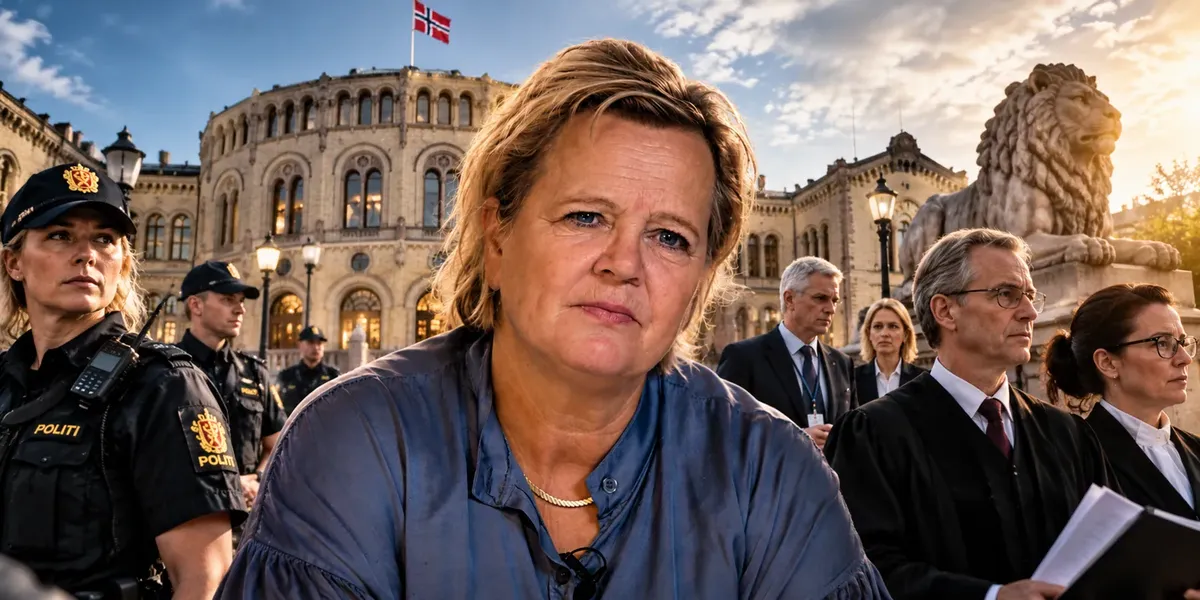
On 15 June 2026 the Swedish Riksdag adopted a new criminal provision. From 1 August, Chapter 20, section 2 of the Swedish Penal Code (brottsbalken) reads: misuse of public position (missbruk av offentlig ställning). It covers anyone in public service who intentionally acts, or fails to act, in breach of an act or regulation — in order to obtain an improper advantage for themselves or others, or to cause someone an improper disadvantage. The penalty is a fine or imprisonment for up to two years. In aggravated cases: imprisonment from one year and six months to six years.
At the same time, Sweden raised the minimum sentence for gross misconduct in office (grovt tjänstefel) to one year and six months, and amended its civil service act, the Public Employment Act (lagen om offentlig anställning).
The reasoning is worth reading carefully. Until now, Swedish criminal liability applied only to errors committed in the exercise of public authority. Everything else a public employee did was dealt with under employment law — with a warning, disciplinary measures or dismissal. Now criminal liability covers how public employees conduct themselves in the whole of their duties.
That is exactly the limitation Norway still has. And we have one more.
The two filters in Norwegian law
Section 171 of the Penal Code (straffeloven) reads as follows, as reproduced by the Supreme Court in HR-2023-805-A:
“Any person who exercises or assists in the exercise of public authority and grossly breaches his or her official duty shall be subject to a fine or imprisonment for a term not exceeding 2 years.”
Read it twice. It contains two conditions, and both must be met.
The first is that the act must take place in the exercise of public authority. This is the same filter Sweden has now removed.
The second does not appear in the new Swedish provision at all: the breach must be gross. An ordinary breach of official duty is not a criminal offence in Norway. It is a personnel matter.
The consequence is that there is a substantial category of acts that appear nowhere in the Penal Code. They are too serious to be called trivial, but not “gross” enough for section 171 — or they took place outside what counts as the exercise of public authority. They fall out of criminal law and into employment law.
And who deals with them there?
For the police and the prosecuting authority there is at least a body outside the agency: the Norwegian Bureau for the Investigation of Police Affairs (Spesialenheten for politisaker). Let us look at what that body produced in 2025, according to the Bureau’s own annual report to the Ministry of Justice.
The Bureau received 1,169 reports, spread across 857 cases. It made prosecution decisions in 909 cases, covering 1,305 reports.
875 reports — 67 per cent — were dropped without investigation.
Not dropped after investigation. Dropped without. Two out of three reports against employees of the police and the prosecuting authority were decided without anyone examining them.
Positive prosecution decisions — fines, indictments and conditional waivers of prosecution combined — numbered 34. Three per cent. In total, 25 people and one company received a criminal sanction. The average case handling time was 154 days.
And this, then, is the situation in the part of the public administration that has an external oversight body.
For the rest there is nothing equivalent. For the Child Welfare Service, NAV, the health trusts, the municipalities and the ministries, it is the employer itself that decides whether an employee has done something that should have consequences. The Civil Service Act (statsansatteloven) gives the employer the tools — disciplinary penalties, summary dismissal — and the employer itself decides whether to use them. It is also the employer that in practice decides whether something is to be reported to the police.
This means that the question of whether a public employee has committed a criminal offence in the course of their duties is in most cases decided internally, by someone with a vested interest in the answer.
This is not a claim of ill will on the part of Norwegian managers. It is a claim about system design. A system in which the person being assessed and the person assessing belong to the same organisation will produce few assessments. That is not corruption. It is mechanics.
And Sweden is not there yet either: there too, responsibility for reporting still lies with the employer. That is a weakness in the Swedish reform, and it is the one Norway should avoid copying if we follow suit.
This is not a technical debate
People have their children taken from them by the Child Welfare Service on deficient documentation.
People are subjected to gross injustice in the public administration, and in the police, the prosecuting authority and the courts in connection with criminal cases.
We also see a growing tendency for administrative cases to spill over into criminal cases. In child welfare cases, restraining orders between children, child welfare staff and parents are quickly imposed. When parents send many requests for access, or ask for information about what has happened to their children, a restraining order is imposed. And if the children themselves, in desperation, try to contact their parents and the parents answer the phone when the children call, it is treated as a breach of the restraining order. Suddenly there is a criminal case. People are imprisoned for it.
In cases where an individual stands on one side and the state on the other, more than 90 per cent are lost — regardless of the documentary evidence. That is no longer an objective state governed by the rule of law.
And in criminal cases we see in many of the cases that the police and the prosecuting authority disregard information, that they fail to present documentation despite having a duty of objectivity, or that outright falsified evidence is presented to the courts.
It has no consequences afterwards.
And now we know why. Either it was not the exercise of public authority. Or the breach was not “gross”. Or the report was dropped without investigation.
The case has not been rejected because it has been examined and found groundless. It has been rejected because the law does not reach that far.
What Norway must do
Four things, in this order.
Remove the exercise-of-public-authority condition from section 171 of the Penal Code. Criminal liability must cover the whole of the performance of duties, not just the moments in which the employee formally exercises authority. Sweden now has the wording. It can be translated.
Remove, or lower, “gross”. Alternatively: introduce a separate criminal provision for ordinary breach of official duty, alongside section 171. The threshold as it stands decriminalises a whole category of acts that hit individuals hard.
Take the question of reporting out of the agency. When there is information about a possible criminal offence in the course of duty, the assessment of whether it should be investigated must lie with a body outside the agency concerned — and the assessment must be written and reasoned, so that it can be reviewed.
Amend the Civil Service Act so that disciplinary proceedings do not replace a criminal law assessment. Today a case can be closed internally and thereby be finished. The Act must state that an employment law sanction does not preclude the criminal law assessment.
And the Storting has already said no
Sweden took one year. The inquiry report came on 25 July 2025. The government bill on 13 April 2026. The decision on 15 June. The Act entered into force on 1 August.
In Norway there is no inquiry into extended liability for public officials. The closest we have come was not a proposal to extend criminal liability at all. It was a proposal merely to look at the body that decides the cases.
Document 8:255 S (2021–2022), from Grunde Almeland, Guri Melby and Ingvild Wetrhus Thorsvik, asked the Government to initiate an independent review of the Norwegian Bureau for the Investigation of Police Affairs — of the quality of its investigations, of the decisions to drop cases, of its culture and of its independence from the police.
The majority of the Standing Committee on Justice — the Labour Party, the Conservative Party, the Centre Party and the Progress Party — would not support it. They saw no reason for a review, and pointed to the high level of support for the Bureau’s decisions when they are appealed to the Director of Public Prosecutions, and to previous evaluations.
The Storting considered the matter on 6 December 2022. The proposal did not win a majority.
So Norway has not only failed to change the law. Norway has refused to examine the apparatus that enforces it.
But some have tried
Morten Wold, former First Vice President of the Storting, gave evidence in Vigdis Bollerud’s case in Oslo District Court last week.
Wold has repeatedly tried to raise the issues for which she has presented documentation — corruption and cronyism on the inside of the justice sector. He has been talking to deaf ears, including in the Storting.
Now Sweden has changed its legislation, so that officials who break the law in their work can be prosecuted. The way is then clear for Norway to do the same.
Sources
• The Norwegian Bureau for the Investigation of Police Affairs, annual reporting for 2025 to the Ministry of Justice and Public Security: regjeringen.no/contentassets/ecb2f92dcb884bbcb2ba40bd82df7f24/arsrapportering-2025.pdf
• Document 8:255 S (2021–2022), private members’ motion on an independent review of the Bureau for the Investigation of Police Affairs: stortinget.no
• Innst. 97 S (2022–2023), recommendation of the Standing Committee on Justice: stortinget.no
• Government bill 2025/26:217 “Ett utökat straffrättsligt tjänstemannaansvar” (An extended criminal liability for public officials), Swedish Ministry of Justice, 13 April 2026: regeringen.se
• Report 2025/26:JuU40 of the Riksdag Committee on Justice, adopted on 15 June 2026: riksdagen.se
• Arbetsgivarverket (Swedish Agency for Government Employers), “Riksdagen beslutar om nytt tjänsteansvar” (The Riksdag decides on new official liability), 16 June 2026
• SOU 2025:87 “Straffrättsliga åtgärder mot korruption och tjänstefel” (Criminal law measures against corruption and misconduct in office), 25 July 2025
• HR-2023-805-A, Supreme Court of Norway, paragraph 17 (reproducing section 171 of the Penal Code): domstol.no
Quotes translated from Norwegian.
Related articles
Three in four are refused when they apply for patient injury compensation

Limit values assess one substance at a time. The body meets many

Amicable settlement with VG: – We should simply have called you

We published the entire closing speech. The court makes no such recording itself

Children who speak out have the right to be taken seriously