News · Rules and advice · Property rights and land consolidation
What is a right of way, and how does it arise?
A right of way is the right to use a road across someone else’s property. It may arise by agreement, by prescription, by a decision in the land consolidation court or by expropriation. Here are the rules in the Easements Act (servituttloven), the Prescription Act (hevdsloven) and the Roads Act (veglova), and what you should check before a dispute arises.
In brief
- A right of way is a right of use, an easement, which gives the right to use a road across someone else’s land (the Easements Act § 1).
- A right of way may arise by agreement, by prescription, by land consolidation or by expropriation. In cases of prescription, the prescription period is normally 20 years when the conditions, including good faith, are met, but 50 years for a right of use that is not apparent from a fixed installation, except for a necessary road or storage area (the Prescription Act § 8).
- Neither the owner nor the person who holds the right of way may use their right in a way that is unreasonable or unnecessarily harmful to the other party (the Easements Act § 2).
- The land consolidation court may decide whether a right of way exists, determine its content and grant a new right of way against compensation (the Roads Act § 53).
- A registered right of way is protected against new owners. A right of way acquired by prescription applies even if it is not registered (the Land Registration Act (tinglysingsloven) § 21).
A right of way is the right to drive, walk or otherwise use a road that lies on someone else’s property. It can become a source of conflict between neighbours, and between landowners and the municipality. Often the right of way is several generations old, and no one any longer has an overview of what was actually agreed. This guide belongs to the topic page on property law and land consolidation.
The first part explains how a right of way arises, and what it entitles you to. The second part concerns a case we have documented, and what we still do not know.
These are the rules
A right of way is an easement
In legal terms, a right of way is a right to use someone else’s property, an easement. The Easements Act § 1 applies to special rights over another person’s real property “for particular kinds of use”, and a right of way is the classic example. The Act is written in Nynorsk, and the rules give way to what has been agreed. The first thing you must find out, therefore, is what is stated in the agreement or decision that created the right of way.
The difference between a right of way and another right of use is only what the use concerns. A right of way is one type of right of use. Other types are the right to have a water pipe, jetty or parking on someone else’s land.
How a right of way arises
- Agreement: The most common method. The agreement should be in writing and registered.
- Prescription: If you have used the road as if you had the right to do so, in good faith, you may have acquired a right of way by prescription (the Prescription Act § 7). The prescription period is normally 20 years when the right of way is shown by a fixed arrangement. For a necessary road, the prescription period is also 20 years when there is no fixed road; otherwise the prescription period is 50 years (§ 8).
- Immemorial usage: An unwritten rule on use over a very long period.
- Land consolidation or assessment: The land consolidation court may grant the right to build or use a private road over someone else’s property against compensation, when the interference is clearly more beneficial than harmful (the Roads Act § 53).
- Expropriation: The public authorities may compulsorily acquire rights pursuant to statute, against full compensation.
There is also a common misunderstanding: the fact that the municipality maintains or clears snow from a road does not in itself mean that the municipality owns the land or has a private-law right of way. Such rights require a legal basis; the Roads Act has its own rules on public and municipal roads.
What a right of way entitles you to
The content depends on the basis for the right. An agreement on pedestrian access does not give the right to drive a lorry. Under the Easements Act § 2, neither the owner nor the person who has the right of way may use their right in a way that is unreasonable or unnecessarily causes damage or inconvenience to the other. In the assessment, one looks at the purpose of the right and what is in accordance with the times and circumstances. This means that the use may develop somewhat over time, but not without limit.
Who is to maintain the road is often stated in the agreement. If nothing is stated, the land consolidation court may set rules on joint use and maintenance (the Land Consolidation Act (jordskiftelova) § 3-8) and decide that the person who is allowed to use an existing road must pay a proportionate share of the expenses (the Roads Act § 53 third paragraph).
Relocation and redemption
Under the Easements Act § 5, each of the parties may demand that the road be moved or that the use be defined more precisely, if the party making the demand pays the cost and the new solution is at least as good for the other party. A right of way that is clearly more harmful than beneficial may be redeemed by the owner against compensation (§ 7). The compensation cannot be set lower than the value of the right to the person who has it.
Prescription and rights of way are closely connected. See What is prescription? The conditions, and how long the prescriptive period is.
If you are involved in a road dispute, you do not have to stand alone. Become a supporting member – coming soon.
See also the guides The Conciliation Board: how it works, and when you must go there first and What is the district court, and which cases does it hear?.
This is our members’ experience
We have so far documented one case about a right of way in a film interview. That is too little to say anything general about how road disputes are handled in Norway, and we do not take a position on who is right in the case.
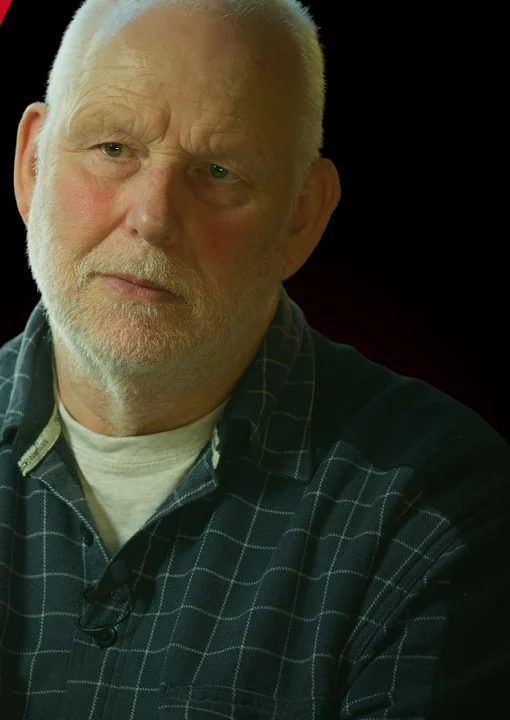
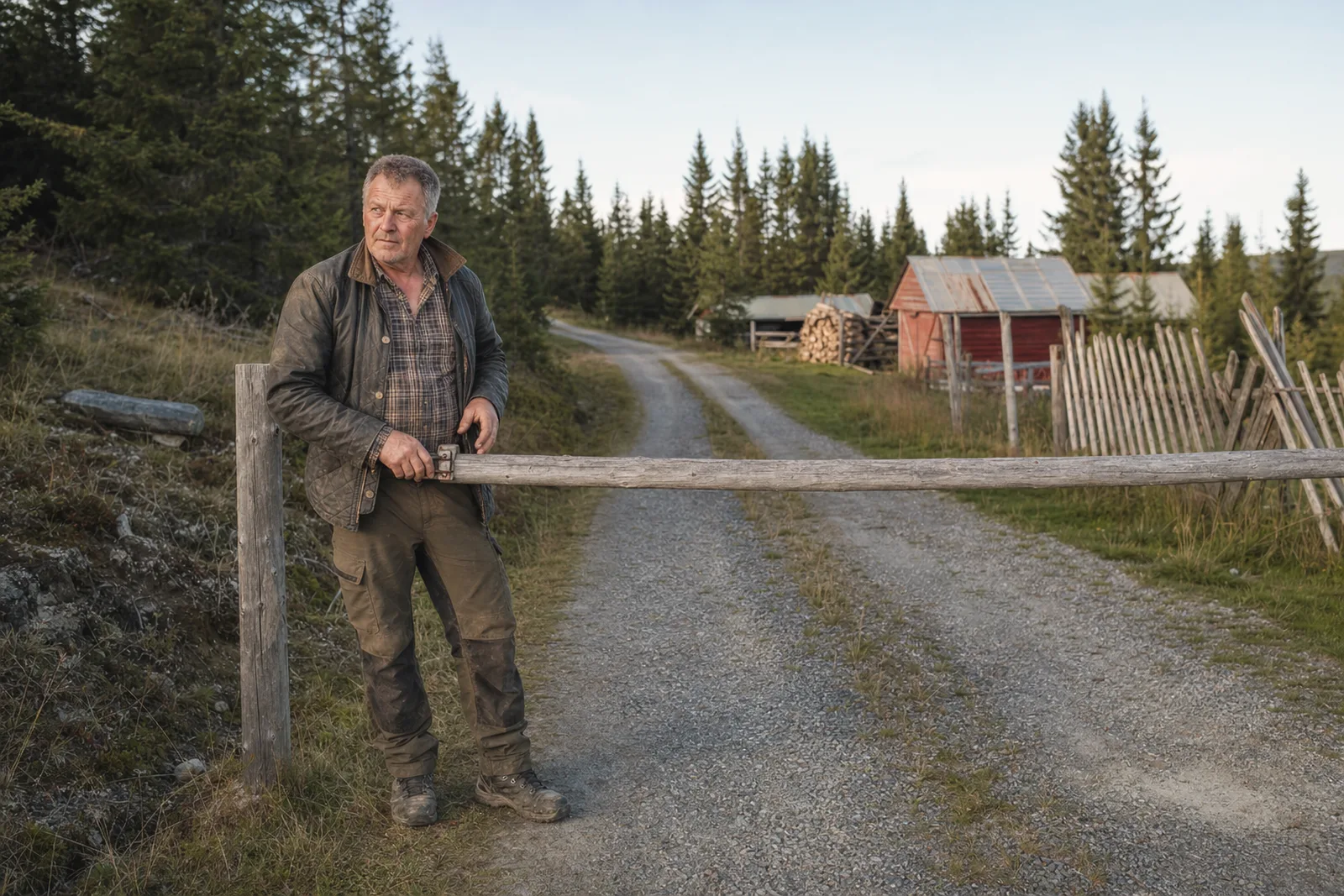
Egil Klubben bought a smallholding in western Norway in 1989. With the purchase came, as he describes it, a conflict over a road. In Klubben’s view, the question of the road was decided in a registered decision many decades ago, and that decision still applies. As Klubben describes the case, the municipality is claiming rights to the road. He has not seen documentation of how the municipality is supposed to have obtained them. In his experience, the municipality uses its maintenance of the road as the basis for referring to the road as municipal, and links this to ownership in court.
This is Klubben’s account. But the question the case raises is general and important: what is the legal basis? The law requires a right of way or ownership right to have a basis, whether agreement, prescription, land consolidation or expropriation. Maintenance alone is not such a basis. Read more in He bought a house and inherited a road dispute.
Are you involved in a road dispute? We would like to hear how your case has gone, and what happened in the land consolidation court or district court. Contact us via the contact page. We will not publish anything about you unless you have agreed.
How to proceed
- Obtain a Land Register transcript and all registered documents for both properties.
- Look for old agreements, land division records and land consolidation cases in the state archive and the municipality.
- Write down how the road has been used, by whom and for how long.
- Ask the other party in writing to document the basis for their right.
- Consider the land consolidation court. It can clarify rights and set rules for the use.
Would you like help and a community? Become a supporting member – coming soon. As a member, you get access to the tools in the members’ area and to groups with people who have been through the same thing.
Frequently asked questions
What is a right of way?
A right of way is the right to use a road over someone else’s property. Legally, it is an easement, a special right over another person’s real property under the Easements Act § 1. The content depends on the basis for the right, for example the agreement. The right of way may concern walking, driving or other use.
How does a right of way arise?
A right of way may arise by agreement, by prescription under the Prescription Act §§ 2, 4 and 7, by immemorial usage, by a decision in the land consolidation court under the Roads Act § 53, or by expropriation. In prescription cases, the conditions, including good faith, must be met. The prescription period is normally 20 years, but 50 years for a right of use that is not shown by a fixed arrangement, except for a necessary road or storage site, cf. the Prescription Act § 8. The fact that a road has been cleared of snow or maintained by someone does not in itself confer a private-law right of way.
What is the difference between a right of way and a right of use?
A right of way is one type of right of use. Right of use is the collective term for rights to use someone else’s property in a particular way, for example a road, water pipe, jetty or parking. The rules in the Easements Act apply to all such rights, unless something else has been agreed.
Must a right of way be registered?
An agreed right of way should be registered. Under the Land Registration Act § 20, a registered right takes priority over later rights, and a buyer in good faith may, as a general rule, disregard an agreed right that is not registered. A right of way acquired by prescription nevertheless applies without registration, under § 21 second paragraph.
Can the road be moved?
Yes. Under the Easements Act § 5, each of the parties may demand that the road be moved or that the use be defined more precisely, if the party making the demand pays the cost and the new solution is at least as good for the other party. The land consolidation court may also decide claims for relocation under the Roads Act § 53.
Sources
- Lovdata: The Easements Act § 1 – special rights over another person’s property
- Lovdata: The Easements Act § 2 – unreasonable or unnecessary damage or inconvenience
- Lovdata: The Easements Act § 5 – alteration (relocation)
- Lovdata: the Prescription Act § 7 – acquisition of a right of use by prescription
- Lovdata: The Roads Act § 53 – private road over another person’s land
- Lovdata: The Land Consolidation Act § 3-8 – rules on shared use
- Lovdata: The Land Registration Act §§ 20 and 21 – legal protection
- Justice for All Norway: Egil Klubben – the land consolidation judgment
- Fact check: the legal references have been checked against Lovdata’s open data (current acts, retrieved 15 November 2026), and the other information against official online sources on 20 November 2026.
Quotes translated from Norwegian.
Published 20 November 2026 · Last updated 20 November 2026
About AI in our articlesSupporting members
Support Justice for All Norway from abroad
Membership of the association is open to people living in Norway. International supporting memberships are on their way, so that you can support our work wherever you live.
Become a supporting memberComing soon