News · Rules and advice
Supervised contact: who supervises, and what can be written in the report?
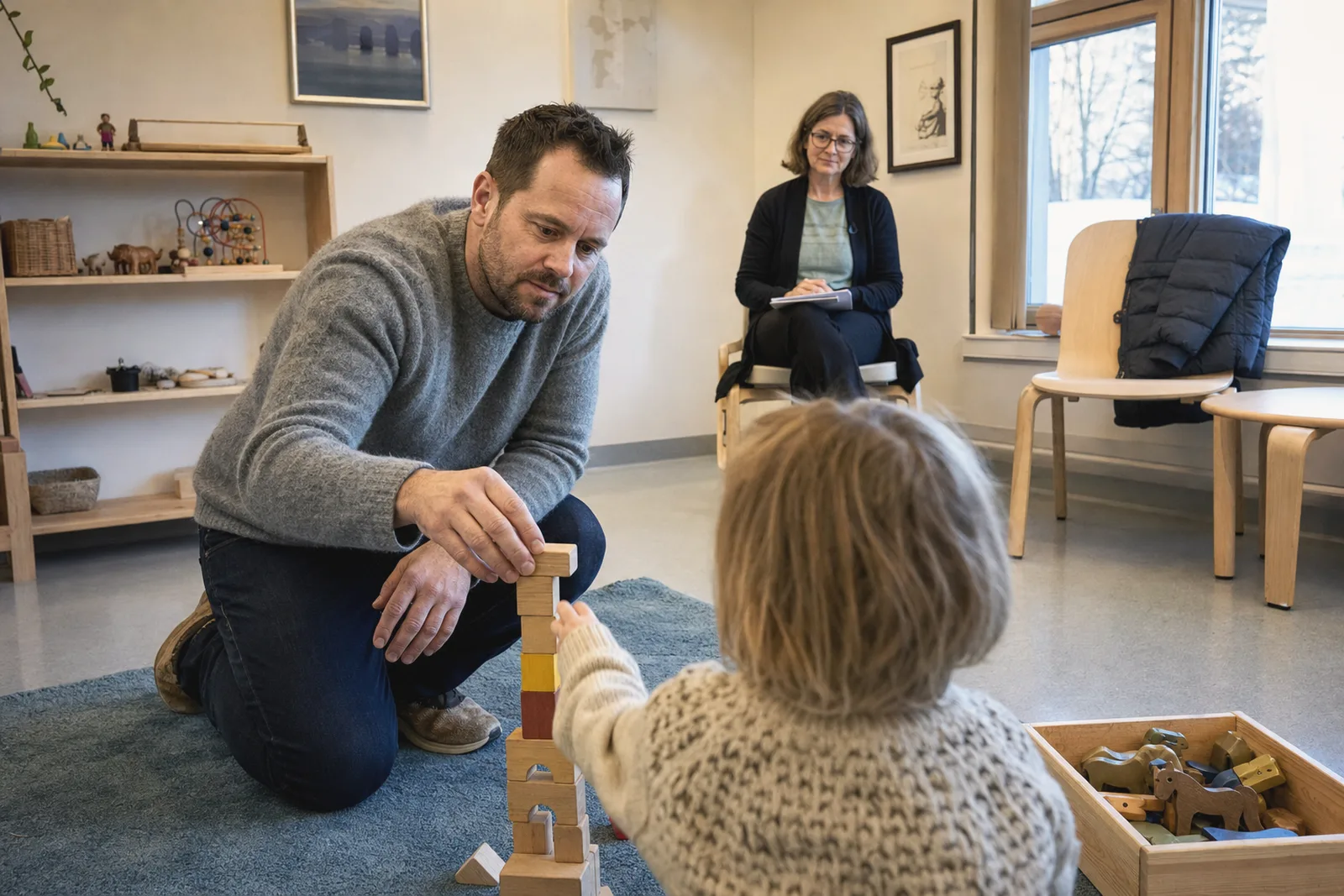
Supervised contact means that another adult is present while you are with your child. The supervisor often writes a report, and it can carry great weight later in the case. Here is what the law says about supervision, and how you can make sure the report is accurate.

In brief
- It is the Child Welfare Tribunal that can decide that contact is to be supervised, as a condition in the contact decision (section 7-2 of the Child Welfare Act).
- The child welfare service must draw up a plan for how contact is to take place. The plan cannot be appealed, but the service may grant more contact than the tribunal has set (section 7-6).
- Where there is a risk of harm to the child, the head of the child welfare service may make a temporary decision on supervision. That decision can be appealed (sections 7-7 and 14-23).
- What is written about contact becomes part of the child welfare record, which must contain significant factual information and professional assessments (section 12-4).
- You are entitled to see the reports and can ask for corrections and add your own comments.
Short answer: Whether contact is to be supervised is as a rule decided by the Child Welfare Tribunal when it sets contact under section 7-2 of the Child Welfare Act. Who supervises, and how, is usually decided by the child welfare service in its plan for contact. The reports that are written are part of the case, and you are entitled to see them and respond to them. This article belongs to the topic page on child welfare.
These are the rules
Under section 7-1 of the Child Welfare Act (barnevernsloven), children and parents have a right to contact with each other unless otherwise decided. When the tribunal has made a care order, it must set contact under section 7-2. The tribunal may attach conditions to contact, and the section mentions expressly that it may decide that contact is to be supervised. The decision must be based on a specific assessment of, among other things, the child’s need for protection and the ability of child and parents to maintain and strengthen their bonds.
Once the tribunal has decided, the child welfare service must under section 7-6 draw up a plan for how contact is to take place, based on a specific assessment of the child’s needs. The plan is not an individual decision and cannot be appealed. The child welfare service may nevertheless grant more contact than the tribunal has set, as long as this does not conflict with the premises of the decision, and it must at regular intervals consider whether contact should be changed.
The law also has an urgency rule. Under section 7-7, the head of the child welfare service, their deputy or the prosecuting authority may make a temporary decision on supervision during contact if there is a risk that the child will suffer harm. Such a decision must be reviewed by the tribunal and can be appealed directly to it. It lapses if the child welfare service does not apply to the tribunal to change contact within three weeks.
Who supervises the contact?
The law does not say who the supervisor is to be. That is for the child welfare service to decide when it draws up the plan for contact, within the framework of the tribunal’s decision. It may be an employee of the child welfare service, someone the service has engaged, or another person the service considers suitable. If you have someone in mind whom you trust, for example a relative or another adult the child knows well, you can suggest them. The child welfare service must consider the suggestion, but is not bound by it.
It is also worth asking what kind of supervision is intended. Is the supervisor only to be present to keep the child safe, or also to guide and observe the interaction? The two roles are very different, and the report should state clearly which role the supervisor had. How the ECHR sees supervision as a less intrusive alternative to stopping contact is discussed in how little contact the Convention allows. In the Jansen case from 2018, contact was set at one hour four times a year with supervision, after it had previously taken place with police assistance.
What can be written in a contact report?
Reports from contact sessions become part of the child welfare record. Under section 12-4, the record must contain all significant factual information and professional child welfare assessments on which the case handling is based, and which may have a bearing on decisions. A good contact report therefore distinguishes clearly between what happened and what the supervisor thinks about it. “Mother sat down on the floor and read to the child for twenty minutes” is an observation. “Mother had little contact with the child” is an assessment, and it should be supported by observations.
The report should also describe what worked. If only the problems are noted, a series of reports over time will give a distorted picture. It is reasonable to ask for the report to say something about how the child greeted you, how the goodbye went, and what you did together.
When the report is wrong or imprecise
You are entitled to see the reports; see a party’s right of access and access to the child welfare file. Ask to receive them as they are written, not only when the case is due before the tribunal. If a report contains factual errors, you can ask for them to be corrected; see correcting the child welfare record. If you disagree with the assessments, you can write a reply of your own to be placed on file; see responding to a child welfare report. Reply briefly and factually, and preferably quickly, while the session is fresh in everyone’s mind.
How to proceed before and after supervised contact
Ask for the contact plan in writing, and ask who will supervise, what their role is, and whether a report will be written. Prepare something to do with the child, particularly if contact is to take place on neutral premises. Make a few notes of your own after each session: what you did, how the child seemed, and whether anything happened that the supervisor commented on. If you ask for more contact or unsupervised contact, it is precisely positive observations over time that provide the best basis. How you can ask the tribunal to reconsider contact is explained in contact after a care order.
Where supervised contact is meant to protect a child after violence in a dispute between parents, the Children Act and separate rules apply. We explain them in contact with protected or supported supervision after violence.
This is our members’ experience
Many of those who contact Justice for All Norway describe supervised contact as unnatural and tense. The Storeide family had their contact extended to seven hours, but it was to take place in a room under observation. In the filmed interview with Justice for All Norway, Jan Erik Storeide put into words how it felt:
What are we supposed to do for those seven hours? Play Monopoly for seven hours?
Experience shows that what happens during contact matters as much as the number of hours. It can be a good idea to ask for part of the contact to take place outdoors, at an activity or somewhere the child knows, even when it is supervised.
If you would like to support our work, you can become a member here.
Frequently asked questions
Who decides that contact is to be supervised?
As a rule the Child Welfare Tribunal, which under section 7-2 of the Child Welfare Act may set supervision as a condition of contact. Where there is a risk to the child, the head of the child welfare service may make a temporary decision on supervision under section 7-7.
Who can supervise contact?
The law does not say who the supervisor is to be. That is decided by the child welfare service when it draws up the contact plan under section 7-6, within the tribunal’s decision. You can suggest a person you trust.
What can be written in a contact report from the child welfare service?
The report forms part of the record, which under section 12-4 of the Child Welfare Act must contain significant factual information and professional child welfare assessments. A good report distinguishes between what happened and what the supervisor thinks about it.
Can the plan for supervised contact be appealed?
No. Under section 7-6 of the Child Welfare Act, the plan is not an individual decision that can be appealed. A temporary decision on supervision under section 7-7 can, however, be appealed directly to the tribunal under section 14-23.
Sources
Quotes translated from Norwegian.
Published 22 November 2026 · Last updated 22 November 2026
About AI in our articlesSupporting members
Support Justice for All Norway from abroad
Membership of the association is open to people living in Norway. International supporting memberships are on their way, so that you can support our work wherever you live.
Become a supporting memberComing soon