News · Rules and advice
Safety plan: how to prepare to get out safely
The period around a break-up can be the most dangerous. A safety plan makes it easier to act quickly and safely. Here is what the plan should contain, who can help you with it, and which protective measures you can ask for.
In brief
- Everyone who is subjected to violence or threats of violence in close relationships must be offered a safe, temporary place to live and help to get out of violent relationships (section 2 of the Crisis Centre Act).
- All crisis centres offered day users one-to-one conversations and systematic assessment of threats and protection needs in 2025 (Bufdir).
- On the basis of a threat assessment, the police can put in place safety and protective measures, such as restraining orders, violence alarms and a confidential address (Office of the Auditor General).
- You do not need to report to the police to get help from the crisis centre or a mobile violence alarm.
A safety plan is a plan for how you will keep safe, both while you still live with the person who uses violence and when you are going to break away. It covers where you can go, whom you can ring, what you need to take with you and which protective measures you can get. You do not have to make it entirely on your own. The crisis centre can help you, even without you moving in or reporting. More about how public services and decisions work can be found on the topic page Public administration, NAV and individual decisions.
These are the rules
Under section 2 of the Crisis Centre Act (krisesenterloven), the municipality must provide a crisis centre service for people who are subjected to violence or threats of violence in close relationships and who need advice or “a safe and temporary residential service”. The service includes a free residential service, a free day service, a 24-hour telephone service and follow-up in the re-establishment phase. Everyone who is affected must be offered a safe temporary place to live and help to get out of violent relationships. The crisis centres offer protection, safety, advice and guidance to both adults and children.
The police are responsible for the criminal law protective measures. The Office of the Auditor General describes how the police, on the basis of a threat assessment, can put in place safety and protective measures in domestic violence cases. These may be a restraining order under section 222 a of the Criminal Procedure Act, a mobile violence alarm, a reverse violence alarm or a confidential address. How the violence alarm works is explained in the article on mobile violence alarms.
Who can help you with the plan
The crisis centre is the natural place to start. You can ring around the clock, or come in during the day, without a referral. In 2025 all crisis centres offered day users one-to-one conversations and systematic assessment of threats and protection needs. This means you can get help to assess the risk and plan, long before you possibly move. What the crisis centre offers is explained in the article on what a crisis centre is.
The police can assess the risk and put in place protective measures. The Director of Public Prosecutions has decided that the police normally cannot ask someone who wants to make a report to come back later. Even so, you do not need to report to get help with a mobile violence alarm or a restraining order. The crisis centre can also help you contact the police, a lawyer, NAV and the child welfare services, which were the agencies residents were most often put in contact with in 2025.
What the plan should cover
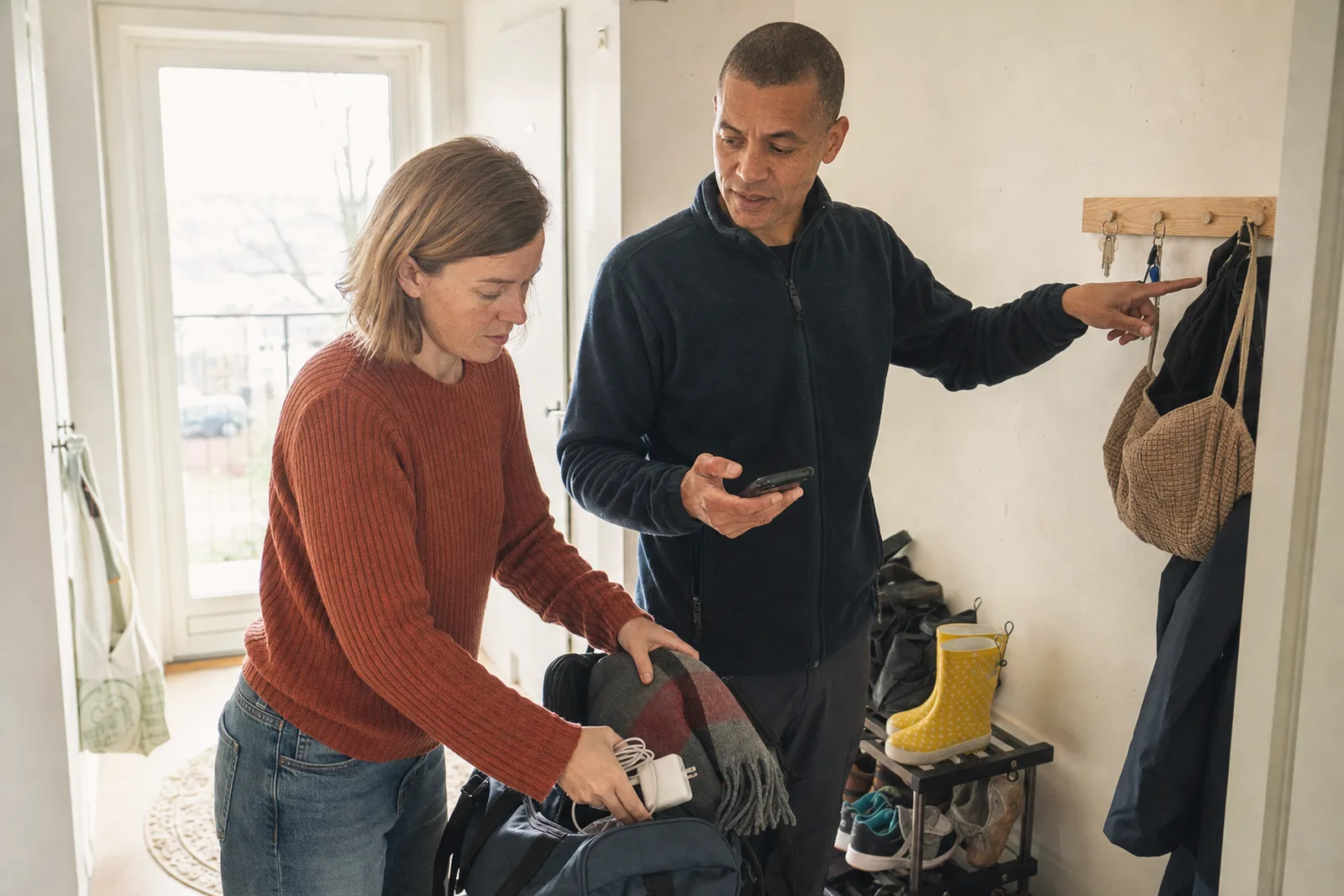
A good plan is concrete. It should say where you can go if you have to get out quickly, and how you will get there. It should include a list of phone numbers you may need: the police on 112, the crisis centre, the Violence and Abuse Helpline on 116 006 and someone you trust. It can include a code word agreed with a friend, so that you can ask for help without the other person understanding. And it should say what you need to take with you: identification, bank cards, medicines, important papers for you and the children, and chargers.
The plan should also take account of the children: what they should do if something happens, who can collect them, and what the nursery or school should be told. And it should take account of the digital side. Many people can be tracked through their phone, shared accounts or apps. Go through location sharing and passwords before you leave. Advice on this can be found in the article on digital violence.
Finally, the plan should cover the period after the break-up. When you move, you can ask the police to consider a restraining order, a violence alarm or a confidential address. The municipality has a duty to follow you up in the re-establishment phase, including with housing, transitional housing and help with work or studies. The crisis centres themselves do not have the most important tools for re-establishment, such as housing and finances, so ask for help in contacting NAV as early as possible.
This is what the evidence shows
Bufdir's statistics show that assessment and planning do not always happen by themselves. Threats and protection needs were systematically assessed in 75 per cent of adults' stays in 2025, and a plan for follow-up after the stay was made in only 30 per cent. For you, this means that it may pay to ask expressly for a safety plan to be made, and to have it in writing. If you are afraid that you yourself might use violence, the police refer to dinutvei.no as a source of help. Become a supporting member – coming soon if you want to support the work for better legal protection for victims of violence.
How to proceed
- If you are in immediate danger, call 112.
- Contact the crisis centre and ask for help in making a safety plan. You do not need to move in or report to the police.
- Write down important phone numbers and where you can go, and keep it somewhere the other person will not find it.
- Gather identification, bank cards, medicines and important papers for you and the children, or know where they are.
- Check your phone and accounts for location sharing and tracking.
- Ask the police to consider a mobile violence alarm, a restraining order or a confidential address.
If you are in danger now, call the police on 112. The Violence and Abuse Helpline is available around the clock on 116 006. Become a supporting member – coming soon if you want to support our work or share your experiences with us.
Frequently asked questions
What should a safety plan for violence contain?
Where you can go and how, important phone numbers, a code word with someone you trust, what you need to take with you, what applies to the children, and how you secure your phone and accounts. The crisis centre can help you with the plan.
Can I contact a crisis centre without reporting to the police?
Yes. You can get in touch directly without a referral or a police report. The crisis centre's telephone is open around the clock, and the day service is free.
What do I do if there is also digital abuse?
Go through your phone and accounts for location sharing, shared passwords and apps that can be used for tracking. Ask the crisis centre or the police for advice before you change anything, if you are afraid that the changes will be noticed.
Where can I find help if I am afraid of using violence?
The police refer to dinutvei.no as a source of help for people who subject others to violence and threats. Alternative to Violence also offers treatment.
Sources
- Crisis Centre Act § 2, Lovdata
- The Criminal Procedure Act (straffeprosessloven) § 222 a, Lovdata
- Bufdir: Crisis centre statistics – residential and day services
- The Office of the Auditor General: Document 3:8 (2021–2022) on the authorities’ work to combat domestic abuse
- The Director of Public Prosecutions’ circular no. 2/2023 on violence in close relationships
- The police: Are you subjecting someone to violence and threats?
Quotes translated from Norwegian.
Published 22 November 2026 · Last updated 22 November 2026
About AI in our articlesSupporting members
Support Justice for All Norway from abroad
Membership of the association is open to people living in Norway. International supporting memberships are on their way, so that you can support our work wherever you live.
Become a supporting memberComing soon