News · Rules and advice · The rule-of-law state
What is abuse of power, and how does the rule-of-law state protect against it?
Here we use abuse of power to mean that someone uses power they have been given for something other than the purpose for which that power is intended. When this happens in the exercise of public authority or in assisting such exercise of authority, serious breaches of official duties may be criminal offences, and an administrative decision may, depending on the circumstances, be invalid. Here is what the law says, which oversight bodies exist, and what the whistleblowers we have spoken to have experienced.

In brief
- Here, abuse of power is used to mean that power is used for something other than the purpose for which it is intended, or in a way that harms others.
- Serious breaches of official duties in the exercise of public authority or in assisting such exercise of authority may be criminal offences (the Penal Code (straffeloven) §§ 171–173). Abuse of public authority can carry up to six years’ imprisonment.
- An administrative decision based on irrelevant considerations or improper differential treatment may be invalid.
- The Constitution of Norway (Grunnloven) states that everyone is equal before the law (§ 98), and that interventions must have a basis in law (§ 113).
- Formal oversight may take place through appeals, the Parliamentary Ombud, the Norwegian Bureau for the Investigation of Police Affairs, the courts and the Storting (the Norwegian Parliament). The press and whistleblowers can also help uncover matters worthy of criticism.
In this guide, we use “abuse of power” to mean that someone uses power they have been given through a position or office for a purpose other than the one for which the power is intended, or in a way that wrongfully affects others. It can happen in a family, in a workplace and in an association. But when power is abused in the exercise of public authority, it strikes at the rule-of-law state itself, because citizens cannot opt out of the authorities. The guide belongs to the topic page about the rule-of-law state.
The first part explains what the law says about abuse of power and abuse of authority. The second part concerns what the whistleblowers in the association have told us, and what happens when oversight is not perceived to work.
These are the rules
The Constitution of Norway: equality and legal basis
The Constitution of Norway (Grunnloven) has no separate section on abuse of power, but it is built on principles intended to prevent it. Under § 2, the Constitution of Norway shall safeguard democracy, the rule of law and human rights. § 98 states that everyone is equal before the law, and that no one must be subjected to improper or disproportionate differential treatment. And § 113 establishes that interventions by the authorities against the individual must have a basis in law. Under § 89, the courts have the right and duty to review whether the authorities have acted within the Constitution of Norway and the laws.
Abuse of authority in the public administration
In administrative law, the term abuse of authority is used for decisions based on irrelevant considerations, decisions that are arbitrary, decisions that involve improper differential treatment or decisions that are grossly unreasonable. It is a non-statutory rule, developed through case law. Such a decision may be invalid, even if the public administration formally had the authority to make it. You can appeal the decision, and you can ask the courts to review it.
When it is a criminal offence
The Penal Code (straffeloven) has three provisions on breaches of official duties by a person who exercises public authority or assists in such exercise:
- § 171 Misconduct in public office: Anyone who “grossly breaches their official duties” is punishable by a fine or imprisonment for up to two years.
- § 172 Grossly negligent misconduct in public office: a fine or imprisonment for up to one year.
- § 173 Abuse of public authority: imprisonment for up to six years for anyone who knowingly grossly breaches their official duties, breaches them to obtain gain, breaches them with serious inconvenience, harm or wrongful deprivation of liberty as a consequence, or otherwise abuses public authority.
The threshold is high. It is not enough that a decision is wrong, or that a case officer has done a poor job. There must be a serious breach. Cases against police employees and employees of the prosecuting authority are investigated by the Norwegian Bureau for the Investigation of Police Affairs. When power is used to secure an advantage for someone, it may also be corruption; see Corruption in Norway: what the law says, and how it is uncovered.
Whistleblowers are part of oversight
The Working Environment Act § 2 A-1 gives employees the right to whistleblow about matters worthy of criticism in their employer’s undertaking, and hired-in workers also in the undertaking of the hirer; the provision mentions abuse of authority as an example. Retaliation against an employee who whistleblows in accordance with §§ 2 A-1 and 2 A-2 is prohibited (§ 2 A-4). Without whistleblowers, many cases would never become known. Farmer Dag Hauffen reflects on the boundary between the power of the state and the freedom of the individual in When the power of the state meets human free will.
If you feel that power is being used against you, you do not have to stand alone. Become a supporting member – coming soon.
See also the guides The Norwegian Bureau for the Investigation of Police Affairs: when you report the police, How to whistleblow at work: a proper procedure step by step and How to complain to the County Governor?.
This is our members’ experience
What follows is based on film interviews with Justice for All Norway. These are experiences and allegations from the people we have spoken to, not documented facts. We take no position on questions of guilt, and none of the people referred to in the interviews has been convicted of any of the alleged matters.
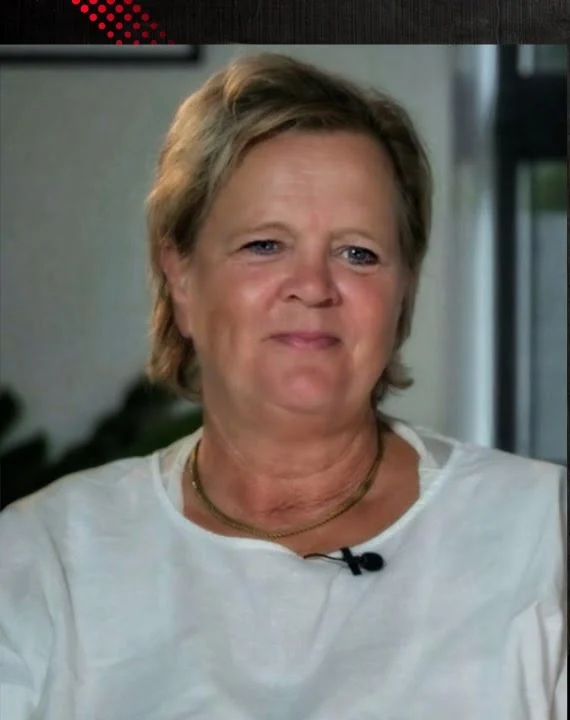
Vigdis Bollerud worked for more than 30 years as an investigator in the police. She blew the whistle on economic crime, later lost her position and has brought legal proceedings against the state. In the film interview, she describes a culture in which, in her experience, speaking up comes at a cost, and where few dare to speak out because those who do so, in her experience, are met with reactions.
In Bollerud’s experience, a new manager reacted differently from the others when the manager heard the story. Bollerud felt she was the only one who said that she could not know what Bollerud had been through and do nothing about it.
In an appeal, she has at the same time emphasised that the criticism does not apply to all police officers.
The gap between law and reality is clear here. On paper, the whistleblower is protected, and abuse of authority can be punished. In practice, many whistleblowers say that they are the ones who are investigated, transferred or dismissed, and that their complaints are dropped. Whether this is due to individuals, culture or weaknesses in the control system is a question we believe must be examined by someone outside the agencies concerned. Do the oversight bodies have enough independence when they are to investigate their own? That is the question asked by many of the people we speak to.
How to proceed
- Ask for written reasons and access to the documents in your case.
- Appeal the decision within the deadline, and state specifically what you believe is improper.
- Complain to the Parliamentary Ombud once the appeal has been fully processed by the public administration.
- If it concerns the police or the prosecuting authority, you can report the matter to the Norwegian Bureau for the Investigation of Police Affairs.
- Write a log with dates, and keep all correspondence.
Would you like help and a community? Become a supporting member – coming soon. As a member, you get access to the tools in the members’ area and to groups with people who have been through the same thing.
Frequently asked questions
What is abuse of power?
In this guide, we use abuse of power to mean that someone uses power they have been given through a position or office for something other than the purpose for which the power is intended, or in a way that wrongfully affects others. When exercising public authority or assisting in such exercise of authority, serious breaches of official duties may be punishable under the Penal Code (straffeloven) sections 171 to 173, and an administrative decision based on irrelevant considerations may be invalid.
Is abuse of power a criminal offence?
Yes, when exercising public authority or assisting in such exercise of authority. Section 171 of the Penal Code (straffeloven) punishes serious breaches of official duties with imprisonment for up to two years, and section 173 punishes misuse of public authority with imprisonment for up to six years. The threshold is high: there must be a serious breach, not just an error or a poor assessment.
What is the difference between abuse of power and abuse of authority?
Abuse of power is the broad term and can happen anywhere, including in a workplace. Abuse of authority is used in administrative law for public decisions based on irrelevant considerations, arbitrariness, gross unreasonableness or unjustified differential treatment. Such decisions may be invalid. Section 2 A-1 of the Working Environment Act gives employees the right to report censurable conditions in their employer’s undertaking, and hired-in employees also in the hirer’s undertaking; abuse of authority is mentioned as an example.
Where can I complain about abuse of power by public employees?
You can appeal the decision to the appeals body, and then to the Parliamentary Ombud. If you believe a criminal offence has been committed, you can report the matter to the police, or to the Norwegian Bureau for the Investigation of Police Affairs if it concerns the police or the prosecuting authority. The courts can review whether the decision is valid, cf. Article 89 of the Constitution of Norway (Grunnloven).
Is abuse of power in the workplace unlawful?
The Working Environment Act § 4-3 says that employees must not be subjected to harassment or other improper conduct, and the employer has a duty to ensure a fully sound working environment. If this affects someone who has blown the whistle, and it happens as a result of or in response to the whistleblowing, it may be retaliation, which is prohibited under § 2 A-4.
Sources
- Lovdata: the Penal Code (straffeloven) section 171 – breach of official duties
- Lovdata: the Penal Code (straffeloven) section 172 – grossly negligent breach of official duties
- Lovdata: the Penal Code (straffeloven) section 173 – misuse of public authority
- Lovdata: the Constitution of Norway (Grunnloven) Article 98 – equality before the law
- Lovdata: Article 113 of the Constitution of Norway (Grunnloven) – interference requires a basis in law
- Lovdata: the Constitution of Norway (Grunnloven) Article 89 – judicial review by the courts
- Lovdata: the Working Environment Act section 2 A-1 – right to report
- Justice for All Norway: Film interview with police whistleblower Vigdis Bollerud
- Fact check: the legal references have been checked against Lovdata’s open data (current acts, retrieved 15 November 2026), and the other information against official online sources on 20 November 2026.
Quotes translated from Norwegian.
Published 20 November 2026 · Last updated 20 November 2026
About AI in our articlesSupporting members
Support Justice for All Norway from abroad
Membership of the association is open to people living in Norway. International supporting memberships are on their way, so that you can support our work wherever you live.
Become a supporting memberComing soonRelated articles
Corruption in Norway: what the law says, and how it is uncovered

When the power of the state meets human free will

When the police go to war against the population
The Norwegian Bureau for the Investigation of Police Affairs: when you report the police

How to blow the whistle at work: a responsible approach step by step

How to complain about the County Governor?