News · The Child Welfare Service
Help within the family first: what the law requires before a child can be taken into care
The Child Welfare Act says that children must be helped within their own family first. A care order may only be made when less intrusive measures are not enough. But financial help is, as a rule, not the child welfare service's task.

In brief
- Children have the right to care and protection, preferably within their own family, and measures must not be more intrusive than necessary (Child Welfare Act, section 1-5).
- The child welfare service must offer support measures when the child has a particular need for help because of its care situation (section 3-1).
- A care order requires that less intrusive measures cannot create satisfactory conditions for the child (section 5-1).
- Bufdir: the child welfare service must not put in place support measures intended to remedy problems with living conditions. Financial help may only be given in special cases.
- 35,309 children had support measures, emergency measures or behavioural measures during 2025. 7,242 were in care.
The principle of the least intrusive intervention runs like a thread through the Child Welfare Act. Children have the right to care “preferably within their own family”, and the child welfare service's measures must not be more intrusive than necessary (section 1-5). Bufdir writes that this follows both from the Constitution and from Norway's human rights obligations. In practice, it means that the family must be helped at home before the child is moved out.
What the child welfare service is not meant to do
The law also draws a line. The child welfare service is responsible only for help connected with the child's care situation. Bufdir's child welfare circular uses financial help as an example of what falls outside: “The child welfare service shall not implement support measures intended to remedy problems with living conditions.” The child welfare service may give financial help “in special cases”, but it is not its task to sort out the family's finances. If the family is short of money, the child welfare service must help it get in touch with Nav, the Norwegian Labour and Welfare Administration.
At the same time, the circular says that the child welfare service must take the family's living conditions into account when choosing measures, because a lack of money can affect the care. Nav and the child welfare service have joint guidelines for families who need help from both.

Consent that does not feel voluntary
The circular acknowledges a dilemma: parents and children may feel they have to accept support measures they do not want, “because the alternative may be compulsory measures”. The child welfare service must therefore make sure that the consent is genuine, and that the family understands what the measure involves and what may happen if they say no.
The figures show that support measures are the most common. During 2025, 42,551 children received measures from the child welfare service. 35,309 of them had support measures, emergency measures or behavioural measures, and 7,242 were in care, according to Statistics Norway.
“Not within the child welfare service's mandate”
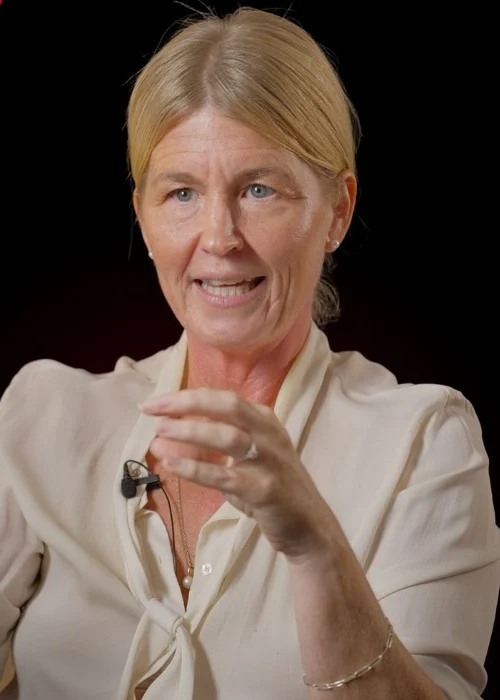
Lawyer Barbro Paulsen has come up against this line in court. In a case before the tribunal in Lillehammer, the mother was short of money, and her two children were living in an emergency foster home and a foster home. She had to pay for her own journey to the hearing. The foster family had their travel, hotel and meals covered. Barbro asked the child welfare service why the mother was not given financial help instead.
And her answer was very simple. It is not within the child welfare service's mandate.
The answer is in line with the circular. Barbro's own answer is a different one: “This case could have been solved so easily.” The full story is in the chapter on help that is not the child welfare service's job. What happens once the child has been moved out is covered in When the child welfare service removes a child the same day: what the law says about emergency orders and When parents want their child back: how a case to end a care order works.
This is one of four articles belonging to Child welfare gone astray, the story of lawyer Barbro Paulsen. The chapter on help that is not the child welfare service's job is closely linked to what you are reading here. The story has six chapters, from her childhood in Tromsø to the years of the hardest child welfare cases.
What can you do?
- Ask for support measures in writing and ask for an individual decision. If you are refused, you can appeal.
- Ask for a plan of measures. It should state the aim and how the measures will be evaluated.
- Contact Nav about financial social assistance, and ask the child welfare service to help you get in touch.
- Ask which measures have been considered if the child welfare service wants to take the case to the tribunal. A care order requires that less intrusive measures are not enough.
- Bring someone you trust to meetings with the child welfare service.
Watch the filmed interview: Lawyer Barbro Paulsen – Child welfare gone astray (2 hours). The film is also embedded in the main story.
Open questions
- How many care orders are made in families that applied to Nav for financial help the year before?
- How often does the child welfare service give financial help “in special cases”, and how does this vary between municipalities?
- Why is the journey to the hearing covered for foster parents, but not always for the parents?
Have you received – or not received – help at home from the child welfare service? Become a supporting memberComing soon, and you can share your experience with us.
Supporting members
Support Justice for All Norway from abroad
Membership of the association is open to people living in Norway. International supporting memberships are on their way, so that you can support our work wherever you live.
Become a supporting memberComing soonRead more
- The major story: Child welfare gone astray – chapter 2: The last green tick · chapter 3: Help that is not the child welfare service's job · chapter 4: The siblings who are separated · chapter 5: The 9-year-old under the sofa
- The series: When the child welfare service removes a child the same day: what the law says about emergency orders
- The series: Siblings in child welfare: what the law says about living together and keeping in touch
- The series: When parents want their child back: how a case to end a care order works
- The filmed interviews: Lawyer Barbro Paulsen – Child welfare gone astray · When children invoke necessity to get home
- More stories: Found in breach 25 times in Strasbourg · How child welfare institutions are inspected · Abuse by child welfare staff
- Topic pages: Child welfare · Norway in Strasbourg
- Become a supporting memberComing soon
Sources
- The Child Welfare Act (Lovdata, in Norwegian)
- Bufdir: Child welfare circular (Barnevernsrundskrivet)
- Nav: Guidelines for cooperation between the child welfare service and the Nav office
- Statistics Norway: Child welfare – key figures for 2025
- Justice for All Norway: Lawyer Barbro Paulsen – Child welfare gone astray (filmed interview, 2026)
Quotes translated from Norwegian.
Published 25 November 2026 at 07:00 · Updated 25.11.2026
About AI in our articlesSupporting members
Support Justice for All Norway from abroad
Membership of the association is open to people living in Norway. International supporting memberships are on their way, so that you can support our work wherever you live.
Become a supporting memberComing soon