News · Opinion
A society gone astray when children's safety does not come first
When care fails – who takes responsibility for the children the child welfare service is meant to protect?
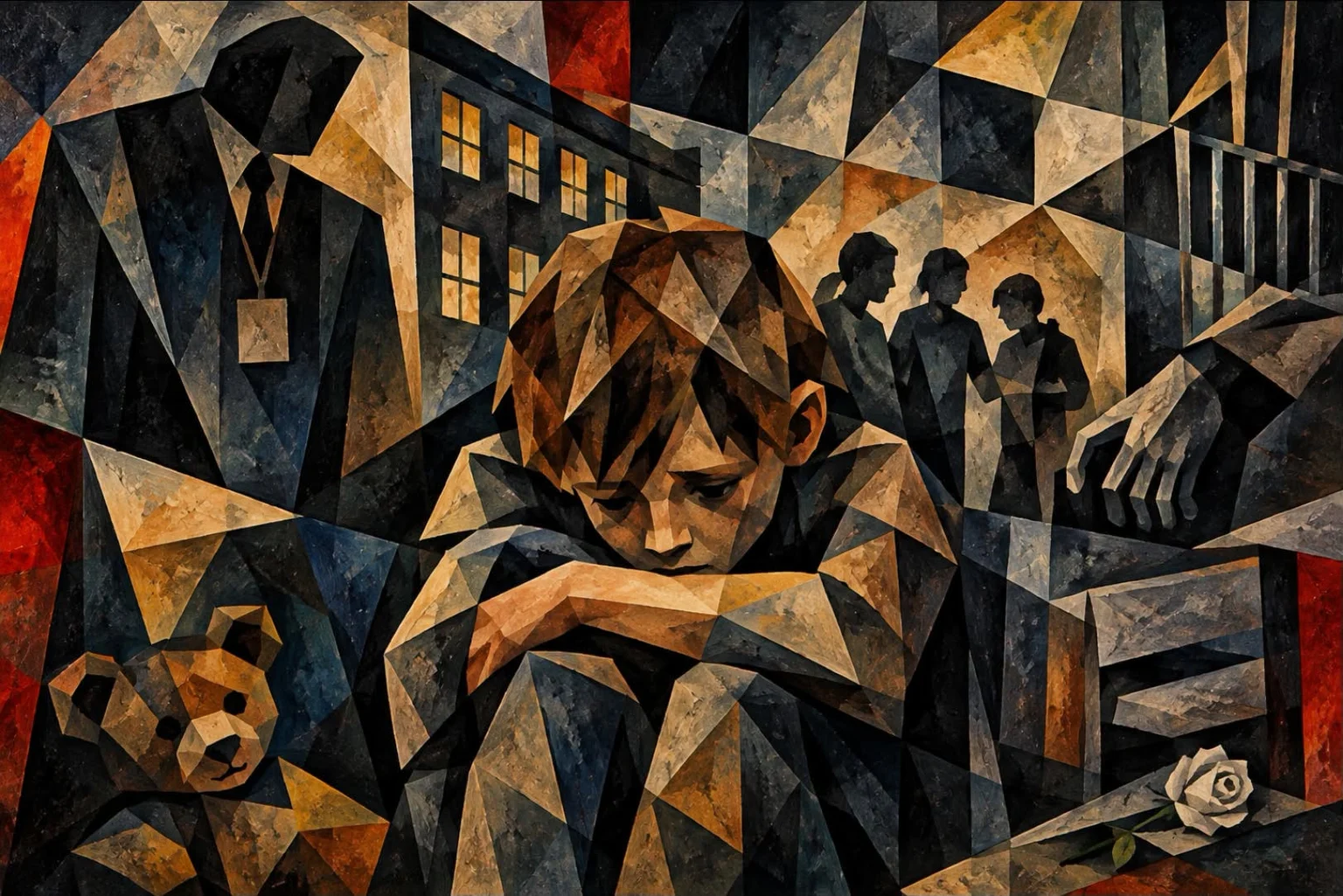
Norway likes to describe itself as a pioneer in children's rights. We have laws, supervisory bodies and political speeches about the best interests of the child. Even so, there are children who are moved from unsafe homes to child welfare institutions where they continue to be exposed to violence, abuse, crime, neglect and severe psychological strain.
This can no longer be dismissed as isolated cases. We must ask a fundamental question: how can a system set up to protect the most vulnerable children fail precisely those children time and again?
When traumatised children are placed together
Many children in institutions have experienced violence, abuse, neglect and prolonged insecurity. They need stability, safe adults, continuity and treatment tailored to the individual.
Yet children with major and complex difficulties are often placed together in environments marked by unrest, self-harm, substance abuse, aggression and destructive coping strategies.
Children can influence one another and reinforce each other's burdens. Without sufficient expertise, staffing and individual follow-up, the institutions risk sustaining the problems rather than helping the children out of them.
The Norwegian Directorate for Children, Youth and Family Affairs (Bufdir) found in its status analysis that 43 per cent of young people aged 15 to 17 who lived in an institution in the period 2013–2018 had been charged with at least one offence. By comparison, the figure was 13 per cent among young people with experience of foster care and 4 per cent among young people without child welfare measures.
The figures show how extensive the challenges are, and how important it is that the institutions actually reduce risk rather than increase it.
Abuse while in the care of society
It is deeply serious that children who have already suffered violations can also be subjected to sexual abuse, harassment and exploitation in the very institutions that are meant to protect them.
In 2024, Bufdir reported that since 2020, 18 cases had been registered involving suspected sexual abuse in which an institution employee was the suspect. The Norwegian broadcaster NRK has reported on at least 33 cases, raised by whistleblowers, of possible rape, abuse, sexual harassment and exploitation committed by staff over a five-year period.
Children in institutions live in a relationship of power in which adults control their daily lives. They may be afraid to report concerns, and afraid of not being believed. That is why the responsibility for uncovering abuse can never be placed on the children themselves.
When criminal actors take on roles in the care sector
In August 2026, Økokrim (the Norwegian National Authority for Investigation and Prosecution of Economic and Environmental Crime) and the A-krim Centre in Tønsberg published a report identifying 16 companies in eastern Norway with links to criminal actors. Three had links to the operation or approval of child welfare institutions.
The report does not document that all institutions have been infiltrated, or that children have been recruited into crime. But it reveals a serious risk.
When private companies are given responsibility for vulnerable children, strict requirements must be set for ownership, management, finances, expertise and good character. The care of children must never become a haven for profit-driven crime.
Children are dying – where are the answers?
A 2023 review by the Norwegian Board of Health Supervision described eight girls aged between 13 and 18 who died in the period from 2018 to January 2023 and had links to child welfare institutions.
Among other things, the report pointed to failures in cooperation between services, a lack of continuity in mental health care, repeated moves and measures that were not adapted to the children's needs.
In August 2026, Bufdir reported, according to VG, 21 deaths linked to Norwegian child welfare institutions since 2015. When a 14-year-old girl died at a state institution in Bergen in September 2026, that death came in addition.
The figures do not mean that every death was caused by failings in the child welfare service. But they make the need for independent investigations, openness and accountability all the greater.
How many children have died while society had responsibility for their care? How many deaths have been thoroughly investigated? And how many could have been prevented?
When care becomes an industry
The 2024 spending review of institutional child welfare described rising costs and difficulties in governing and controlling both the professional content and the use of resources.
Private actors can provide important services, but financial interests must never outweigh the needs of the children.
Children are not market share. Their trauma is not a business model. And institutional places can never be an end in themselves.
When society spends ever greater resources without being able to document that the children actually get safer lives, the organisation, the funding and the division of responsibility must be scrutinised.
This requires more than new action plans
We need a fundamental reform of institutional child welfare:
- Independent investigation of serious incidents, deaths, abuse and system failures.
- Openness about violence, sexual violations, reports of concern, deviations and the use of coercion.
- Stricter scrutiny of private providers, owners, managers and staff.
- Individually tailored measures based on the children's trauma and actual needs.
- Sufficient professional expertise and staffing, with stable relationships between children and adults.
- Genuine participation and an independent right of complaint for the children.
- Clear accountability and consequences when children are subjected to inadequate care.
- Better cooperation between child welfare, mental health services, schools and other services.
No child should be left stranded between systems that pass the responsibility on.
Who protects the children when the protectors fail?
The most serious thing is not that a system can make mistakes. What is serious is when failures are repeated, when warnings do not lead to action, when responsibility is diluted and when the children's experiences have no consequences.
Children placed outside the home have not asked to become part of an institutional system. They are entitled to more than a roof over their heads, shift rotas and minimum staffing. They are entitled to safety, dignity, treatment and adults who stay.
We must stop measuring the child welfare service by how many children are placed, how many measures are carried out or how many procedures are followed.
We must measure it by one decisive question:
ARE THE CHILDREN ACTUALLY SAFER?
A society that takes over the care of a child also takes on a moral responsibility. That responsibility cannot be outsourced, diluted or hidden behind organisational explanations.
Norway must wake up now. Not with more speeches about the best interests of the child, but with action, openness and consequences.
The children cannot wait for yet another reform that is never carried out.
It is not the children who have failed the system.
It is the system that must answer to the children.
Quotes translated from Norwegian.
Published 23 November 2026 at 09:00 · Updated 23.11.2026
About AI in our articlesSupporting members
Support Justice for All Norway from abroad
Membership of the association is open to people living in Norway. International supporting memberships are on their way, so that you can support our work wherever you live.
Become a supporting memberComing soon